Saad Ullah
Inflation remains one of the most watched topics in global markets, and a long-term chart is adding new fuel to that conversation. The visual tracks gasoline front-month futures alongside the United Nations FAO Food Price Index from 2007 through 2026, and the relationship it reveals is hard to ignore. As Tavi Costa noted, these two indicators have moved together across multiple economic cycles, suggesting energy prices and food costs are far more intertwined than many investors realize.
Two Commodities, One Pattern: The Energy-Food Price Link
The chart shows that gasoline and global food prices have followed similar cycles over nearly two decades. During the commodity boom of 2008, both indicators surged before collapsing together during the global financial crisis. The same pattern repeated in the post-pandemic period, when supply chain disruptions and energy shocks pushed both measures sharply higher at the same time.
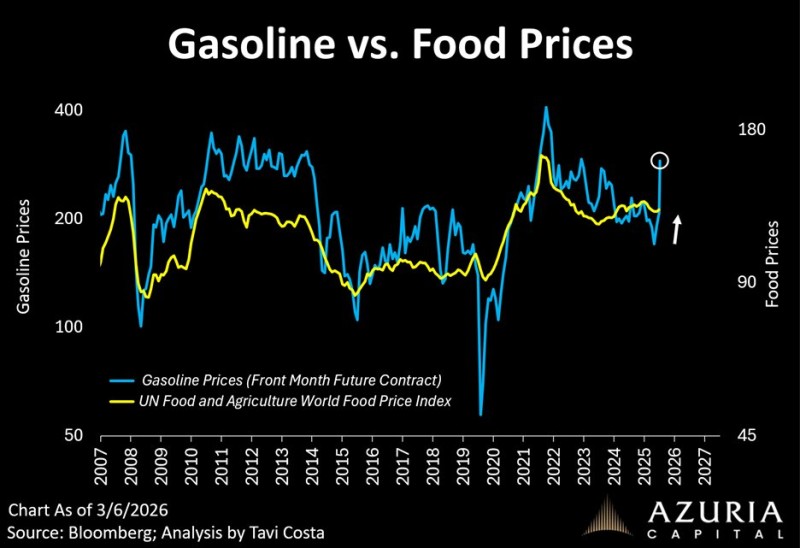
The FAO Food Price Index tracks global prices across key agricultural categories including grains, vegetable oils, dairy, meat, and sugar. These markets are deeply tied to energy through tradable commodity channels, where fuel costs shape every stage of production and distribution. When gasoline prices rise, the knock-on effects travel through fertilizer manufacturing, agricultural machinery, and freight logistics. The result is a structural link that shows up consistently in the data.
Why Rising Food Costs Carry Broader Social and Economic Risk
The implications extend well beyond commodity trading floors. Historically, sharp spikes in global food costs have coincided with political unrest and economic instability across multiple regions. In economies already under financial pressure, higher food prices hit household budgets directly, intensifying existing social tensions.
This makes energy markets more than a financial variable. They become a potential trigger for wider instability, particularly in regions where food represents a large share of household spending. The chart is a reminder that macroeconomic forces rarely operate in isolation and that commodity markets, from energy to agriculture, remain deeply connected. For investors and policymakers alike, tracking gasoline prices may offer an early read on where food inflation is heading next.
 Saad Ullah