Artem Voloskovets
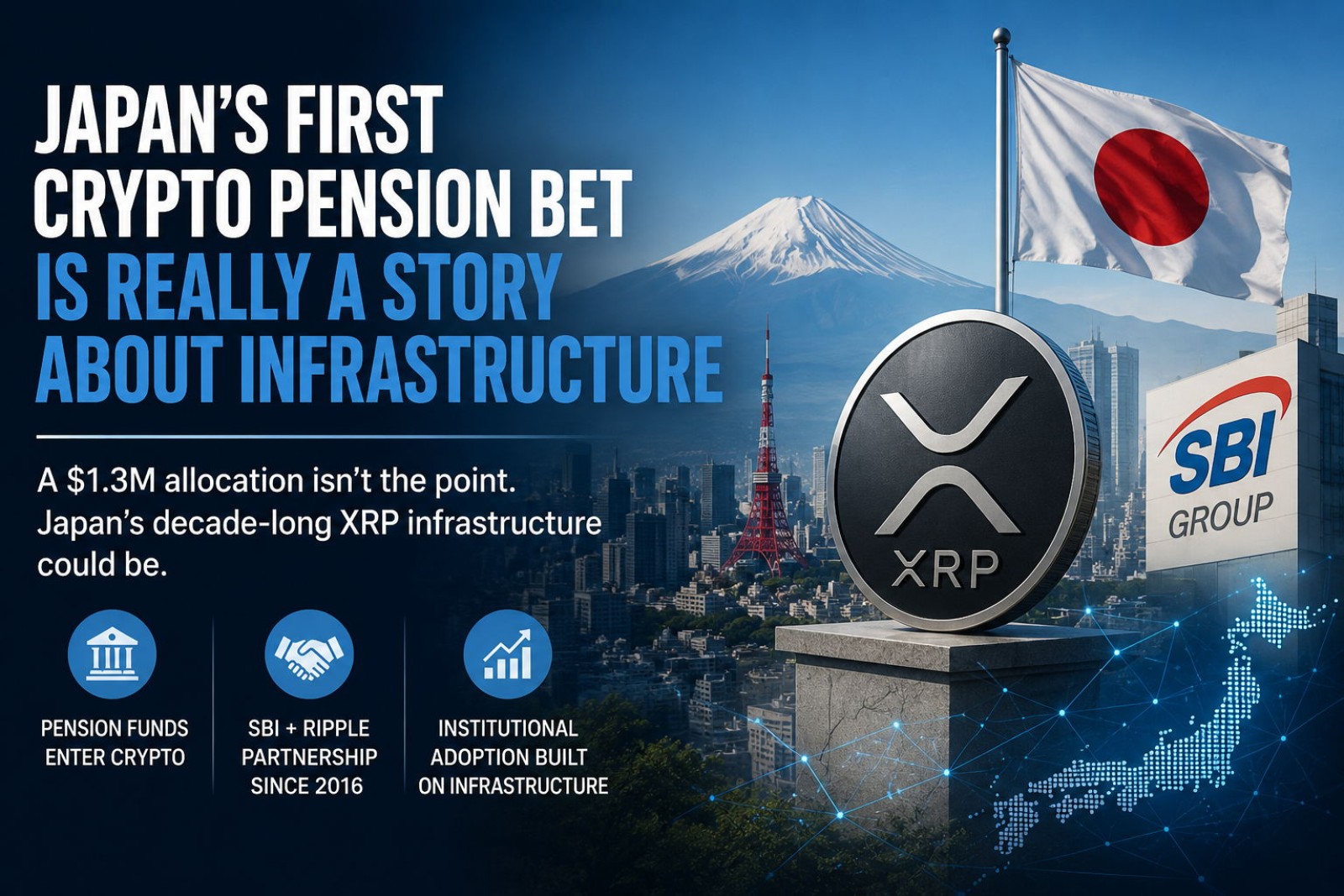
On paper, the move appears noteworthy. In practice, the numbers suggest otherwise. A 1% allocation translates into approximately $1.36 million of crypto exposure — a figure too small to alter market dynamics or materially affect digital asset valuations. The announcement matters for a different reason. It offers another indication that institutional investors are beginning to engage with a market whose foundations were laid years before most of them arrived.
A Small Allocation With Outsized Significance
Viewed in isolation, the proposed investment is modest.
| Category | Value |
| Assets Under Management | $136M |
| Proposed Crypto Allocation | $1.36M |
Even if the entire allocation were directed toward a single asset, the impact would be negligible relative to daily trading volumes across major cryptocurrencies.
What makes the development noteworthy is not the capital involved but the type of institution deploying it. Pension funds generally sit at the conservative end of the investment spectrum. Their participation often reflects changes in risk perception that have already been underway for years.
Why Japan Keeps Reappearing In The XRP Conversation
Most markets approached digital assets through speculation first and infrastructure later. Japan followed a different path. In 2016, SBI Holdings and Ripple formed SBI Ripple Asia, a joint venture focused on blockchain-based financial services and cross-border payment infrastructure. Corporate filings show the venture remains owned 60% by SBI Group and 40% by Ripple Labs.
| Shareholder | Ownership |
| SBI Group | 60% |
| Ripple Labs | 40% |
The importance of this partnership is often overlooked because it predates the current cycle of institutional interest in digital assets. While much of the industry concentrated on token issuance and trading activity, parts of Japan's financial sector spent years experimenting with blockchain-based settlement systems and payment networks.
As a result, XRP became associated not only with a digital asset but also with a broader financial infrastructure strategy.
Infrastructure Before Capital
The sequence matters. In many emerging markets, capital arrives first and infrastructure follows. Japan's experience has been closer to the opposite.
Regulatory frameworks were introduced early. Financial institutions participated in pilot programs. Relationships between traditional finance and blockchain companies were established before digital assets became a mainstream institutional topic. The result is an ecosystem that looks unusually mature compared with many other jurisdictions.
Key Milestones In Japan's Digital Asset Development
| Year | Event |
| 2016 | SBI Ripple Asia established |
| 2017–2024 | Expansion of blockchain settlement initiatives |
| 2025 | Broader institutional engagement with digital assets |
| 2026 | Pension fund evaluates crypto exposure |
The timeline illustrates why the pension fund announcement should be viewed within a broader context. The decision did not emerge from a vacuum. It arrived after years of regulatory, technological, and institutional development.
Where The Story Leads
The immediate implications for crypto markets are limited. A $1.36 million allocation will not alter liquidity conditions, reshape adoption trends, or determine the future of XRP. The longer-term implications are harder to dismiss.
Institutional adoption rarely begins with large allocations. It typically starts with research mandates, pilot programs, and limited exposure designed to test operational and governance frameworks. That process appears increasingly visible in Japan.
Whether the assets ultimately selected include XRP, Bitcoin, or a broader basket of cryptocurrencies is almost secondary. The more important development is that institutions traditionally excluded from the digital asset market are beginning to evaluate participation.
Conclusion
The pension fund's reported crypto allocation is not a market-moving event. What makes it relevant is where it is happening. Japan has been developing a framework that connects digital assets, financial institutions, payment infrastructure, and regulatory oversight. The emergence of institutional investors within that framework is a continuation of a longer trend rather than the beginning of a new one. The allocation itself is small. The system surrounding it is not.
 Artem Voloskovets