Marina Lyubimova
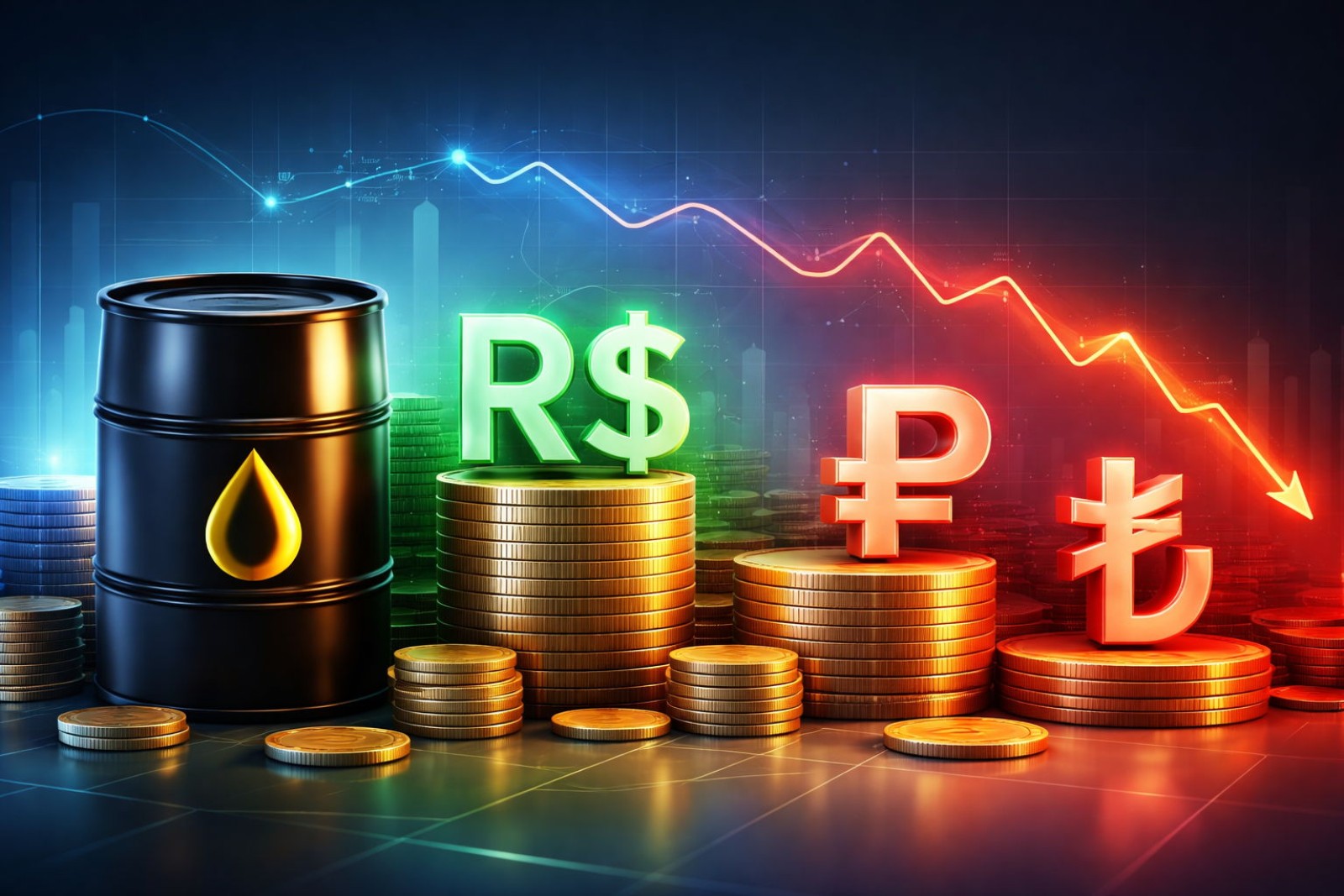
⬤ When crude oil jumped almost 40% in the first quarter of 2022, currency markets didn't just react - they split wide open. Energy price moves of that magnitude have a way of separating winners from losers fast, and Q1 2022 made that painfully clear across foreign exchange markets worldwide.
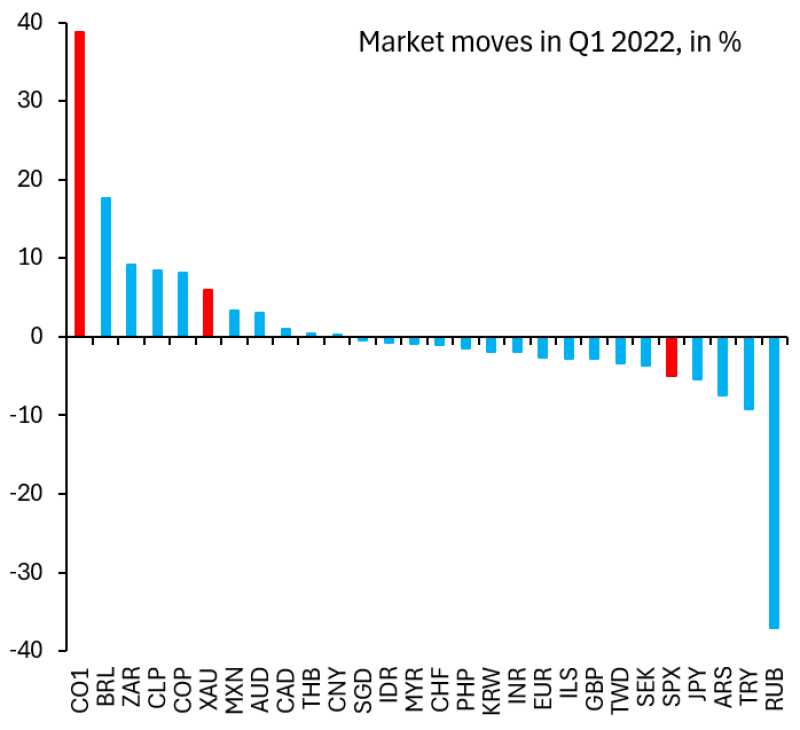
⬤ Brazil's real came out on top. The BRL climbed close to 20% as rising energy revenues strengthened the country's external position, making it the standout currency performer of the quarter. Other commodity-linked currencies posted modest gains too, but nothing close to what Brazil pulled off. As one market analyst put it: "When oil rallies this hard, commodity exporters don't just benefit - they dominate the leaderboard." The divergence between energy exporters and importers was impossible to miss.
⬤ On the other end of the chart, the Turkish lira posted the steepest decline of any currency tracked that quarter. The Russian ruble wasn't far behind, dropping more than 30% as geopolitical pressure compounded the volatility already rippling through energy markets. Asian and European currencies fell somewhere in between, their losses shaped by how exposed each economy was to rising import costs and shifting capital flows.
⬤ What Q1 2022 showed, more than anything, is how directly oil prices feed into currency valuations. FX traders watching energy markets had a clear edge that quarter. When crude surges, exporter currencies like BRL tend to strengthen materially. Importer currencies - especially those already under geopolitical or fiscal stress - can unravel quickly. It's a dynamic that plays out every time oil moves big, and 2022 was one of the more dramatic examples in recent memory.
 Marina Lyubimova