Saad Ullah
⬤ China has become the single largest buyer of Iranian crude, absorbing over 50% of Iran's exported barrels in early 2026. Beijing imported roughly 1.35 million barrels per day out of Iran's total 2.57 million barrels exported in February 2026. That's a commanding share of a trade flow that keeps growing even as Western sanctions aim to cut Tehran off from mainstream energy markets.
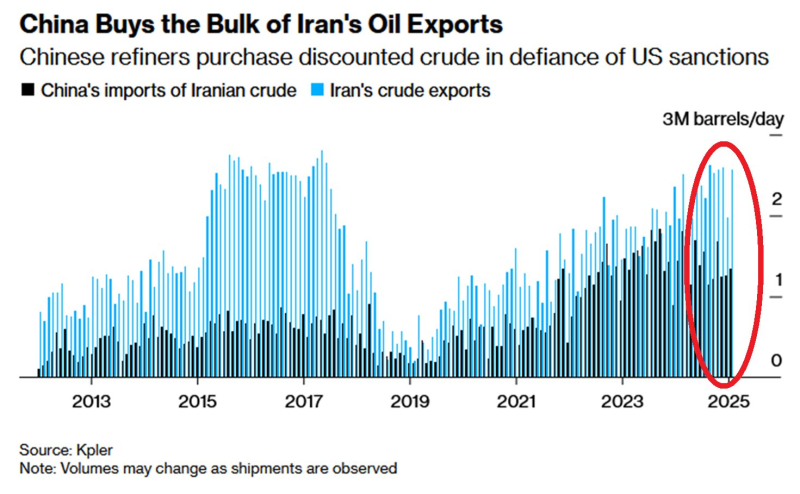
⬤ The China-Iran oil relationship works because both sides get what they need. Tehran gets a reliable buyer; Beijing gets heavily discounted crude it couldn't source elsewhere at the same price. Data from Kpler and Reuters confirm China purchased more than 80% of Iran's shipped oil in recent years, averaging around 1.38 million bpd in 2025, roughly 13% of China's total seaborne crude imports. Independent Chinese refiners, the so-called "teapots," are the biggest takers, drawn by favorable margins on discounted Iranian grades.
⬤ The broader context matters here. Middle East tensions and global supply disruptions have pushed Brent crude higher, adding urgency to China's drive to lock in stable, affordable sources. Iranian exports keep moving at scale through alternative shipping routes, shadow tanker fleets, and strategic storage arrangements that blunt the impact of U.S. sanctions. For Beijing, this isn't just opportunism, it's a deliberate move to diversify crude sourcing and reduce exposure to supply shocks in a volatile global environment.
⬤ China's dominance in buying Iranian crude is quietly reshaping how Middle Eastern oil gets marketed and distributed worldwide. Beyond sustaining Tehran's export revenues, this trade equally shapes China's refinery throughput planning and geopolitical positioning. As long as energy markets stay sensitive to both economic signals and strategic developments, this relationship looks set to deepen rather than unwind.
 Saad Ullah