Alex Dudov

Plenty of people inherit a head start. Few of them actually do something remarkable with it. Brian Roberts is one of the exceptions. Over more than four decades, he transformed Comcast from a regional cable operator into one of the most dominant media and technology companies on the planet — through bold acquisitions, early bets on the internet, and a leadership style that combined hands-on hustle with long-term vision.
So if you've been asking yourself who is the CEO of Comcast, now you know. But the more interesting question is how he got there — and what it actually took.
Who Is the CEO of Comcast and How Did His Career Start?
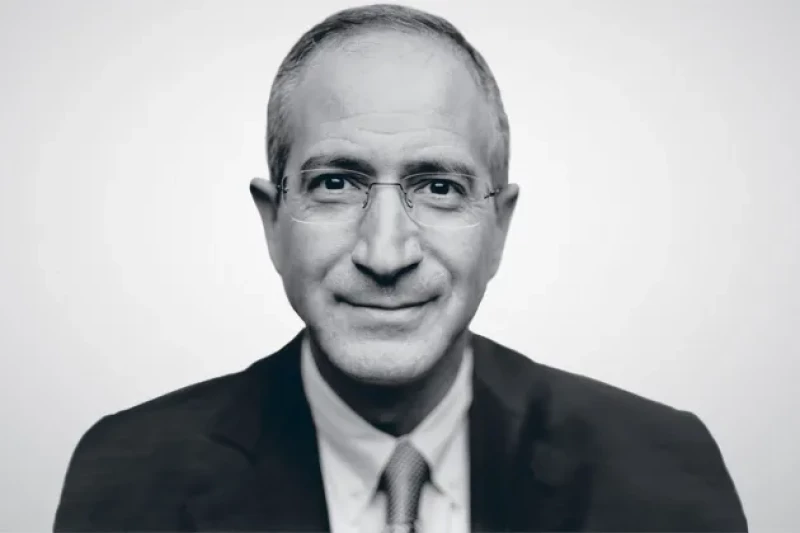
Brian L. Roberts was born on June 28, 1959, in Philadelphia, Pennsylvania. His father, Ralph J. Roberts, founded Comcast Corporation, so Brian grew up around the cable business from the very beginning. You might expect a founder's son to coast a little. He didn't.
After graduating from the Wharton School at the University of Pennsylvania with a Bachelor of Science in Economics in 1981, Roberts went straight to work at Comcast — not in a senior role, but as a manager of cable system marketing. That meant dealing with customers, learning operations from the inside, figuring out what made a cable system actually function. It wasn't glamorous. It was exactly what he needed.
His early pay was modest — entry-level wages for someone in the cable industry in the early 1980s. But Roberts wasn't there for the paycheck. He was there to understand the business he would one day run. Most executives at his level inherited a title. Roberts inherited a work ethic and spent years earning the rest.
He moved through different departments, built relationships across the company, and developed the kind of practical knowledge that can't be faked in a boardroom. By the time he was given real authority, he already knew how the whole machine worked.
Brian Roberts' Journey to the Top of Comcast

In 1990, at just 31 years old, Roberts was named President of Comcast. At that point, the company had annual revenue of $657 million and served about 2.4 million customers. Decent numbers for the time — but a fraction of what Comcast would eventually become.
The 1990s were when Roberts really started to show what kind of leader he was. In 1997, he personally put together a deal with Bill Gates that brought a $1 billion investment from Microsoft into Comcast to build out its broadband network. Think about that for a second — in 1997, most cable executives were still thinking about TV channels. Roberts was already thinking about the internet. That instinct alone separates him from most of his peers.
Then came the move that truly changed everything. In 2001, Comcast acquired AT&T Broadband for $72 billion, making it the largest cable operator in the world. A year later, in 2002, Roberts became CEO. Two years after that, he added the title of Chairman. The company he now led wasn't just big — it was the biggest.
But he wasn't done. In 2011, Comcast acquired NBCUniversal, folding in NBC, Telemundo, Universal Pictures, and a whole ecosystem of entertainment brands. Then in 2018, Comcast went international and bought Sky — the British media and telecom company — giving Comcast a serious presence across Europe.
By 2024, the numbers tell the whole story: more than 52 million customers, over 170,000 employees worldwide, and $123.7 billion in annual revenue. That's what one man's tenure looks like when the long bets keep paying off.
Comcast CEO Salary: What Brian Roberts Earns and What He's Worth

So what does running one of America's largest companies actually pay? Roberts' total compensation in 2024 came in at $33.86 million — down about 4.5% from the $35.47 million he earned in 2023. His package broke down like this: a base salary of $2.5 million, stock awards worth $17.9 million, stock options valued at $5.75 million, a performance cash bonus of $7.5 million, and roughly $200,000 in other compensation.
His pay has been consistently strong for years: $32.1 million in 2022, $34.0 million in 2021, $32.7 million in 2020, and $36.4 million in 2019. His career-high was $35.8 million back in 2018 — the year he closed the Sky deal.
Beyond his annual paycheck, Roberts is a billionaire. His net worth is estimated at around $2 billion, mostly tied to his stake in Comcast. He holds Class B common stock that gives him sole voting power over 33.3% of the company's combined voting shares — meaning he controls Comcast in a way that goes beyond just showing up to the office. He also owns a Philadelphia estate worth around $10 million and a beach house in the Hamptons valued at approximately $20 million.
And when it comes to giving back, Roberts has been serious about that too. In March 2025, he and his family donated $125 million to the Children's Hospital of Philadelphia to fund a new 20-story facility called Roberts Children's Health. That's not a tax write-off strategy — that's someone with deep roots in his city doing something meaningful with what he's built.
A New Era: Comcast Now Has Two CEOs
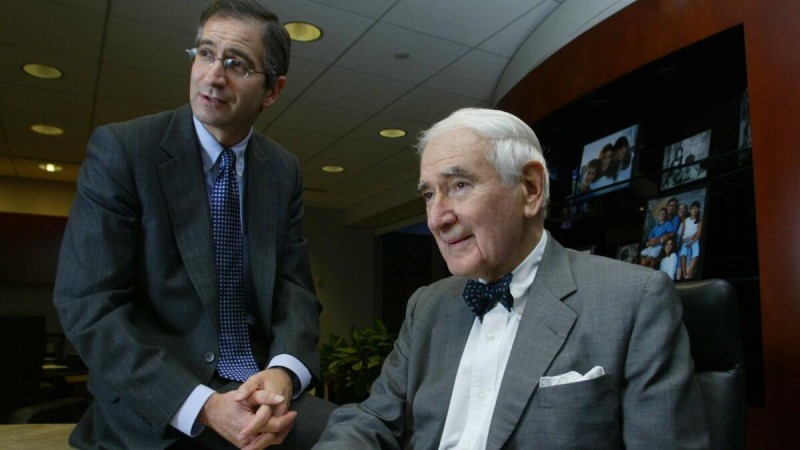
Something historically significant happened at Comcast in late 2025. In September, the company announced that Michael J. Cavanagh — the longtime President — would be elevated to Co-CEO alongside Roberts, effective January 2026. For the first time in Comcast's history, someone outside the Roberts family holds the top job.
Cavanagh is no stranger to high-stakes leadership. He spent over two decades in financial services, including time as Co-CEO of JPMorgan Chase's Corporate & Investment Bank and six years as JPMorgan's CFO. He joined Comcast in 2015 as CFO and became President in 2022. In 2024, he earned $28.26 million in total compensation.
Roberts was direct about why he made the move: "Since joining Comcast a decade ago, Mike has proven himself to be a trusted and collaborative leader. He is the ideal person to help lead Comcast as we manage the pivot we are making to drive growth across the company. Mike and I work seamlessly together, and I am thrilled to be partnering with him as Co-CEO."
The timing isn't random. Comcast is in the middle of a major strategic shift — spinning off most of NBCUniversal's cable networks into a separate company (currently called SpinCo), while refocusing the core business around six growth areas: residential broadband, wireless, business services, theme parks, Peacock streaming, and studios. Roberts will own about one-third of SpinCo stock after the separation is complete.
Brian Roberts' Key Ideas on How to Succeed

People who follow Brian Roberts closely tend to notice the same patterns in how he thinks and operates. None of it is revolutionary on its own — but the consistency is what makes it remarkable.
- Play the long game. Roberts has never been a quarterly-earnings kind of thinker. The AT&T Broadband deal, the NBCUniversal acquisition, the early push into broadband — none of these were safe, obvious moves at the time. They required conviction and the willingness to sit with uncertainty for years. That's what separates builders from managers.
- See the future before it arrives. When Roberts cut that deal with Microsoft in 1997 to build out Comcast's broadband infrastructure, streaming didn't exist. Netflix was a DVD-by-mail company. Roberts was already laying the groundwork for something most people couldn't picture yet. Today Comcast is the largest internet service provider in the United States. That didn't happen by accident.
- Do the actual work, even when you don't have to. Roberts was the founder's son. Nobody would have said anything if he'd skipped the entry-level stuff. Instead, he spent years learning cable marketing, operations, and customer service from the inside out. That foundation gave him credibility — and more importantly, it gave him judgment that pure finance types often lack.
- Surround yourself with people who are genuinely great. Bringing in Mike Cavanagh as Co-CEO isn't a sign of weakness — it's a sign of confidence. Roberts controls 33% of the company's voting power. He doesn't need to share the throne. He chose to, because he knows what strong leadership next to him is worth.
- Give back like you mean it. A $125 million donation to a children's hospital isn't a PR move — it's a statement of values. Roberts has received humanitarian awards, served on presidential advisory councils, and been a consistent civic presence in Philadelphia for decades. He treats success as something that comes with responsibility, not just privilege.
 Alex Dudov