Sergey Diakov
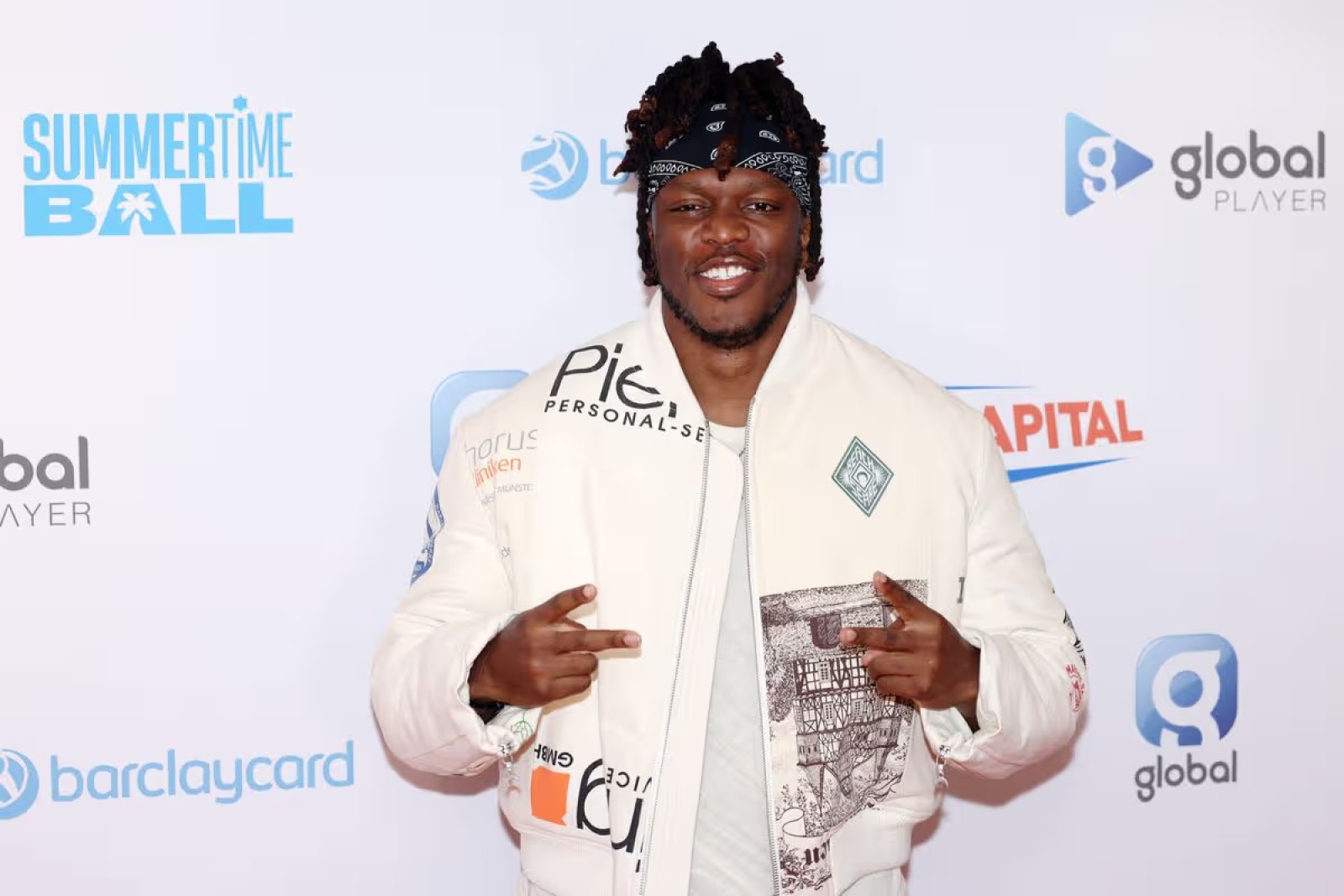
You probably know KSI as the loud, confident guy who fights celebrities, drops rap albums, and somehow co-founded one of the fastest-growing drink brands in history. But behind all the spectacle is a genuinely interesting business story. Olajide Olayinka Williams Olatunji, better known as KSI, grew up in Watford, England, and had no industry connections, no family money, and no obvious path to fame. What he had was a camera, a gaming console, and an unusual ability to make people laugh. That turned out to be enough. Today, at just 31, his wealth rivals that of many established celebrities, and it all started with a YouTube channel nobody noticed for the first few years.
How KSI Made His First Money
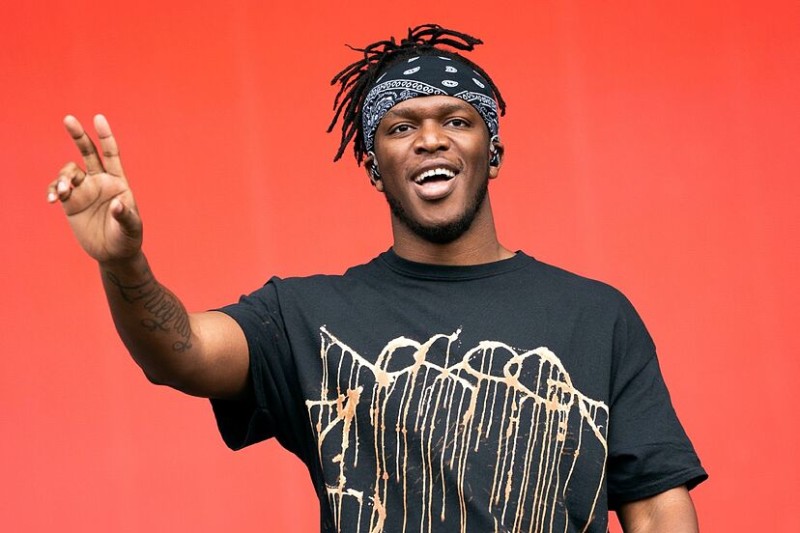
The origin story is pretty unglamorous. In 2008, a 15-year-old KSI created his first YouTube channel called "JideJunior" and started uploading FIFA gameplay videos. Nobody was watching. He tried again in 2009 with a new account, "KSIOlajideBT," the name being a mix of a Halo gaming clan motto he liked ("Knowledge, Strength, Integrity"), his real first name Olajide, and BT for British Telecom.
For years it was just a hobby. He kept uploading, kept improving, and slowly the audience grew. By 2012, he crossed one million subscribers, and the ad revenue had become real enough to make a serious decision: he dropped out of sixth form college and went all in on YouTube. That was his first real job, except there was no boss, no salary, and no safety net if things went wrong.
In 2013, he signed with Polaris, a sub-network of Maker Studios, which gave his channel a proper professional structure and better monetization. That same year, he co-founded the Sidemen with Simon Minter and five other British YouTubers, a group that would grow into one of the most recognized creator collectives in the world.
KSI Career Growth and Early Earnings
Through the early Sidemen years, KSI's income came mostly from YouTube ads and merchandise. The group launched Sidemen Clothing in 2014, which added a steady stream of revenue beyond platform earnings. At this point, estimates put his annual income somewhere in the low to mid six figures, genuinely good money for someone in their early twenties, though nowhere near what was coming.
Music was the next move, and at first it did not exactly set the world on fire. His debut single "Lamborghini" featuring P Money came out in 2015 and peaked at No. 30 on the UK Singles Chart. His first EP "Keep Up" dropped in January 2016 through Island Records. Critics were mixed. Some people in the comments were brutal. KSI kept going anyway, which would turn out to be a recurring pattern throughout his career.
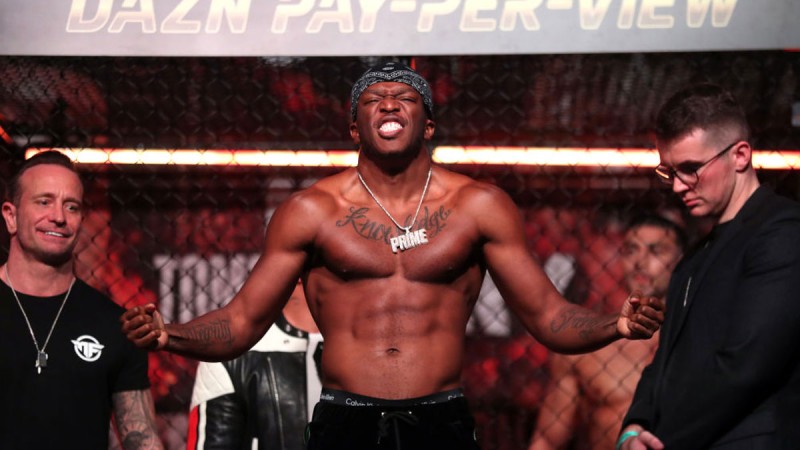
Boxing changed everything in terms of scale and public attention. After a high-profile amateur bout against fellow YouTuber Joe Weller in 2018 that racked up 21 million views in just 24 hours, KSI stepped into the ring against Logan Paul in what became one of the most-watched internet events of that decade. The first fight generated roughly $13 million in pay-per-view revenue, and KSI reportedly walked away with around $2 million. The 2019 rematch, broadcast by DAZN, guaranteed him at least $900,000 upfront, with total earnings likely crossing $3 million once all revenue sources were added up. Some reports place the full package from the rematch closer to $32 million when sponsorships and secondary income were factored in.
KSI Net Worth Peak: The PRIME Hydration Era
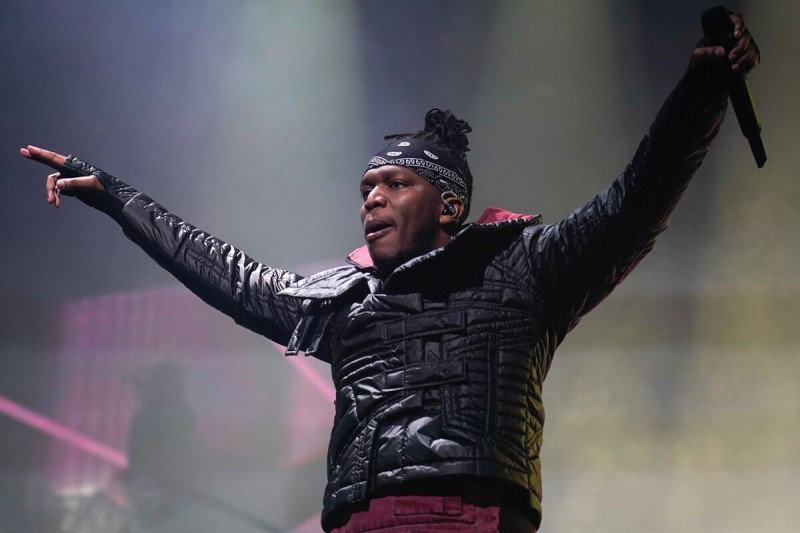
If one single moment reshaped the KSI net worth conversation, it was January 2022. That month, KSI and Logan Paul, former boxing rivals turned unlikely business partners, launched PRIME Hydration. Nobody expected what happened next.
PRIME generated $250 million in retail sales in its very first year. In 2023, that number climbed to over $565 million. By 2024, global sales had crossed $1.2 billion. KSI reportedly holds around a 20% stake in the company, which means his share alone is worth tens of millions of dollars, possibly significantly more depending on current valuation.
The financial results from this period are hard to ignore. Between September 2022 and September 2023, KSI earned an estimated $25 million in a single year, a figure that landed him at No. 2 on Forbes' Top Creators list in 2023. His music career hit its own peak around the same time. His debut album "Dissimulation" came out in 2020 and reached No. 2 on the UK Albums Chart. His follow-up "All Over the Place" in 2021 debuted at No. 1 and went platinum. Collaborations with Lil Wayne, Anne-Marie, and Craig David followed, putting him firmly in mainstream music territory rather than the "YouTube guy who makes rap songs" box.
Beyond PRIME, KSI is CEO of Misfits Boxing, earning income as both a fighter and a stakeholder in a growing sports media company. He also co-owns Lunchly, and through the Sidemen, he holds interests in XIX Vodka, the Sides restaurant chain, the Side+ subscription app, and Best Cereal.
Where KSI Stands Financially Right Now
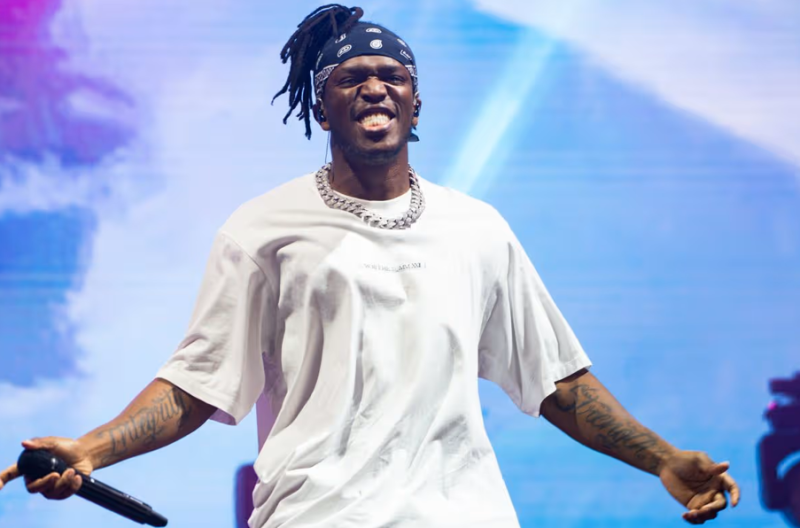
As of 2025, KSI net worth is estimated somewhere between $100 million and $150 million by most credible sources. Celebrity Net Worth puts the number at $100 million. The Watford Observer, the local paper from his hometown, estimated his wealth at 81 million pounds in 2025, which is roughly $110 million. More conservative estimates from The Times placed the figure around 50 million pounds on the lower end.
His three YouTube channels ("KSI," "JJ Olatunji," and "KSIClips") have accumulated over 44 million subscribers and 14 billion views combined. Monthly YouTube ad revenue alone is estimated between $75,000 and $76,500. Sponsored videos reportedly bring in around $250,000 per upload. Across all YouTube activity, that likely adds up to around $5 million a year, and that is just one slice of his income.
Add music royalties, boxing revenue, PRIME earnings, and his various business interests, and it becomes clear why some analysts believe KSI could be approaching $200 million before the end of the decade. The trajectory has not slowed down in any meaningful way.
KSI's Key Ideas on How to Become Successful
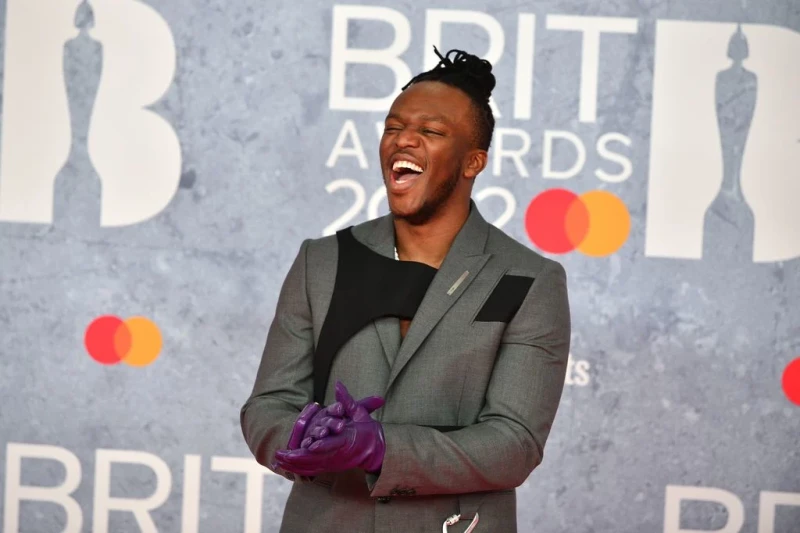
KSI has never been shy about sharing what he thinks it actually takes to build something real, and his perspective tends to be refreshingly practical rather than vague motivational advice.
The thing he comes back to most often is consistency. He did not get famous quickly. He uploaded FIFA videos for years before most people knew his name. His view is pretty simple: the people who make it are usually just the ones who did not stop when things got slow or awkward or embarrassing.
The second idea is diversification, and his own career is basically a working case study in it. YouTube led to music. Music built his profile. Boxing made him a mainstream name. Boxing introduced him to Logan Paul. Logan Paul became his PRIME co-founder. PRIME became a billion-dollar brand. Each step unlocked the next one because he was always looking for what came after the door he had just walked through.
He also talks openly about public failure. His early music got mocked. His boxing was doubted. He put things out that did not land, and he did it in front of millions of people. His take is that most people never start because they are scared of looking foolish, and that fear is what keeps them exactly where they are.
Finally, KSI is consistent about treating yourself like a business from day one. Even as a teenager posting gaming clips, he was thinking about his name, his image, and what he wanted to stand for long-term. That early mindset is what eventually led him to take equity stakes instead of just cash deals, co-found companies instead of just endorsing them, and build something that does not depend entirely on any one platform.
At 31, his story is still going. A kid from Watford with a FIFA channel and no connections built a nine-figure net worth. However you feel about his content, that part is genuinely difficult to argue with.
 Sergey Diakov