Alex Dudov

- Gordon Ramsay's Early Career: From Kitchen Porter to Rising Chef
- Building the Empire: How Gordon Ramsay Net Worth Grew Through Restaurants
- Television Stardom: When Gordon Ramsay Net Worth Really Took Off
- Gordon Ramsay's Current Financial Status
- Success Philosophy: Gordon Ramsay's Keys to Building Wealth
Gordon Ramsay didn't start out dreaming of becoming a chef. Actually, his first passion was football, and he was pretty damn good at it too. But life had other plans, and a knee injury at 19 crushed those dreams before they could really take off. What seemed like a disaster at the time turned out to be the push he needed to discover his real calling in the kitchen.
Today, Ramsay's one of the richest chefs on the planet, pulling in somewhere between $60 to $70 million every year from restaurants, TV shows, books, and a bunch of other ventures. But getting there wasn't some overnight success story. It took decades of brutal hours, failed businesses, and the kind of determination that's become his trademark.
Gordon Ramsay's Early Career: From Kitchen Porter to Rising Chef

After that football injury ended his sports career, Ramsay found himself at a crossroads. He enrolled at North Oxon Technical College to study hotel management, basically starting from scratch in his early twenties. His first real kitchen job came when he moved to London and started working under some seriously demanding chefs.
The biggest break came when he landed a spot at Harvey's in South London, working under Marco Pierre White. The guy was infamous for being even more aggressive than Ramsay would later become. Ramsay was making about £20,000 a year, which in London barely covered rent and tube fare. But the education was priceless, even if it meant getting screamed at and occasionally having pans thrown in his direction.
White's kitchen was like boot camp for chefs. Ramsay worked 16-hour days, got yelled at constantly, and learned that perfection wasn't optional in fine dining. That experience shaped everything about how he'd later run his own kitchens. Yeah, it was harsh, but it worked.
Building the Empire: How Gordon Ramsay Net Worth Grew Through Restaurants

Ramsay knew he needed to level up his skills, so he moved to France in his mid-twenties to train under legends like Guy Savoy and Joël Robuchon. Living in France and working in those prestigious kitchens taught him classical French technique and gave him the foundation he needed to compete at the highest level.
When he came back to London at 27, he became head chef at Aubergine and quickly earned the place two Michelin stars. His salary jumped to around £50,000, which felt like serious money after years of scraping by. But Ramsay had bigger ambitions than just being someone else's head chef.
In 1998, he took the leap and opened Restaurant Gordon Ramsay in Chelsea. This was his baby, his chance to prove he could run his own show. Within three years, the restaurant had three Michelin stars, which is basically the culinary equivalent of winning an Olympic gold medal. Suddenly, Ramsay wasn't just another talented chef. He was a brand.
His earnings exploded during this time. The flagship restaurant was bringing in £150,000 to £200,000 for him personally, but he didn't stop there. He started opening restaurants all over London, then New York, Dubai, Singapore, and pretty much everywhere else. By 2008, his company Gordon Ramsay Holdings was pulling in around £60 million in annual revenue, and Ramsay himself was taking home somewhere between £7 to £10 million a year just from the restaurants.
Not every restaurant worked out. Some closed, some lost money, and the 2008 financial crisis hit him hard with about £10 million in losses. But the successful ones more than made up for it, and Ramsay learned to be smarter about expansion and cost control.
Television Stardom: When Gordon Ramsay Net Worth Really Took Off

Restaurants made Ramsay respected in culinary circles, but television made him famous everywhere else. His first TV appearance was in a 1999 documentary called Boiling Point that showed him being, well, himself in the kitchen. People were shocked by how intense and foul-mouthed he was, but they couldn't stop watching.
That led to Kitchen Nightmares in the UK in 2004, where he'd go into failing restaurants and try to save them while yelling at incompetent owners. The show was a massive hit because Ramsay didn't hold back. He told people exactly what he thought, and audiences loved the drama.
Then came the American shows, and that's when things really exploded. Hell's Kitchen launched in the US in 2005, followed by the American Kitchen Nightmares in 2007, then MasterChef in 2010. These weren't just successful shows—they were huge hits that made Ramsay a household name across America.
The money from television dwarfed what he was making from restaurants. By 2012, he was earning about $225,000 per episode of MasterChef alone. When you're filming multiple shows with dozens of episodes each, that adds up fast. At his peak, Ramsay was pulling in over $60 million a year just from television.
He also started his own production company, Studio Ramsay, which produces content for streaming platforms and international markets. That's another revenue stream that keeps growing. Right now, he's still making between $40 to $60 million annually from TV projects like Hell's Kitchen, MasterChef, MasterChef Junior, and Next Level Chef.
Gordon Ramsay's Current Financial Status
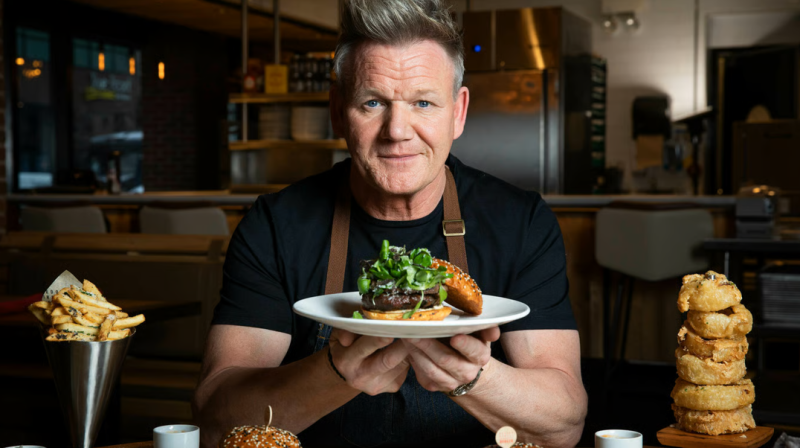
These days, Gordon Ramsay net worth sits at around $220 million, making him one of the wealthiest chefs in the world. He's only behind a couple of others like Alan Wong and sits right alongside Jamie Oliver in terms of wealth.
What's impressive is how diversified his income has become. Beyond restaurants and TV, he's published over 25 cookbooks that have sold millions of copies worldwide. He gets paid massive fees for personal appearances and speaking engagements, reportedly around $250,000 or more for a single event.
His digital presence brings in money too. His YouTube channel has millions of subscribers, and he's constantly posting content that generates ad revenue and brand partnerships. During the pandemic, he adapted quickly by launching ghost kitchens and delivery-only concepts when his sit-down restaurants had to close.
Right now, Ramsay's restaurant empire includes 58 locations spread across the globe, from London to Las Vegas to Seoul. Some are fine dining, some are casual concepts, but they all carry his name and reputation. Industry insiders estimate he's currently earning between $60 to $70 million per year when you add up everything—restaurants, TV, books, digital content, endorsements, and licensing deals.
His net worth keeps climbing because he's never stopped working or launching new projects. The guy's in his late fifties now and still puts in crazy hours like he did when he was starting out.
Success Philosophy: Gordon Ramsay's Keys to Building Wealth

Ramsay's pretty open about what made him successful, and it's not complicated advice. First and foremost, it's about work ethic. The man still works 16-hour days regularly and stays involved in every part of his businesses. He's famous for saying he worked his ass off to get where he is, and he means it literally.
Perfection is another non-negotiable for him. Whether it's a dish at his three-star Michelin restaurant or a burger at one of his casual spots, it has to be done right every single time. That consistency builds trust with customers, and trust translates directly into repeat business and revenue.
Despite being worth over $200 million, Ramsay's also incredibly tight with money when it comes to his business operations. He personally reviews financial statements and demands that his management teams justify every expense. He learned this the hard way after losing millions during the financial crisis.
Here's something interesting about Ramsay—he's publicly said his kids won't inherit his fortune directly. He doesn't even let them fly first class with him and his wife. His reasoning is that they haven't earned it yet. He wants his children to learn the value of money and build their own success rather than just coasting on his wealth.
Diversification is huge in Ramsay's playbook. He never relied on just restaurants or just TV. He built multiple income streams so that if one area struggled, the others could carry him through. That's probably the smartest financial move he made, spreading his risk across different industries.
Ramsay also believes in taking calculated risks and learning from failures. He's had restaurants close, partnerships fall apart, and lost millions on bad investments. But instead of hiding those failures, he talks about them openly and says they made him a better businessman. His advice is simple: take risks, fail fast when something's not working, learn from it quickly, and never make the same mistake twice.
The last piece of his philosophy is never getting comfortable. He's said that the minute you think you've made it is when you're screwed. That's why he's constantly launching new shows, opening new restaurants, and finding new ways to expand his brand. Complacency kills businesses, and Ramsay's determined never to let that happen to his empire.
 Alex Dudov