Alex Dudov

Most people who make it to the top of a Fortune 500 company have some version of a "big break" story. A well-timed introduction. A prestigious MBA right out of the gate. A family connection that opened the right door. Mary Barra's story has none of that. She started at 18, inspecting car parts on an assembly line to pay for college, and spent the next 34 years working through almost every corner of the same company before anyone handed her the keys. Today, as the CEO of GM, she earns roughly $27.8 million a year and holds stock worth over $37 million. The rise was quiet, steady, and completely earned.
CEO of GM: How Mary Barra Earned Her First Money

Mary Teresa Barra was born on December 24, 1961, in Royal Oak, Michigan. Her father, Ray Makela, spent 39 years as a die-maker at General Motors, so cars were never just a product in their household. They were the family's livelihood. Growing up in suburban Detroit, Mary had a natural pull toward engineering, and when it came time to figure out how to pay for college, the answer felt obvious.
In 1980, at 18 years old, she started as a co-op student at GM's Pontiac Motor Division through the General Motors Institute, later renamed Kettering University. Her first job was about as entry-level as it gets: checking fender panels and inspecting hoods on the assembly line. The pay was nothing special, but she wasn't there for the paycheck. Every dollar went toward her tuition. She was funding her own electrical engineering degree, one shift at a time, without any financial cushion from home.
It wasn't glamorous work. But she treated it like it mattered, because to her, it did. That same attitude, showing up fully and taking unglamorous work seriously, would follow her for the next four decades.
GM Career Path: 34 Years of Climbing Through Every Level
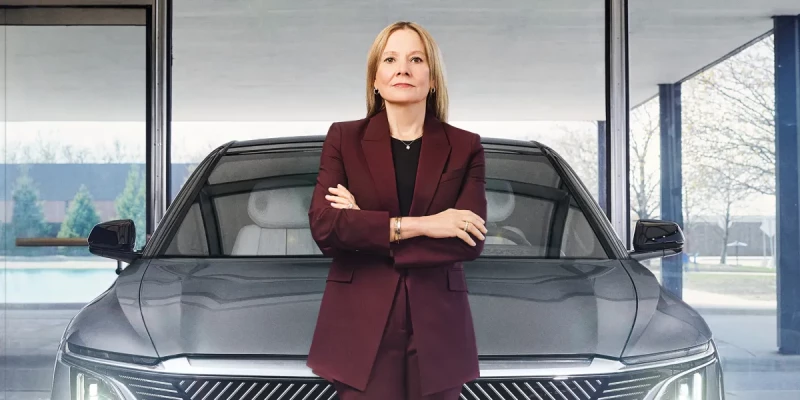
Barra graduated in 1985 with a Bachelor of Science in Electrical Engineering and didn't leave. She stayed at GM and kept moving, not in a straight line, but through the kind of varied roles that most ambitious people skip over in favor of a faster track. She managed the Detroit/Hamtramck Assembly plant. She ran internal communications. She worked on manufacturing quality and product engineering. At each step, she learned something most executives never bother to understand firsthand.
In 1988, GM decided to invest in her future. The company awarded her a fellowship to attend Stanford Graduate School of Business, where she earned her MBA in 1990. That degree, fully paid for by GM, signaled that the company saw serious leadership potential. She came back and kept climbing.
By 2008, she was named Vice President of Global Manufacturing Engineering. In 2009, she made a move that surprised some people, stepping into Vice President of Global Human Resources. It looked like a lateral shift, but it turned out to be one of the smartest things she ever did. Understanding how the company's people systems worked gave her a perspective that pure engineering or finance executives rarely develop. In 2011, she returned to the product side as Executive Vice President of Global Product Development, overseeing design, engineering, and quality across GM's entire vehicle lineup. Sales rose 13% under her oversight, and she became the highest-ranking woman in the automotive industry.
When the CEO of GM Reached the Top: January 2014
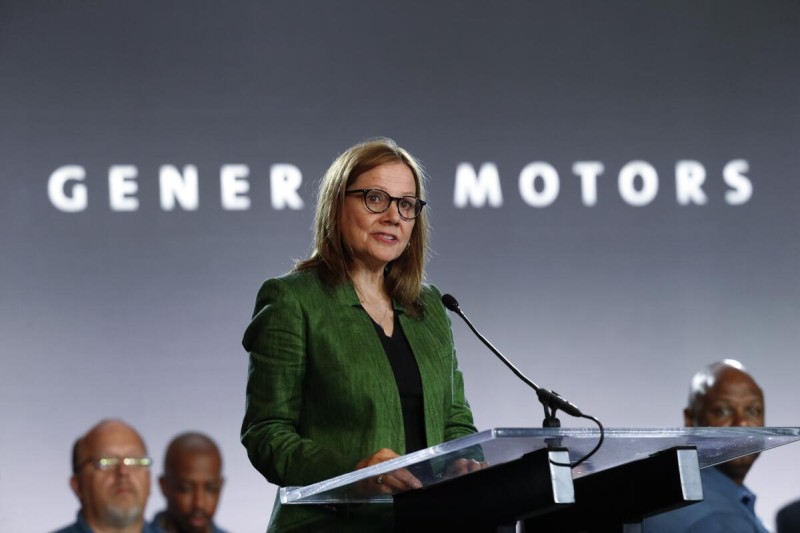
On December 10, 2013, General Motors announced that Mary Barra would succeed Daniel Akerson as CEO. She officially stepped into the role on January 15, 2014, becoming the first female CEO of a Big Three automaker and one of only 23 women leading a Fortune 500 company at the time. Two years later, she was elected Chairman of the Board as well, making her the most powerful figure at the company by any measure.
The start of her tenure was anything but smooth. Within months of taking over, GM was in the middle of a massive ignition switch recall linked to more than 120 deaths. Barra was called before Congress to testify. She didn't hide behind lawyers or corporate talking points. She acknowledged what went wrong, took responsibility on behalf of the company, and committed to systemic changes. New reporting structures. A new accountability culture. The way she handled it became a case study in crisis leadership, not because it was perfect, but because it was real.
By 2017, she was the highest-paid executive among Detroit's Big Three, with total compensation of $21.96 million. The numbers kept growing from there. In 2020, her package reached $23.7 million, including a $2 million base salary and $13.1 million in stock awards. In 2021, total compensation hit $29.1 million. In 2022, it was $28.98 million. By 2023, she took home $27.85 million. Add it all up and her first ten years as CEO brought in over $200 million in total pay.
Mary Barra's Net Worth in 2026: What the CEO of GM Is Worth Today
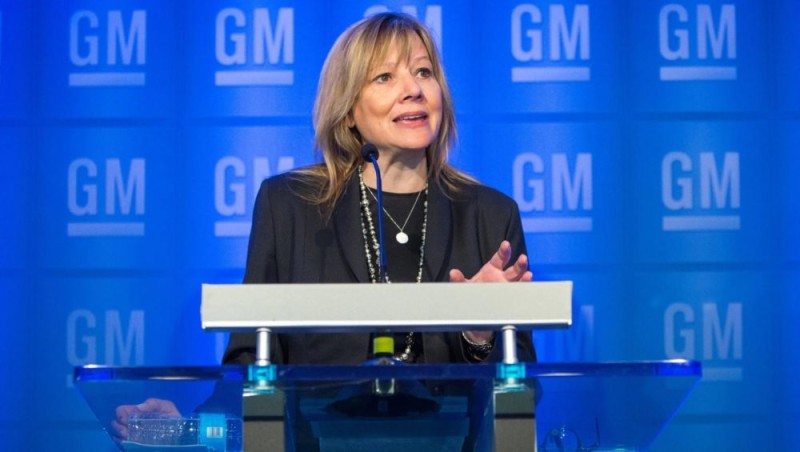
Estimates of Mary Barra's net worth range depending on the source and methodology. Conservative figures put it around $43 million, while broader calculations that include her full GM stock holdings, equity grants, and accumulated career earnings push the number to $232 million. She owns more than 1.1 million shares of General Motors stock, valued at over $37 million at recent prices. Her base salary sits at $2.1 million a year, but total annual compensation consistently lands in the $20 million to $30 million range once bonuses, stock options, and long-term incentives are added in.
In May 2025, Fortune named her the most powerful woman in business for the fifth time during her tenure as CEO. Forbes ranked her seventh on its list of most powerful women in the world in 2025. She was inducted into the Automotive Hall of Fame in 2023. Her tenure at GM now spans over 11 years, making it the second longest CEO run in the company's history, behind only Alfred P. Sloan.
- Base salary: $2.1 million annually
- Total 2023 compensation: $27.85 million
- GM stock ownership: 1.1 million+ shares, valued at $37M+
- First decade as CEO total earnings: more than $200 million
- Net worth range (2025-2026): $43 million to $232 million
How to Build a Career Like Mary Barra: Her Core Ideas on Success

Barra has spoken about leadership and career development consistently for years, and her advice doesn't sound like something written by a PR team. It sounds like someone who actually did the work and paid attention to what helped and what didn't.
Her most repeated point is that people, especially women, tend to write themselves out of opportunities before they even apply. They look at a job, decide they're not ready, and move on. Barra thinks that's a mistake. She also believes that the sideways moves, the roles that seem off-track, are often the ones that build the deepest understanding of how an organization actually runs. Her own jump into human resources at a senior level was proof of that.
On innovation, she's direct: it only counts if the customer feels it. GM's $35 billion commitment to electric vehicles and the plan to phase out combustion engines by 2035 came from that thinking. She also talks about accountability not as a punishing concept but as the thing that allows a company to actually improve. The ignition switch crisis taught her, and GM, that hiding problems costs far more than admitting them.
- Don't rule yourself out of opportunities before you try
- Sideways career moves often build the strongest long-term foundations
- Innovation only matters if it delivers real value to the customer
- Leaders have to translate ideas into actual actions, not just talk
- Transparency and accountability aren't soft values, they're operational necessities
- Staying loyal to one company, and learning it deeply, can be as powerful as any outside path
Mary Barra spent 34 years at the same company before becoming its CEO. She didn't leapfrog anyone, didn't take shortcuts, and didn't leave when things got difficult. Whether her net worth is closer to $43 million or $232 million, the more interesting number is 1980, the year it all started, on an assembly line in Pontiac, Michigan.
 Alex Dudov