Eseandre Mordi
⬤ Nvidia (NVDA) is back in the regulatory spotlight after reports emerged that U.S. agencies have opened a 30-day window to evaluate whether the company can export its H200 AI chips to China. The State Department, Energy Department, and Defense Department are now formally weighing in on the proposed sale before any final call by the Trump administration. This review adds another layer of policy uncertainty to Nvidia's trajectory just as demand for AI hardware continues driving market momentum.
⬤ The H200 represents one of Nvidia's most advanced data-center chips, built specifically for heavy-duty AI training and inference work. If approved, the export would signal a meaningful shift after previous restrictions blocked cutting-edge AI chips from reaching China. But this wouldn't be a simple rollback—multiple agencies still need to sign off after assessing national security, energy infrastructure, and defense concerns.
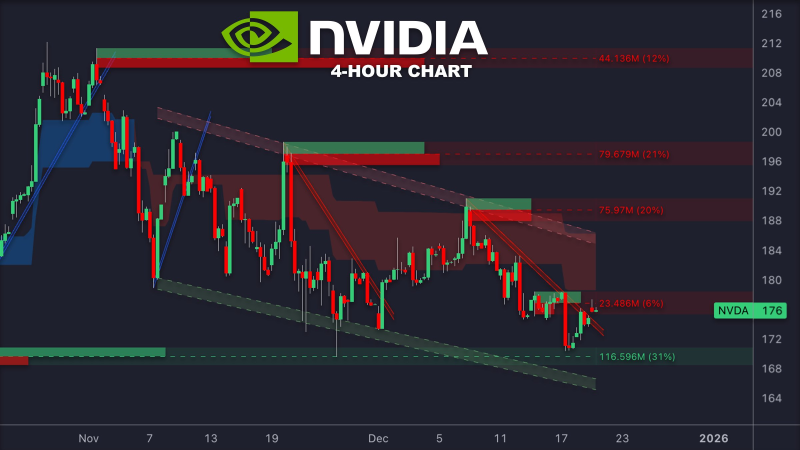
⬤ Nvidia's recent price action reflects how sensitive the stock has become to headline risk tied to regulation and trade policy. The four-hour chart shows consolidation around the mid-$170s following a broader pullback, with overhead liquidity zones highlighting areas where traders are watching for resistance. While technical levels matter, policy decisions like this one can override chart patterns in a hurry.
⬤ For the broader market, this matters because Nvidia sits at the core of global AI spending. Any decision on chip exports to China doesn't just affect Nvidia—it ripples through competitive dynamics, supply chains, and capital flows across the entire semiconductor sector. The chance that China could re-enter as a major demand source introduces both opportunity and risk, reminding investors that geopolitical decisions remain a key driver for leading AI stocks like Nvidia.
 Eseandre Mordi