Saad Ullah

⬤ Microsoft stock plunged roughly 12 percent in a dramatic selloff as investors reacted to management's warning about decelerating Azure cloud growth and ballooning AI-related capital expenditures. The sharp decline came even though the company's quarterly revenue and earnings topped Wall Street forecasts, signaling that beating estimates alone wasn't enough to calm concerns about rising costs and slowing momentum.
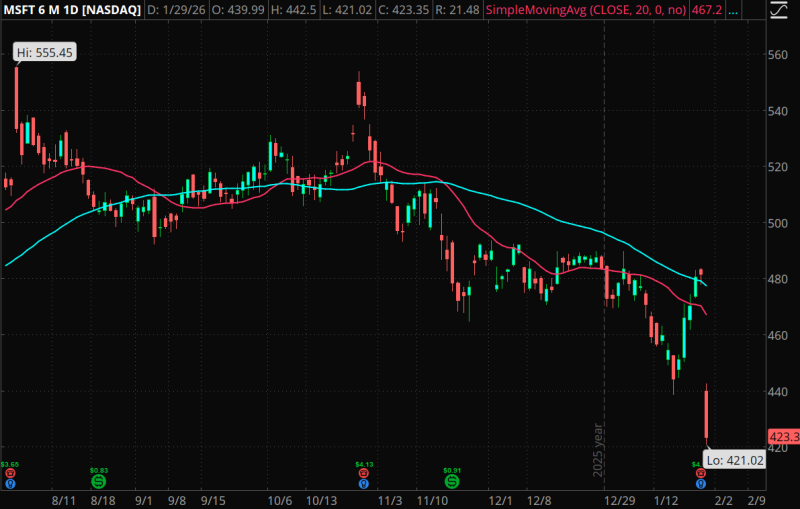
⬤ The price chart captured the severity of the move, with MSFT breaking through key technical levels and sliding toward the 420 zone after trading above 550 earlier in the cycle. Heavy trading volume confirmed this wasn't just short-term noise—investors were repositioning en masse. Azure's growth rate, which has been the backbone of Microsoft's premium valuation, came in softer than previous quarters, raising questions about whether the cloud business can maintain its expansion at this scale.
⬤ Executives made it clear that AI infrastructure spending is headed higher as Microsoft doubles down on data centers and computing capacity to capture long-term AI demand. "While these investments are positioned as strategic, the lack of clear visibility on when AI spending will translate into sustained profit growth appeared to weigh on sentiment," reflecting growing investor impatience with the uncertain timeline for AI monetization. The market is becoming more disciplined, demanding evidence that massive AI investments will actually flow through to margins.
⬤ The selloff matters beyond Microsoft because the company serves as a barometer for the entire large-cap tech sector and cloud computing trends. The harsh repricing shows that the rules have changed—exceeding earnings isn't enough if growth is decelerating and capital intensity is climbing. How MSFT trades from here could shape sentiment across technology stocks as investors recalibrate their assumptions about valuations, spending priorities, and when AI will start delivering real profits.
 Saad Ullah