Artem Voloskovets
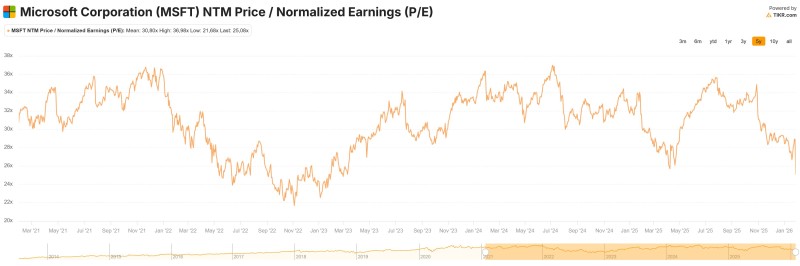
⬤ Microsoft's shares are currently valued at around 25 times their next twelve months normalized earnings. Recent data shows this represents a considerable drop from the higher valuation levels the company enjoyed in previous periods. This 25x multiple marks a return to levels Microsoft hasn't seen in quite some time.
⬤ Looking at the historical picture, Microsoft's forward P/E has swung through a pretty wide range over the years. At its peaks, the multiple climbed into the mid-to-high 30s, while during tougher periods it dipped closer to the low 20s. Right now, sitting near 25x, Microsoft is well below those recent highs and sitting closer to the lower end of its multi-year valuation range. This isn't just about short-term price swings—the trend shows a clear shift in how the market is pricing the stock heading into early 2026.
⬤ What's adding to the story is Microsoft's capital expenditure outlook. There's growing attention on the sharp increase in CapEx the company is planning for this year. While the valuation compression is one thing, pairing it with significantly higher spending on infrastructure and long-term projects changes the narrative. Higher CapEx can put pressure on near-term profitability and cash flow, which helps explain why investors are reassessing what they're willing to pay for the stock.
⬤ This matters beyond just Microsoft itself. As one of the heaviest weights in major stock indexes and a bellwether for the tech sector, shifts in Microsoft's valuation can ripple across the entire market. When you combine a lower earnings multiple with elevated investment spending, it creates questions about risk, growth expectations, and where big tech fits in portfolios going forward. How the market digests this balance between compressed valuations and aggressive spending will likely influence sentiment across other large-cap technology names as well.
 Artem Voloskovets