Saad Ullah
⬤ Despite a 31% jump in nominal wages since 2020, American workers have seen their real purchasing power grow by just 3.7%, according to Bureau of Labor Statistics data shared by market analysts. Inflation has quietly eaten through most of those paycheck gains, leaving the average worker only marginally better off than before the pandemic.
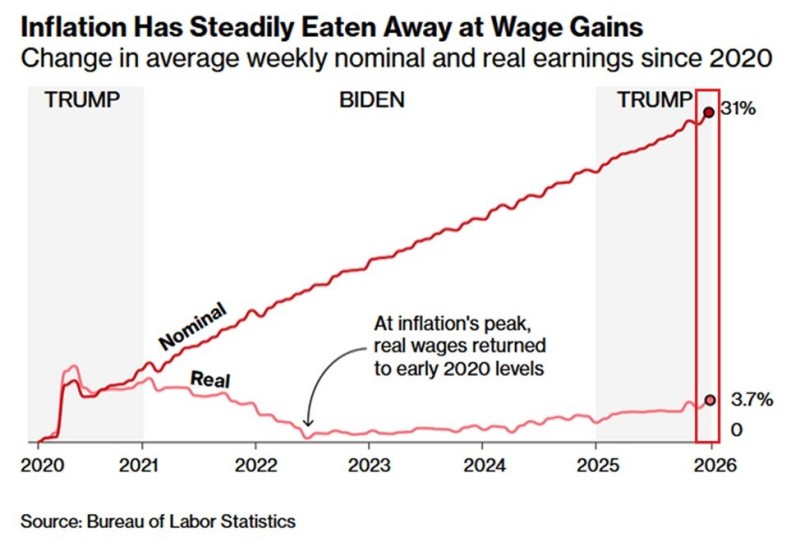
⬤ The numbers tell a sobering story. Nominal wages climbed steadily through 2020-2026, but real wages, stripped of inflation, essentially flatlined. At the peak of the inflation surge, real earnings briefly fell back to early 2020 levels before clawing back to a cumulative 3.7% gain by early 2026. That gap between what workers see on their pay stubs and what they can actually buy has become one of the defining tensions of the post-pandemic economy.
Nominal wages are up 31% since 2020. Real wages? Just 3.7%. Inflation took the rest.
⬤ The cost-of-living breakdown makes that squeeze concrete. Utility gas prices have surged 56% since 2020, electricity is up 41%, and motor vehicle insurance has climbed another 56%. Used car and truck prices jumped 30%, while home insurance costs rose around 14%. These are not luxury expenses - they are the everyday bills that households cannot avoid, and they have risen far faster than real take-home pay.
⬤ The result is a purchasing power gap that affects millions of Americans well beyond what headline wage figures suggest. With essentials outpacing real earnings, affordability remains a defining challenge of the current US economic landscape, shaping everything from consumer confidence to political debate around inflation and labor markets.
 Saad Ullah