Usman Salis

A sharp shift in expectations is unfolding across markets. Polymarket now shows an 88% probability that inflation will rise above 3.5% in 2026, while the odds of inflation topping 4% stand at 52%. As Crypto Rover warned, the bigger issue is not current inflation itself - but the direction of market expectations, and what that could mean for rates, liquidity, and risk appetite.
Inflation Expectations Are Moving Higher, Not Lower
The chart shows a steady repricing in inflation expectations. The light-blue line for inflation above 3.5% remains elevated near 88%, while the darker line for inflation above 4% has climbed to 52% after sitting much lower not long ago.
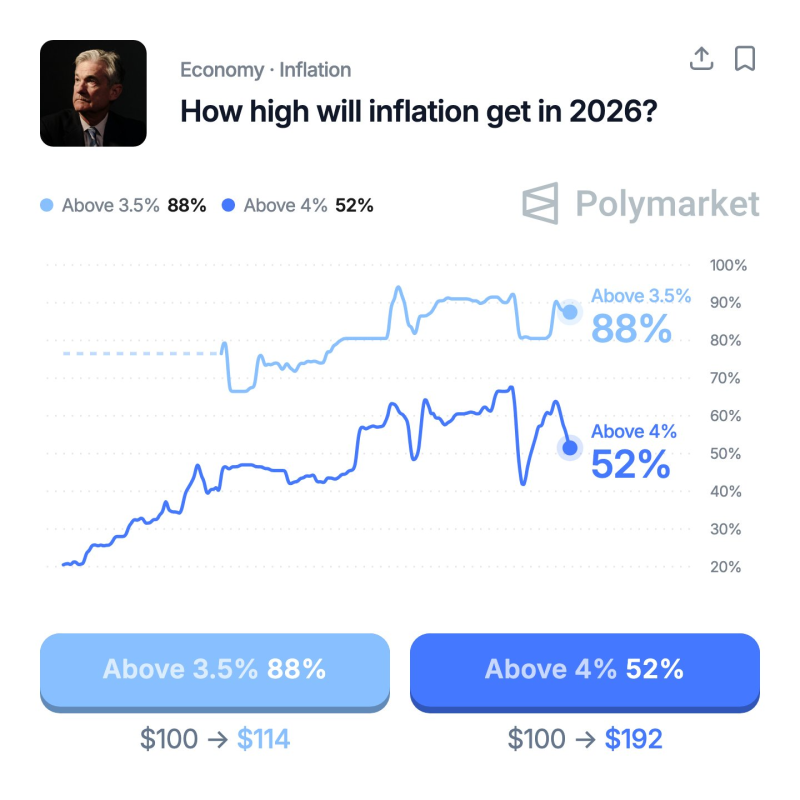
That second threshold is the one drawing the most attention. A move from roughly 20% to above 50% marks a clear change in market positioning. Even with short-term swings, the structure of the chart points to a higher baseline for inflation expectations rather than a temporary spike.
Where Policy Flexibility Starts to Shrink
The core message is that higher inflation expectations can limit how much room central banks have to ease policy. If inflation runs hotter than expected, rate cuts may be delayed and financial conditions could remain tighter for longer.
Markets tend to respond not only to inflation prints, but also to the policy path implied by those expectations. Fed Holds Rates at 3.5%-3.75% for 2nd Straight Meeting as Inflation Forecast Jumps to 2.7% reflects similar concerns about persistent inflation and delayed easing - showing how quickly the Fed's own forecasts have been shifting in the same direction Polymarket odds are now pricing.
Liquidity Becomes the Key Inflation Variable
The main argument centers on liquidity. When rates stay high and capital is more expensive, speculative assets tend to face greater pressure. The sequence described in the source is straightforward:
- Rates stay higher for longer
- Financial conditions remain tight
- Investors become more cautious
- Capital rotates toward safer assets
Fed Bumps Inflation Forecast to 3.0% - Crypto's Safe-Haven Role in Focus shows how higher inflation expectations are already reshaping risk positioning across asset classes - reinforcing that the Polymarket repricing is not isolated to prediction markets but is echoing through broader financial conditions.
The Market Is Pricing Inflation Risk Before the Data Arrives
What makes this setup notable is that the chart is forward-looking. It does not measure where inflation is today - it reflects where traders think it may go in 2026. With 88% odds for inflation above 3.5% and 52% for inflation above 4%, the market is no longer leaning toward a benign inflation path.
That shift in expectations alone can influence how risk is priced across the broader financial system - and in markets that move on anticipation rather than confirmation, the repricing visible on Polymarket may prove to be an early signal of what comes next in rates, liquidity, and asset allocation.
 Usman Salis