Peter Smith
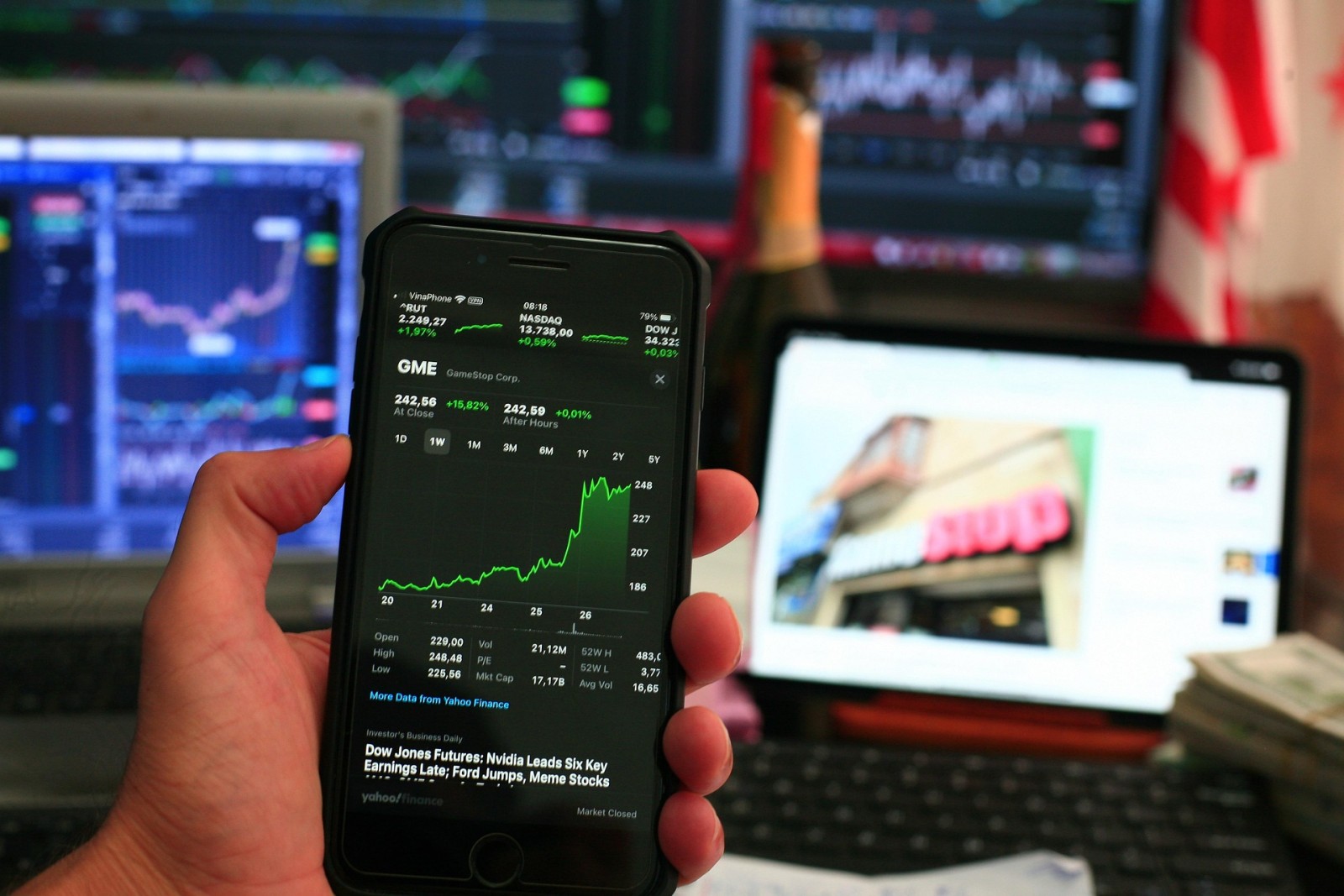
At their core, markets are environments where millions of independent decisions collide. Each participant acts on personal expectations, risk tolerance, and timing. When these actions combine, the result is a system that behaves less like a machine and more like a complex game of probabilities.
Probability, Risk, and Structured Uncertainty
One reason markets resemble chance-based systems is that outcomes are never fully known in advance. Even the best analysis deals in likelihoods rather than certainties. Investors assess probabilities, hedge against downside risk, and accept that losses are part of participation.
This structure is similar to environments where outcomes are governed by transparent rules but uncertain results. Bitcoin expert Steve Day has drawn parallels between financial markets and bitcoin casino platforms when discussing how people interact with risk. Bitcoin and crypto casinos are online gambling platforms that allow users to deposit, place wagers, and withdraw using cryptocurrencies such as Bitcoin, Ethereum, and Litecoin. Instead of traditional banking systems, these platforms rely on blockchain transactions, which are valued for their speed, security, and privacy.
The comparison is not about equating investing with gambling, but about recognizing shared mechanics. Both systems operate within fixed rules, use probability to shape outcomes, and depend on trust in the underlying structure. Participants understand that no single action guarantees success, yet repeated engagement over time follows recognizable patterns.
Markets mirror chance-based systems largely because people react emotionally to uncertainty. Fear, excitement, and overconfidence influence decisions just as much as data does.
When prices rise quickly, optimism spreads. When they fall, panic can cascade. These reactions create feedback loops that amplify movement beyond what fundamentals alone would justify.
Chance-based systems also rely on feedback. A near win feels meaningful. A streak feels significant, even when outcomes are statistically independent.
In markets, recent performance often shapes expectations more than long-term averages. Traders chase momentum, avoid recent losers, or overreact to short-term news.
Technology intensifies this effect. Real-time charts, alerts, and social commentary accelerate collective reactions. As more participants respond to the same signals, behavior synchronizes, making market movements appear random on the surface while still following probabilistic patterns underneath.
Order Within Apparent Randomness
Despite their unpredictability, markets are not chaotic free-for-alls. Over time, patterns emerge. Volatility clusters. Risk premiums exist. Certain behaviors repeat across cycles. This is where probability theory bridges the gap between chance and structure.
Participants who understand this tend to focus less on predicting single outcomes and more on managing exposure. They diversify, size positions carefully, and accept uncertainty as a constant. In doing so, they treat markets not as puzzles to be solved, but as systems to be navigated.
That mindset mirrors how people succeed in any probability-driven environment. The goal is not to eliminate uncertainty, but to work with it intelligently. Markets may look like games of chance, but beneath that surface lies a complex system shaped by human choices, mathematical probabilities, and the ongoing tension between risk and reward.
 Peter Smith