Alex Dudov

Oil markets are showing signs of life after one of the sharpest declines in recent memory. Following a near-vertical drop from above $110 into the low-$90s, WTI crude is now consolidating - and according to analyst Nehal, this setup is defined by risk and volatility rather than a clean trend.
The WTI Collapse That Reset Market Structure
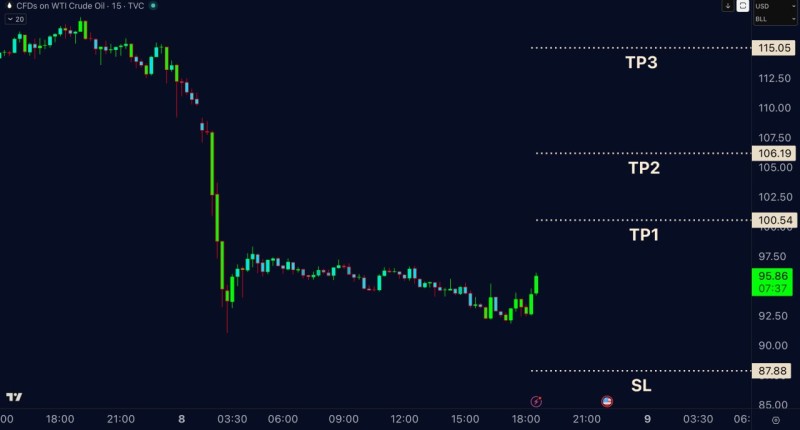
The chart tells a clear story: a steep sell-off wiped out weeks of upside in a matter of sessions, driving price from above $110 down toward the low-$90s in what looked like a near-vertical breakdown.
That kind of move doesn't happen in a vacuum - selling pressure overwhelmed buyers and forced rapid repricing across the board.
This is a high-risk long, driven entirely by volatility - not by trend confirmation or clean structure.
What followed wasn't an immediate reversal. Price moved sideways, forming a tight consolidation range that signals the market is pausing rather than recovering with conviction. That distinction matters. A pause after a shock move can break in either direction - and right now, nothing has been confirmed.
Similar dynamics have played out before. WTI crude oil crashed 12% after a strategic reserve shock, showing just how fast sentiment can flip in this asset class when macro narratives shift.
WTI Oil Price Holds $95 With Eyes on $100 Recovery
Price is currently holding near $95-$96, with smaller candles reflecting reduced momentum compared to the initial sell-off. That's balance, not strength - and traders should read it accordingly.
The setup lays out a clear target structure:
- $100.5 (TP1) - first upside objective and the key psychological level to reclaim
- $106.2 (TP2) - a higher recovery zone that would confirm meaningful demand
- $115 (TP3) - aligning with the pre-drop area and full structural recovery
- $87.9 (Stop-Loss) - the hard downside boundary defining acceptable risk
Price is holding above recent lows, but it hasn't reclaimed anything meaningful yet - that's the honest read here.
The range is structured but fragile. WTI is reacting within defined levels rather than building a directional trend, which makes this a reactive environment rather than a trending one.
WTI oil dropped 13% in 40 minutes after the IEA released 400 million barrels - a reminder that supply-side shocks can overwhelm technical structure almost instantly.
WTI Crude Oil Trade Built on Volatility, Not Confirmation
There is no confirmed reversal here. No higher high, no reclaim of resistance, no pattern that would satisfy a trend-following framework. What exists is compression after a shock move - and compression tends to resolve with expansion.
The market is compressing after a major shock. That alone creates the opportunity, but it also creates the risk.
Geopolitical developments and supply expectations can shift WTI's direction rapidly, as seen when WTI crude oil spiked to $110-$120 as the Strait of Hormuz closed. That kind of volatility doesn't disappear - it reloads.
At this stage, WTI remains in a reactive phase. The setup is real, the levels are defined, and the risk parameters are clear. But this is a volatility trade - not a conviction trade - and anyone entering needs to respect that distinction.
 Alex Dudov