Eseandre Mordi

⬤ U.S. diesel prices have surged sharply in recent weeks as global energy markets absorb disruptions in medium crude exports from the Gulf. Escalating tensions between the United States and Iran have interrupted flows from one of the most critical regions for medium-density crude. The result: retail diesel prices climbing past $5.07 per gallon as of March 16 - a figure that would have seemed extreme just months ago.
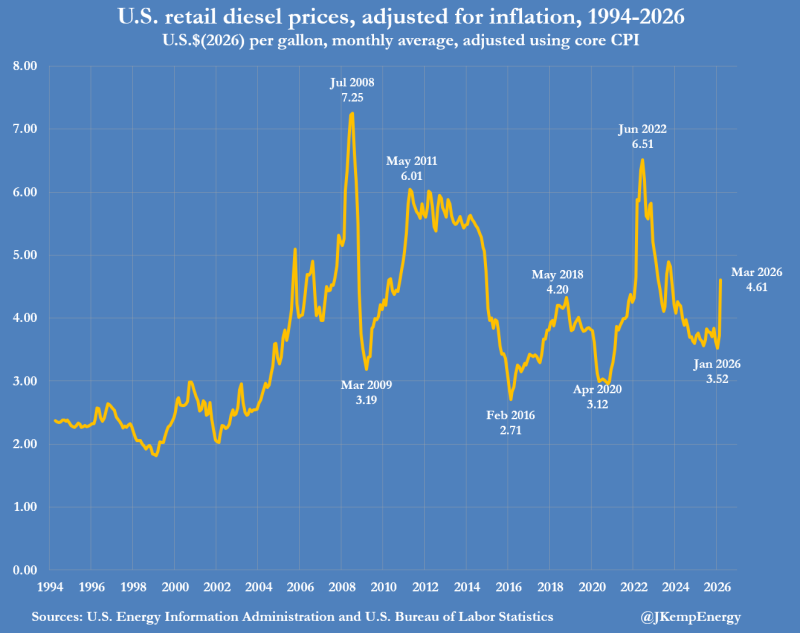
⬤ The move came fast. Prices stood at $3.80 per gallon on February 23, before the conflict intensified, and below $3.50 through most of January. Medium-density crude grades are harder to replace than lighter varieties - they are the primary feedstock for diesel refining, making any supply shock hit distillate markets harder than headline crude benchmarks.
⬤ Year-over-year, diesel is now up nearly 40%. Inflation-adjusted, current levels rank among the highest for this time of year since the 2022 energy crisis that followed Russia's invasion of Ukraine. That episode demonstrated how quickly geopolitical shocks translate into fuel price pain - and the current Gulf disruption is following the same pattern.
⬤ What makes this surge notable is its structural dimension. The spike is not just a crude story - it reflects tightness in refinery capacity and the limited availability of suitable crude grades. As documented across oil supply disruptions and price spikes analysis, supply-driven diesel shocks historically ripple into transportation and industrial costs, reinforcing diesel's role as a leading indicator of broader economic stress.
 Eseandre Mordi