Marina Lyubimova

⬤ U.S. natural gas production losses from winter freeze-offs are starting to ease up after a brutal cold snap hit earlier this month. The freeze-offs have been tracking temperature patterns pretty closely, with output bouncing back fast whenever things warm up. Right now, Lower 48 freeze-offs are sitting at about 5.1 billion cubic feet per day—way better than what we saw during the worst of the cold.
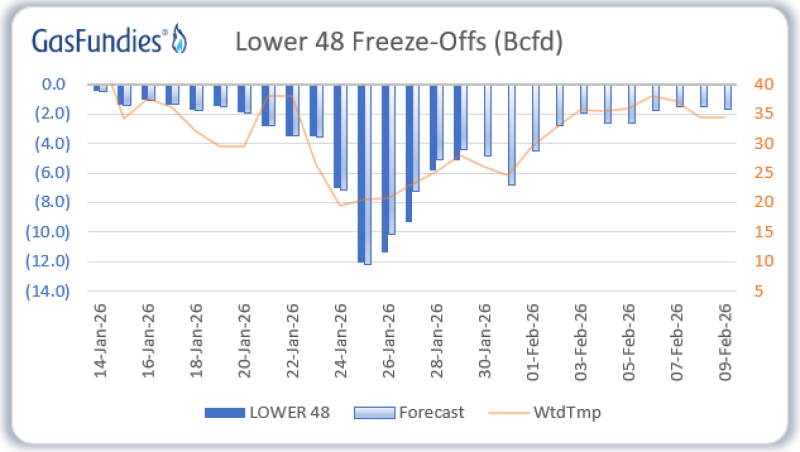
⬤ When temperatures tanked across major producing regions, daily production losses shot up before reversing course as the weather stabilized. Production came back online quickly once conditions warmed, showing how these supply hits are really just short-term and weather-dependent. All told, the cold event knocked out roughly 70 billion cubic feet of cumulative production, which gives you a sense of how much supply got pulled from the market during the peak freeze.
⬤ The recovery looks solid for now, but weather risks aren't off the table yet. Forecasts are calling for another cold blast toward the end of the week, which could push freeze-offs higher again—though it's hard to say by how much. What we've seen so far is that production snaps back efficiently when temps improve, keeping extended supply losses in check even after sharp drops.
⬤ These weather-driven swings matter because they can shake up short-term market balance and spark price volatility during winter. Even temporary disruptions create ripples in storage levels and regional supply dynamics. With more cold weather coming, the connection between temperatures and Lower 48 output will keep driving what happens in the natural gas market over the next few days.
 Marina Lyubimova