Saad Ullah

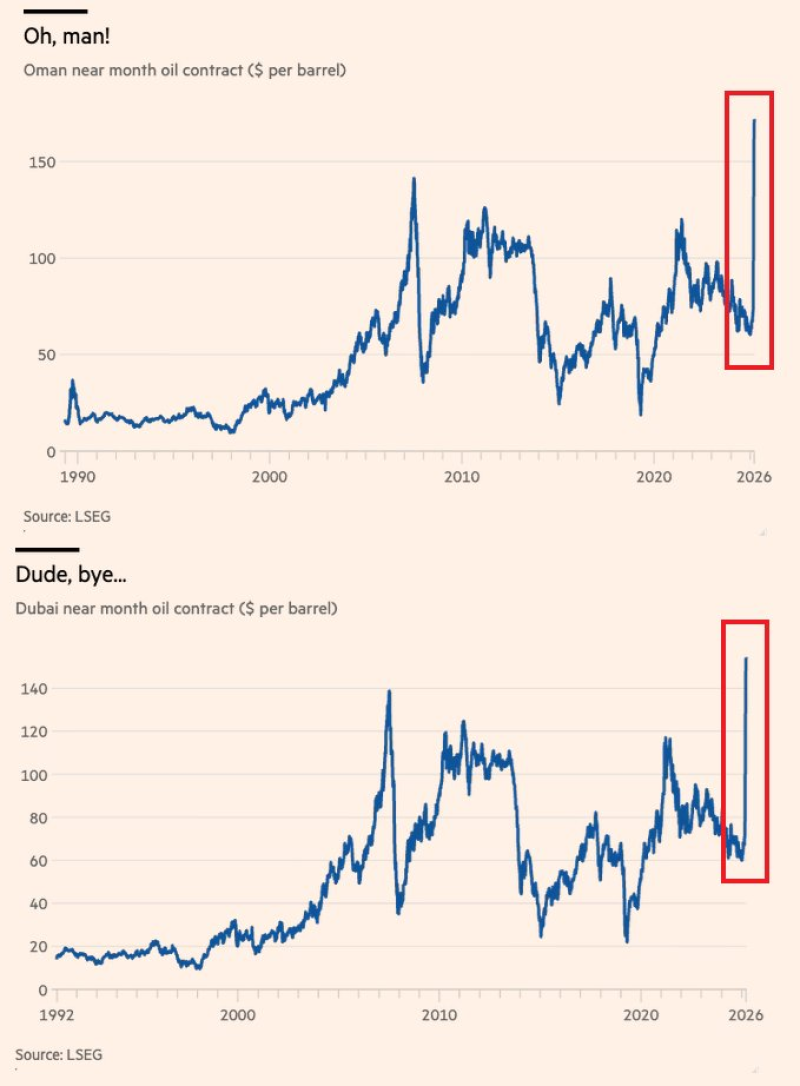
Middle Eastern oil markets are flashing a major warning signal. Oman crude has surged to around $173 per barrel, while Dubai crude crossed $150 — both hitting the highest levels on record. The spike reflects a supply shock tied directly to mounting pressure around the Strait of Hormuz, the world's most critical oil chokepoint.
20% of Global Supply at Risk as Hormuz Pressure Mounts
The Strait of Hormuz carries roughly 20% of global oil supply, and any disruption along this corridor creates immediate price pressure in physically delivered crude markets. Asian oil benchmarks surging above $150 during Hormuz disruptions have already demonstrated how quickly regional shortages translate into price spikes. The current move in Oman crude follows the same logic, only more extreme.
Brent at $115, WTI at $95 — Why Global Benchmarks Are Lagging
Despite record highs in Middle Eastern crude, global benchmarks remain far below the panic seen in physical markets. Brent is trading near $115 and WTI around $95 — a gap that reveals a structural split in how oil is being priced. WTI and Brent diverging from Middle East-linked oil prices has become a defining feature of the current crisis, with the spread between Oman and WTI widening to historically unusual levels.
That divergence matters because it signals the global market has not yet fully absorbed the supply reality in the Gulf. Physical crude buyers in Asia are paying a steep premium that paper markets are still ignoring. Strait of Hormuz disruptions driving global oil market focus are escalating investor attention toward supply risks that could soon force a broader repricing.
If the current disruption drags on, the disconnect between regional realities and globally quoted benchmarks will become increasingly difficult to sustain. Inventories are tightening, trade routes are under pressure, and the physical market is already pricing in a scenario that Brent and WTI have yet to reflect.
 Saad Ullah