Sergey Diakov

When people think about powerful politicians and their bank accounts, they usually imagine some crazy fortune built on shady deals and corporate kickbacks. But Chuck Schumer's financial story is actually kind of refreshingly boring. The guy's been in politics since he was basically a kid, and his net worth today is pretty much exactly what you'd expect from someone who's been collecting government paychecks for almost 50 years and didn't blow it all on stupid stuff.
Schumer didn't come from money, didn't marry into money, and didn't cash out to make millions in the private sector like a lot of his colleagues do. He's just been grinding away in public service since the 1970s, slowly building up his savings the way most normal people do—except his salary's been better than average for the past few decades. It's actually a pretty interesting look at how someone can build solid wealth through consistency and patience rather than taking big risks or working the system.
Chuck Schumer's Early Career and First Paychecks

Chuck grew up in Midwood, Brooklyn, in a typical middle-class Jewish household where money wasn't exactly flowing freely. His dad ran a small exterminating business, and young Chuck pitched in during his teenage years, earning his first real money helping out with the family pest control operation. It wasn't glamorous work, but it taught him what it meant to hustle for every dollar.
After crushing it at Harvard for both undergrad and law school in the early 70s, Schumer tried his hand at being a lawyer for a hot minute. He pulled in about $25,000 a year at a small New York firm, which wasn't bad money back then, but the courtroom life just wasn't for him. At 23, he took a massive pay cut to jump into politics, winning a seat in the New York State Assembly in 1974 where he made around $23,500 annually. Most people thought he was crazy leaving a legal career for that kind of money, but Chuck had bigger plans.
Rising Through the Political Ranks: Congressional Years

Things really started picking up when Schumer won his seat in the U.S. House of Representatives in 1980. Suddenly he was making around $60,000 a year representing parts of Brooklyn and Queens, and that number kept climbing with regular cost-of-living bumps over his 18 years there. During this stretch, Chuck became famous for being everywhere—seriously, there's an old joke that the most dangerous place in D.C. is between Chuck Schumer and a TV camera.
Throughout the 80s and 90s, his congressional salary kept inching up with pay raises, hitting roughly $133,600 by the late 90s. He wasn't exactly living large, but he was building up some decent retirement savings and making smart, boring investments—nothing flashy. The guy was way more interested in collecting political favors than collecting Ferraris, which honestly worked out pretty well for him in the long run.
Peak Success: Senate Leadership and Chuck Schumer Net Worth Today

Schumer hit the big leagues when he knocked off three-term incumbent Al D'Amato in 1998 to grab a Senate seat. His paycheck jumped to $141,300 right off the bat, and over the years it's climbed to the standard senator salary of $174,000. When he became Senate Minority Leader in 2017 and then Majority Leader in 2021, he got bumped up to $193,400—that's what leadership positions pay.
So what's chuck schumer net worth looking like these days? Most estimates put it somewhere between $900,000 and $2.1 million, with the smart money saying it's probably around $1.5 million. That's not exactly private jet money, but it's nothing to sneeze at either. Most of that comes from four decades of congressional paychecks, his federal pension that's been building up, and some real estate. He and his wife Iris Weinshall—who runs operations at the New York Public Library—own a house in Brooklyn worth somewhere between $750,000 and a million bucks.
Current Earnings and Financial Status
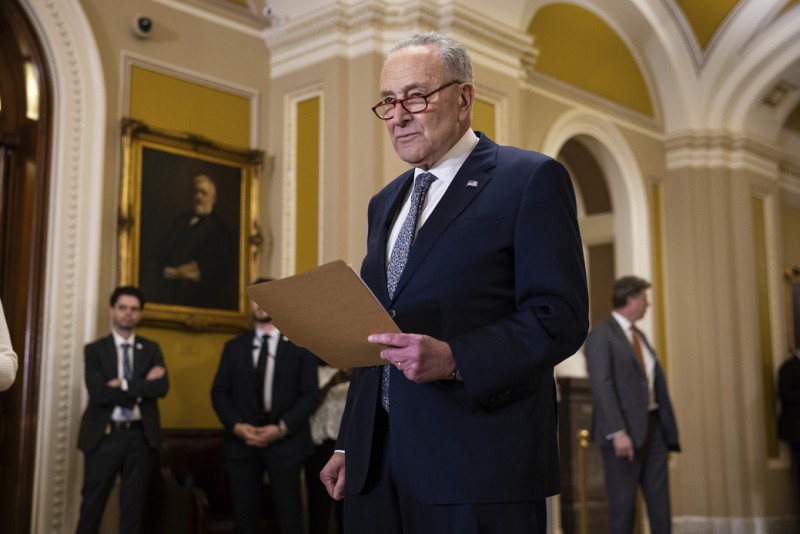
Right now, Schumer's pulling in that $193,400 leadership salary every year, plus all the government benefits and a pension that's gonna be pretty sweet when he finally decides to retire. His wife brings in some serious money too—she makes around $200,000 to $250,000 running things at the library. Combined, they're doing pretty well for themselves, definitely upper-middle-class, though they're nowhere near the richest folks in the Senate.
When you add everything up—salary, benefits, pension contributions, occasional speaking gigs—experts figure Schumer's total annual compensation package is probably in the $400,000 to $500,000 range. His investment portfolio is super boring compared to some of his Senate buddies. He mostly sticks to mutual funds and government securities instead of playing around with individual stocks that might look sketchy given his position. It's the safe, unsexy approach to money management, but it keeps him out of trouble.
Chuck Schumer's Philosophy on Success and Leadership

Over the years, Schumer's been pretty open about what he thinks makes someone successful in politics, and honestly, some of it applies to life in general. His number one thing is obsessive attention to constituent service. He treats every single person's problem like it's the most important thing happening in the world. The guy keeps notes on thousands of people and actually follows up on their stuff personally, even though he's running the entire Senate.
He's also big on staying real and remembering where you came from. Despite being one of the most powerful politicians in America, Chuck still lives in the same Brooklyn neighborhood he grew up in. He takes the subway, shops at regular stores, and acts like a normal person. He tells younger politicians all the time that you can't represent people if you're living in some ivory tower and have no clue what their daily life looks like.
Another huge thing for him is knowing how to work the media. Schumer gets that in today's world, if you're not telling your story, somebody else is gonna tell it for you—and probably not the way you want. He's mastered the art of the catchy quote and knows how to explain complicated political stuff in ways that regular folks actually understand. And finally, he's all about playing the long game. Building relationships over decades, never completely burning bridges, understanding that your enemy today might help you out tomorrow on something else. His whole career basically proves that slow and steady wins the race, at least in politics. You don't have to get rich quick or become famous overnight—just keep showing up, do solid work, and eventually the success takes care of itself.
 Sergey Diakov