Eseandre Mordi

Kelly Ortberg took over Boeing at one of the toughest moments in the company's history. In August 2024, the 64-year-old aerospace veteran came out of retirement to lead one of America's most iconic manufacturers through its darkest chapter. With planes grounded, regulators watching every move, and workers on strike, Ortberg walked into a situation that would make most executives run the other way. But his three decades of hands-on aerospace experience and proven track record turning around complex manufacturing operations made him the perfect candidate to fix Boeing's mess.
Early Career: How the Future CEO of Boeing Started Earning

Kelly Ortberg's story starts pretty far from the executive suite. After finishing his mechanical engineering degree at the University of Iowa in 1983, he grabbed his first real job at Texas Instruments. Nothing fancy - just a regular engineering gig pulling in somewhere between $25,000 and $30,000 a year, which was decent money for a fresh graduate back then.
Those early years weren't about big paychecks or corner offices. Ortberg spent his time elbow-deep in technical problems, working on circuits and manufacturing systems. While his business school classmates were climbing corporate ladders through finance departments, he was learning how things actually get built. That hands-on experience would become his secret weapon later on - unlike executives who only know spreadsheets, Ortberg actually understands what happens on a factory floor.
Building an Aerospace Empire: The Rockwell Collins Years
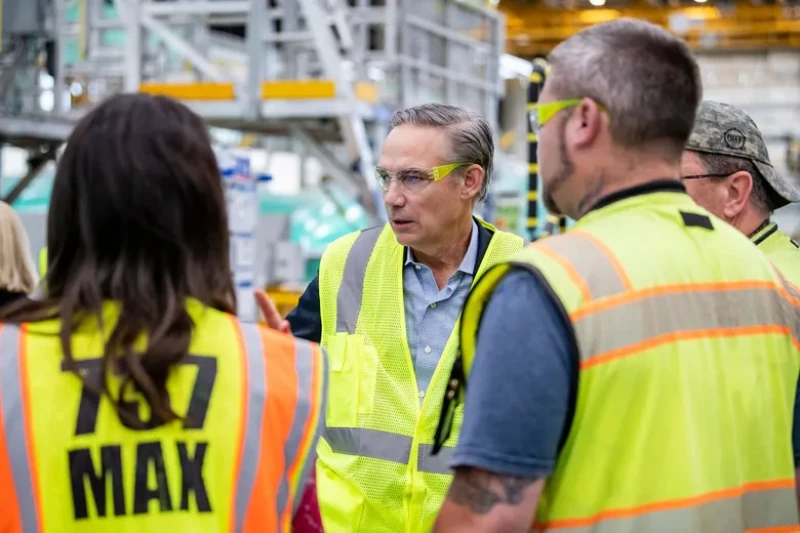
Everything changed for Ortberg when he joined Rockwell Collins in 1987. He spent the next thirty years there, working his way up from engineer to the top job. During the 90s and early 2000s, as he moved through middle management positions, his salary climbed to somewhere between $150,000 and $300,000 annually. Not bad, but nothing crazy either.
The real money started flowing in 2013 when he became CEO of Rockwell Collins. His total compensation shot up to around $10-15 million per year when you counted everything - base salary, bonuses, stock options, the whole package. And honestly, he earned it. Under his watch, Rockwell Collins became a powerhouse in aviation electronics and communications. The company's value skyrocketed, and in 2018, he negotiated a massive $30 billion merger with United Technologies. That deal cemented his reputation as someone who could run a major aerospace operation and make the tough calls when needed.
Peak Success: The CEO of Boeing Takes Command
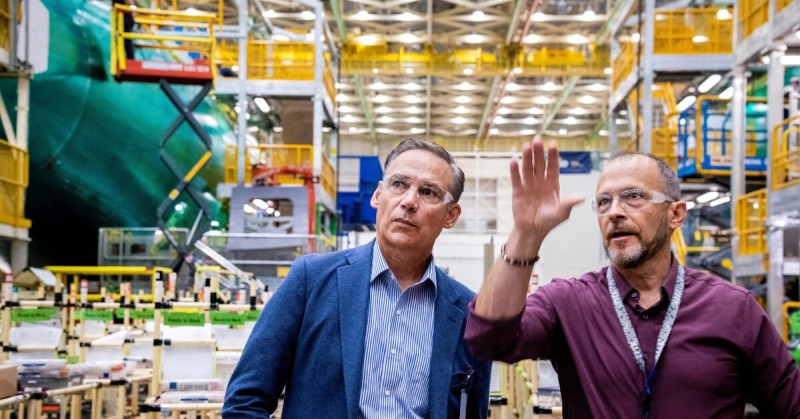
August 8, 2024 - that's when Kelly Ortberg hit the absolute peak of his career. Boeing's board called him up and asked if he'd take over as CEO of Boeing. At 64, most guys would be thinking about golf and grandkids. Instead, Ortberg agreed to tackle one of the hardest jobs in corporate America.
Boeing offered him a base salary of $1.4 million, plus bonuses and stock awards that could push his total pay to $20-25 million annually if he actually fixes the company. But here's what really got people's attention - Ortberg didn't just take the job remotely from some cushy office. He packed up and moved to Seattle, setting up shop right in Boeing's facilities. That sent a message: this guy was serious about getting his hands dirty and understanding the problems firsthand.
And boy, were there problems. The 737 MAX disasters had destroyed Boeing's reputation. Production was a disaster. Money was bleeding out everywhere. Workers were angry and about to strike. Most new CEOs get a honeymoon period - Ortberg walked into a five-alarm fire.
His first few months tested everything he'd learned over three decades. He had to negotiate with striking machinists, secure a $24 billion emergency funding round to keep Boeing afloat, and start rebuilding the company's shattered safety culture. The CEO of Boeing wasn't just managing from the top - he was down in the trenches, meeting with workers, visiting production lines, and making changes that actually mattered.
Current Wealth and Earnings of Boeing's Leader
Nobody knows exactly how much Kelly Ortberg is worth, but people who track this stuff estimate he's sitting on somewhere between $50 and $80 million. That's what you accumulate after spending decades running major aerospace companies and getting paid in stock options that actually went up in value.
At Boeing, his compensation setup is pretty interesting. That $1.4 million base salary is just the starting point. The real money comes from performance bonuses and stock awards that only pay out if he actually turns Boeing around. If he pulls it off and Boeing's stock recovers, his annual take-home could hit $15-20 million or more. If he fails, well, he'll still make decent money but nothing like what success would bring.
Unlike some corporate raiders who cash out fast and bail, Ortberg is required to hold onto significant chunks of Boeing stock. His personal wealth is now tied directly to whether Boeing succeeds or crashes. That's probably why he's working 80-hour weeks trying to fix production problems instead of relaxing in retirement somewhere warm.
Kelly Ortberg's Principles for Success

The CEO of Boeing didn't get where he is by accident. Throughout his career, he's followed some pretty clear principles that separate him from typical corporate executives.
First off, he genuinely believes leaders need to understand the technical stuff. Not just the business buzzwords and financial metrics, but the actual nuts and bolts of how products get made. Ortberg regularly shows up on factory floors, talks to the people actually building planes, and asks detailed engineering questions. He can't stand executives who lead from conference rooms without understanding what their companies actually do.
When crisis hits, he doesn't form committees or commission studies - he makes decisions fast. During his Rockwell Collins days, when problems came up, Ortberg cut through the corporate nonsense and made tough calls quickly. At Boeing, he's doing the same thing, making major structural changes in his first few months instead of letting issues drag on for years.
Culture matters more than most executives realize, and Ortberg gets that. He talks constantly about building companies where safety comes first and workers feel empowered to speak up about problems. Boeing lost its way by putting financial targets ahead of engineering excellence, and he's trying hard to reverse that mindset.
Here's something you don't see often - Ortberg practices what he preaches about commitment. By physically moving to Seattle and working out of Boeing facilities, he's showing everyone he's all-in on this turnaround. He believes leaders should face the same challenges as their employees, not manage problems from thousands of miles away.
Finally, the CEO of Boeing takes the long view. Throughout his career, he's pushed back against the Wall Street obsession with quarterly earnings. At Boeing, he's already told investors the turnaround will take years and require massive investment. Some executives would promise quick fixes to pump up the stock price. Ortberg's being brutally honest about how long this will take.
Kelly Ortberg faces a challenge that would break most people. Boeing, once the gold standard of American manufacturing, became a cautionary tale about what happens when companies lose their way. Production problems, safety disasters, regulatory nightmares, financial bleeding - it's all on his plate now. But if anyone can pull off this turnaround, it's probably the guy who spent 30 years learning every aspect of aerospace from the ground up. Whether he succeeds or fails, Ortberg's betting his legacy on bringing Boeing back from the edge.
 Eseandre Mordi