Editorial staff
- Small Setups Become Massive Really Fast
- Local Hosting Sounds Convenient Until The Save Gets Huge
- Conveyor Belts Create More Server Load Than Expected
- Multiplayer Desync Starts Ruining The Fun
- Factory Planning Matters More Later
- Dedicated Servers Remove A Lot Of Annoying Problems
- Mods And Updates Complicate Everything
- Long-Term Servers Need Maintenance
- Most Players Only Care If The Server Feels Stable
- Satisfactory Worlds Usually Last Much Longer Than Expected
Most Satisfactory multiplayer worlds begin pretty casually. A few friends join, somebody builds ugly conveyor lines, power shuts down every twenty minutes, and nobody really cares because the factory is still small.
That works fine early on.
You automate a few basic materials, unlock some tiers, and slowly expand across the map. Nothing feels too serious yet.
But Satisfactory has this weird habit where tiny factories slowly turn into giant industrial projects without anybody planning for it.
And that’s usually where server problems begin.
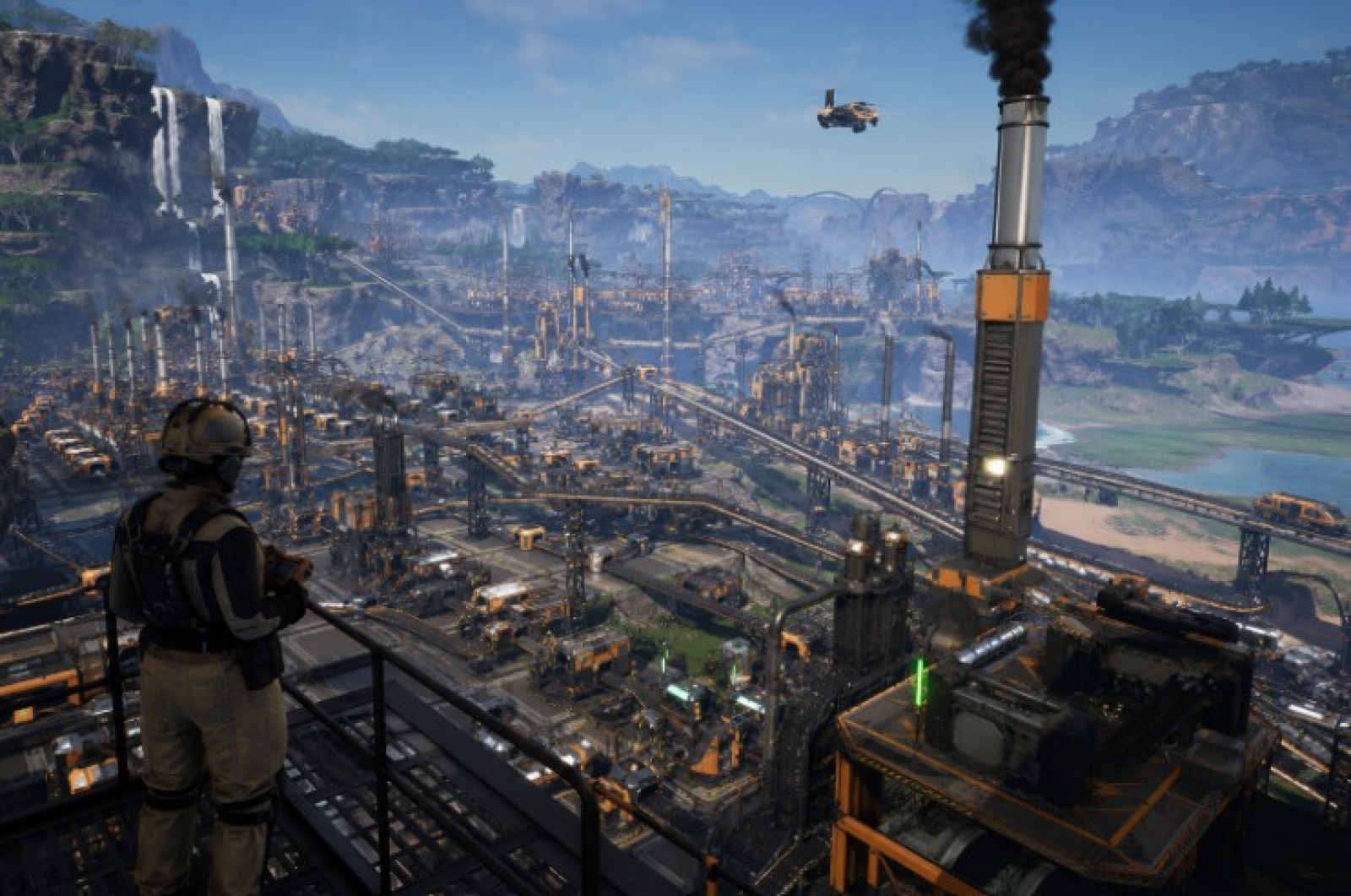
Small Setups Become Massive Really Fast
At first you only need simple production lines.
Iron plates. Wire. Concrete. Maybe a small coal power setup.
Then suddenly everything depends on three other systems.
You need more steel. More power. More trains. More oil production. And every upgrade creates five new logistics problems immediately after.
So what happens is the world keeps growing nonstop.
Factories start showing up literally everywhere.
Deserts, forests, random cliffs nobody planned to build on at first. Trains start running in every direction.
And eventually even decent PCs start struggling with the workload.
Local Hosting Sounds Convenient Until The Save Gets Huge
A lot of players first try running a satisfactory host server directly from their own computer. And honestly, that works perfectly fine for smaller worlds.
Especially early game.
But late-game Satisfactory saves become surprisingly heavy once factories stay active around the clock.
Machines constantly update. Conveyor belts move nonstop. Vehicles calculate routes. Trains load entire factory zones every few seconds.
And once several players build in different parts of the map simultaneously, weaker systems begin falling apart.
That’s normally when people start searching for how to host a satisfactory server properly instead of relying on a spare gaming PC sitting under the desk.
Because desync becomes really noticeable once the world grows large enough.
Conveyor Belts Create More Server Load Than Expected
This part catches people off guard.
Huge conveyor systems look harmless at first. But giant production lines create constant background activity everywhere on the map.
Thousands of moving items need updating all the time.
And once factories become oversized, the server never really gets a break anymore.
That’s why late-game Satisfactory worlds often feel heavier than people expect even with fewer players online.
The factory itself becomes the main problem.
Not the player count.
Multiplayer Desync Starts Ruining The Fun
Here’s where frustration usually starts showing up.
You join the server and suddenly:
- trains teleport
- belts stop syncing
- machines freeze randomly
- vehicles bounce across the map
- building delays become obvious
And the bigger the world gets, the worse those issues become.
Singleplayer avoids a lot of this because everything runs locally. Multiplayer pushes the server much harder, especially when multiple giant factories stay active at the same time.
And honestly, Satisfactory feels terrible once building stops responding smoothly.
Factory Planning Matters More Later
Early game factories can stay messy.
Late-game factories become impossible to manage if everything is built randomly.
One giant mega-base sounds cool until every production line overlaps with another system and the entire area turns into visual chaos.
That’s why experienced players usually spread production into separate zones later.
Oil in one region. Aluminum somewhere else. Nuclear systems far away from the main base.
Not because it looks prettier.
Because giant centralized factories eventually become difficult for both players and servers to handle.
Dedicated Servers Remove A Lot Of Annoying Problems
Look, dedicated hosting will not magically fix bad factory design.
Messy logistics still create lag. Massive train intersections still hurt performance. Poorly planned power grids still break constantly.
But stable satisfactory server hosting removes a lot of smaller issues that slowly destroy multiplayer worlds over time.
Stuff like:
- host disconnects
- random restarts
- unstable internet
- overloaded CPUs
- save corruption risks
Those problems become a much bigger deal once people spend hundreds of hours inside the same world.
Because rebuilding a dead multiplayer server usually kills motivation fast.
Mods And Updates Complicate Everything
Vanilla Satisfactory already gets demanding later.
Mods make everything worse.
Some players add massive decoration packs. Others install advanced logistics mods or extra production systems. And suddenly the save becomes much heavier than expected.
Then updates arrive and compatibility issues start appearing everywhere.
That’s usually when admins begin checking satisfactory server status more often after every patch.
Because one broken update can easily cause crashes or weird synchronization issues inside older saves.
And honestly, large sandbox games almost always become unstable for a while after major updates.
Long-Term Servers Need Maintenance
This is the part people underestimate most.
Running a long-term multiplayer factory world slowly becomes actual maintenance work.
Backups matter. Server restarts matter. Save stability matters.
And once the world becomes huge, ignoring those things eventually creates problems.
Especially because Satisfactory players rarely stop expanding.
Factories keep growing forever.
You finish one production line and immediately realize you now need three more support systems feeding into it.
So the save file never really stays small.
Most Players Only Care If The Server Feels Stable
Admins spend hours comparing hardware, RAM usage, processor speeds, and network settings.
Regular players care about something much simpler.
Does the server actually work properly?
That’s it.
Nobody joins a factory server asking what hardware runs it. But everybody notices lag immediately once trains freeze or conveyor systems stop loading correctly.
And factory games become exhausting really fast once performance problems appear every session.
Satisfactory Worlds Usually Last Much Longer Than Expected
That’s probably why stable servers matter so much here.
People think they’ll play for a few weekends.
Then six months later the same save file is still active every night.
Factories become larger. Train systems become more complicated. Nuclear power spreads across half the map.
And friends keep returning to improve older systems instead of starting over.
So yeah, server quality matters a lot more later than it does at the beginning.
Not because you need some perfect setup. But because giant multiplayer factories stop being fun once crashes, lag, and desync start interrupting everything people spent weeks building together.
 Editorial staff