Editorial staff
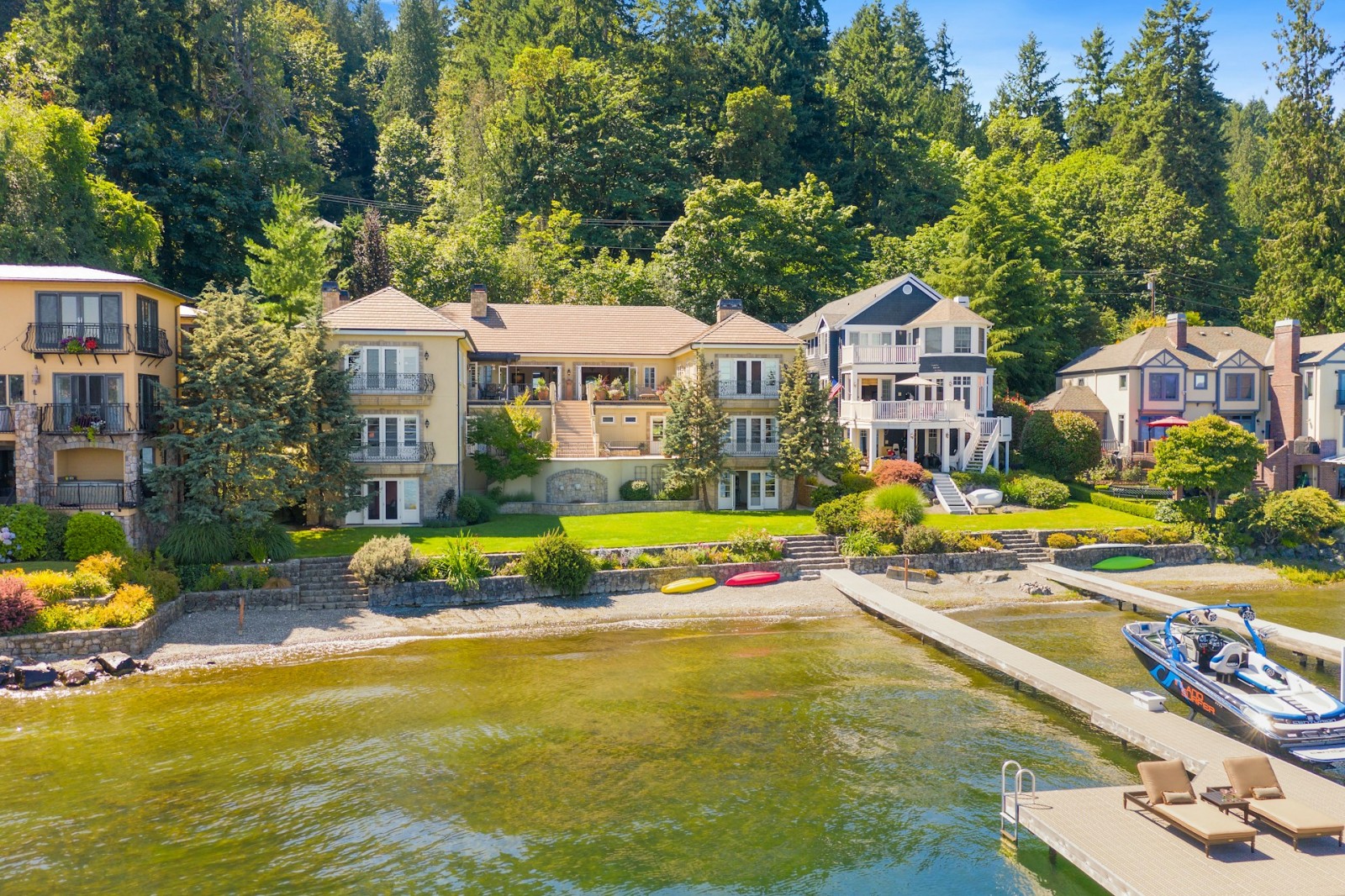
Developers can always bulldoze another hundred acres of farmland for a subdivision, but they cannot manufacture a new coastline. This absolute scarcity creates a floor for value that standard single-family homes simply don't have. When the broader market softens, this inventory constraint prevents the freefall in pricing we often see in commoditized housing sectors.
For sophisticated investors, the question isn’t whether waterfront property is expensive. The question is how it behaves when the rest of the portfolio is bleeding.
The Mathematics of the "Waterfront Premium"
The data bears this out with significant margins. According to Knight Frank’s Global Waterfront Monitor, prime waterfront properties command an average premium of 40% to 48% over comparable inland counterparts. In specific high-demand U.S. markets, Zillow research has shown this spread can widen to over 116%.
This premium acts as a buffer. Even during the housing correction following the 2008 financial crisis, while speculative inland developments turned into ghost towns, prime waterfront assets maintained liquidity. Buyers were aware that the exit strategy for a scarce asset is fundamentally different from a mass-market tract home. The recoverability of these assets is faster because the demand driver—exclusive access to water—never disappears.
Between 2019 and 2024, we saw inventory in many primary vacation markets tighten by nearly 30%. This supply crunch forces prices to stabilize even when interest rates climb, as the entry price for these assets essentially pre-selects for a buyer pool that is less sensitive to the cost of borrowing.
The Psychology of the High-Net-Worth Hold

Recession resistance in this sector is also behavioral. Owners of premier lakefront estates rarely sell out of panic.
For the ultra-high-net-worth individual, a lake home is a lifestyle asset rather than a purely utilitarian one. It holds sentimental value and serves as a multi-generational gathering point. Consequently, these owners have "holding power." They don't liquidate when the S&P 500 dips. They wait.
This behavior constricts supply further during downturns. You won't see a flood of distressed listings on the water during a recession. You see a standstill. Transactions may slow, but values rarely plummet because sellers simply refuse to engage at a discount.
Case Study: Lake Geneva, Wisconsin
A perfect example of this resilience is Lake Geneva, Wisconsin. The market here is unique because it serves as the primary retreat for two massive metropolitan economies: Chicago and Milwaukee.
Even when the national housing market faced headwinds in late 2023 and 2024, Lake Geneva remained robust. Median sales prices in the area continued to trend upward, with recent reports showing a year-over-year increase of roughly 13% as of late 2025. The stability here comes from the "drive-to" factor. In a recession, families may cut back on international flights to Europe, but they will still drive 90 minutes to their lake house.
This dynamic keeps demand consistent across various property types. We see steady inquiries for waterfront condos for sale even during slower economic quarters, as these units offer a lower barrier to entry for buyers wanting a foothold on the lake without the maintenance of a large estate.
The Cash Insulation
The final piece of the puzzle is the financing structure of these deals. High interest rates paralyze the starter-home market, but the luxury waterfront sector is increasingly insulated by cash.
Recent industry data indicates that in luxury markets priced above $5 million, cash transactions account for nearly 65% of sales. These buyers are not asking about 30-year fixed rates. They are asking about dock rights and water depth.
When you remove the lender from the equation, you remove the primary lever that the Federal Reserve uses to cool the market. As we look toward the next economic cycle, lakefront property remains one of the few asset classes that offers both tangible utility and a proven history of wealth preservation.
 Editorial staff