Peter Smith

⬤ Despite all the talk about investors fleeing US Treasuries, the auction data tells a different story. Bid-to-cover ratios — which track how much buyer interest there is relative to the debt being offered — have stayed firmly elevated across multiple maturities. Demand isn't slipping; if anything, it's holding steady or ticking up in recent readings.
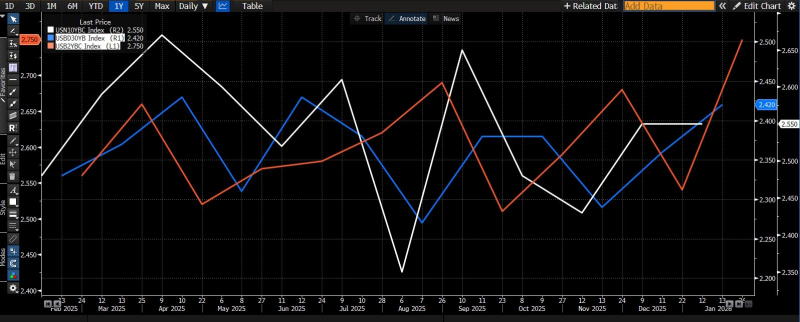
⬤ Here's the thing: a higher bid-to-cover ratio means buyers want more than what's actually on the table. When these ratios stay well above the levels you'd typically see at a weak auction, it's a pretty clear signal that appetite for US government debt is still there. And right now, that's exactly what's happening across short, intermediate, and longer-dated Treasuries alike.
⬤ What makes this especially noteworthy is the broader backdrop. Rates are higher, Treasury issuance has ramped up, and yet auctions keep attracting strong participation. The fact that demand is spread across maturities — not just piling into short-term bills — suggests this isn't just a safe-haven play. Investors are genuinely sticking with the full range of US government debt.
⬤ For broader markets, sustained bid-to-cover ratios matter because they keep Treasury auctions running smoothly and reduce the risk of funding stress during heavy issuance periods. As long as these numbers stay firm, the idea of a wide-scale retreat from US Treasuries simply isn't backed up by what the data is showing.
 Peter Smith