Marina Lyubimova

⬤ Japan's 20-year government bond yield reached 2.92 % this week, the highest value recorded since 1998. The steep increase shows that pressure is building across long term Japanese debt while markets adapt to the possible close of many years of ultra low rates. The yield has now moved past ceilings that stayed intact for more than two decades - the bond market is undergoing a basic change.
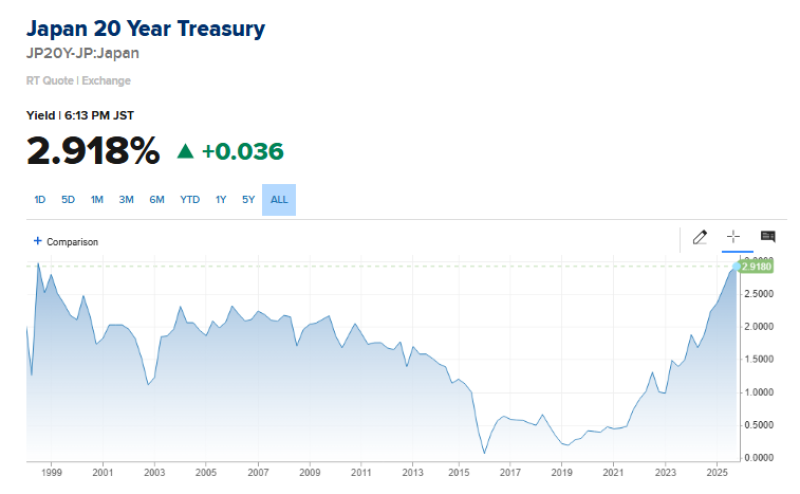
⬤ During most of the previous ten years the JP20Y yield stayed at or under 1 %. The present climb toward 3 % therefore belongs to the largest structural shifts seen in global sovereign debt. The advance mirrors altered inflation patterns, higher wage growth and rising belief that the Bank of Japan will soon abandon its long held loose stance. Market participants now wager that the country's age of near zero yields is drawing to a close.
The swift ascent highlights mounting pressure along the Japanese yield curve - bonds with long maturities are reacting forcefully to the chance of a policy turn.
⬤ Higher domestic yields carry weight beyond Japan because the nation is one of the world's biggest exporters of capital. When Japanese bonds deliver stronger returns at home, domestic institutions often withdraw funds from overseas markets, a step that can redirect global capital. The jump also shows how stubborn inflation and worldwide rate moves oblige investors to reconsider what levels Japanese interest rates are able to reach.
⬤ This move is not a routine rate adjustment - it announces that Japan's financial terrain is shifting at the root. After a quarter century of capped yields, the bond market now embeds a fresh outlook in which inflation forces and policy changes push rates toward territory that recent Japanese history treated as unthinkable.
 Marina Lyubimova