Saad Ullah

⬤ In 2023, 1.3 million people across the EU were employed in transport and storage companies owned by foreign-controlled multinational groups, according to Eurostat. The figures reveal sharp differences in how exposed each country's transport workforce is to foreign corporate ownership, making this one of the more telling snapshots of how integrated European logistics markets really are.
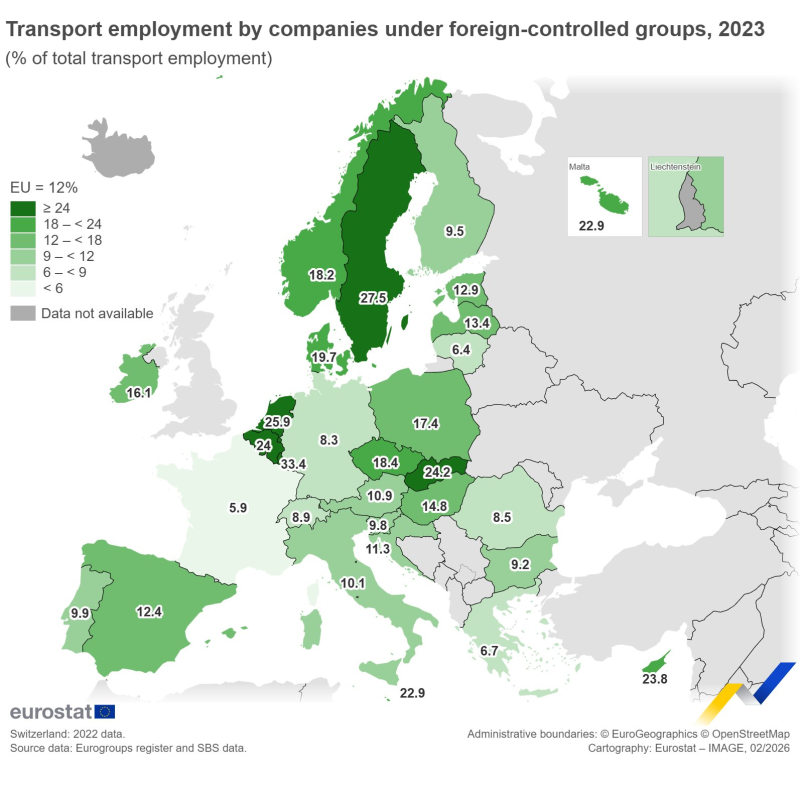
⬤ The EU average sits at 12% of total transport employment under foreign control. Luxembourg leads the pack with 33.4%, reflecting its role as a hub for multinational corporate structures. France, on the other end, records just 5.9%, the lowest in the bloc. Several other countries cluster around the EU average, but the spread across the map is wide enough to signal genuinely different industry structures from one market to the next.
A higher share of foreign-controlled employment can signal deeper integration into multinational logistics networks, while lower shares may point to more locally concentrated industry structures.
⬤ The dataset tracks shares of total transport employment rather than raw headcounts, which puts the focus squarely on ownership patterns. That framing matters because transport and storage sit at the core of EU trade flows, supply chains, and cross-border logistics. Markets with high foreign-controlled shares tend to be more deeply wired into multinational networks, while those with low shares often reflect domestic operators holding the dominant position.
⬤ For anyone tracking EU labor market conditions or macro structure, this kind of data adds useful texture. It connects to broader questions about investment cycles, corporate restructuring, and how workforce exposure to foreign capital shifts over time. Earlier Eurostat-based coverage on EU GDP and sectoral data offers additional context for framing these cross-country differences within the wider European economic picture.
 Saad Ullah