
 Eseandre Mordi
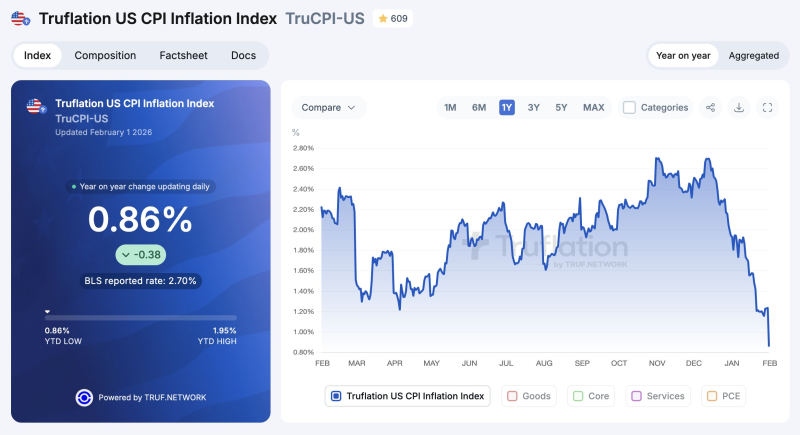
⬤ US CPI inflation hit 0.86% year over year as of February 1 — down sharply from 1.24% just weeks prior. That's the lowest reading the index has logged since 2020, and it paints a picture of consumer prices cooling off across the board faster than most expected.
⬤ The drop wasn't driven by one category — it was broad-based. Utilities led the decline, pulling the index down by 0.13%. Clothing followed at -0.08%, while housing and transportation each chipped away 0.05%. Even food prices edged lower, contributing a 0.04% reduction. Every major consumer segment moved in the same direction.
Real-time pricing data is capturing a cooldown that traditional survey-based metrics are only beginning to reflect.
⬤ Here's where it gets interesting: the year-to-date range now stretches from a low of 0.86% all the way up to 1.95%. Meanwhile, the Bureau of Labor Statistics is still reporting CPI at 2.70%. That's a significant gap — and it highlights a growing divide between high-frequency real-time pricing models and the traditional survey-based approach the BLS relies on.
⬤ If these trends hold, it could shift how markets price in inflation expectations — especially as real-time data tools gain more traction in macro analysis. The easing across utilities, housing, food, and transportation is hard to ignore.
 Eseandre Mordi



