Usman Salis
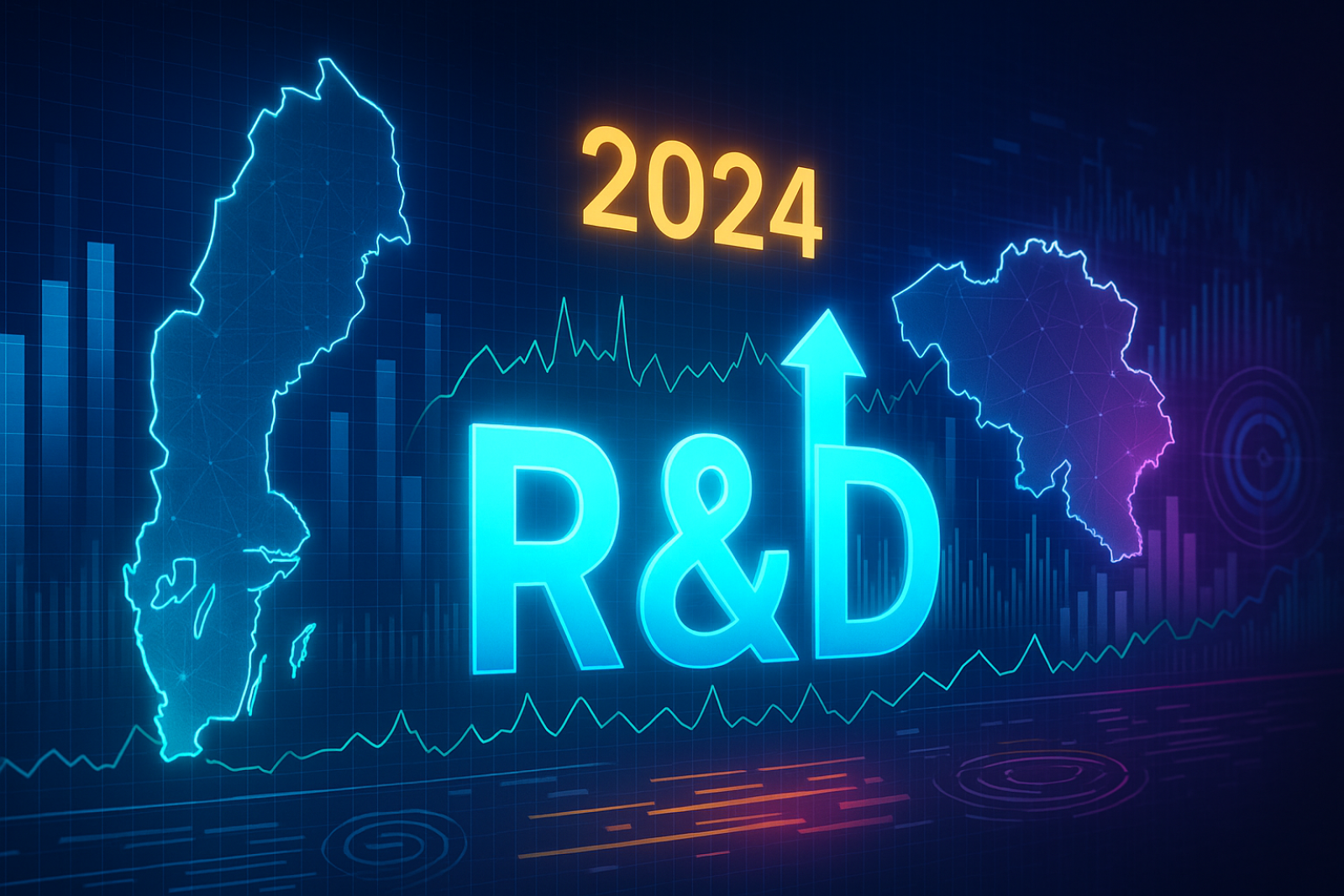
⬤ New Eurostat figures for 2024 reveal a sharp split in how much member states devote to research and development. Sweden besides Belgium lead allocating 3.6 % plus 3.4 % of their GDP. The series which runs from 2014 - 2024, shows that northern and central Europe have raised their outlays year after year, while large parts of the Union remain well below the EU mean.
⬤ Over the past decade most governments have enlarged their research budgets. Sweden moved from roughly 3.2 % of GDP in 2014 - 3.6 % in 2024; Belgium advanced from slightly above 2.3 % to 3.4 %. Finland, Germany, Denmark but also the Netherlands now record at least 2.8 %. Slovenia, Estonia or Czechia fall between 1.9 % and 2.4 %. Spain, Poland next to Ireland stay in the 1.2 % - 1.7 % band. The EU average rose from about 2.0 % in 2014 to a little over 2.2 % in 2024.
Persistent gaps in research spending affect productivity as well as long-term growth prospects across the region.
⬤ Romania besides Malta occupy the lowest rung, with only 0.5 % of GDP committed to research in 2024; Cyprus follows at 0.7 %. Since 2014 those countries have barely shifted. Iceland or Norway - all outside the EU - outspend most member states underlining the wider European divide.
⬤ The wide spread in expenditure directly alters each country's ability to innovate and to expand its economy. The 2024 league table lays bare structural imbalances that will guide future policy debates on how research outlays strengthen economic resilience.
 Usman Salis