Saad Ullah
⬤ Eurozone consumer prices rose to 2.2 percent in November surprising markets that had expected steadier growth. The figure breaks with the softer inflation seen through most of the second half of 2025 and signals that price pressures across the currency bloc are stirring once more.
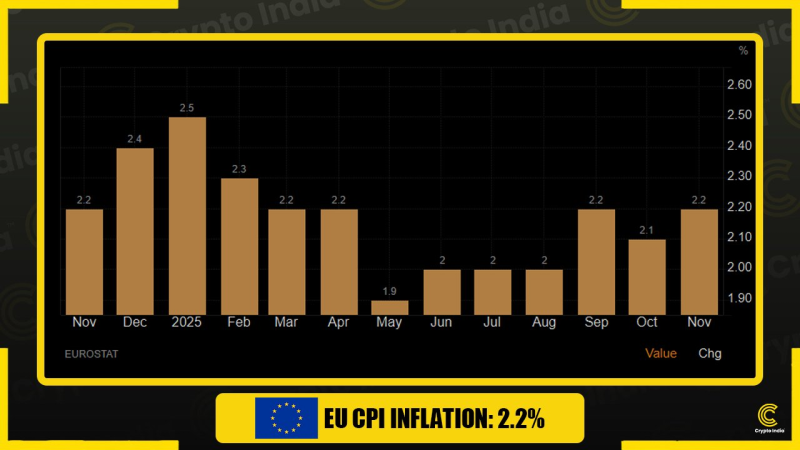
⬤ Inflation peaked at 2.5 percent in January then eased to about 1.9 percent by mid year. November's 2.2 percent follows October's 2.1 percent and equals September's level - prices are edging upward again after staying close to 2 percent all summer. A pattern that looked stable has now tilted plus the latest numbers show consumer price growth regaining speed.
The result, higher than forecast, has drawn attention while policymakers debate eurozone monetary policy.
⬤ The unexpected rise is significant because it appears just as the European Central Bank considers its next step. Markets had counted on further easing of price pressures, helped by lower energy costs and careful spending. November's jump indicates those cooling forces are fading. If the move proves brief, the outlook stays mild - if it persists, the ECB will face tougher choices and market mood will tighten for the year's final weeks.
 Saad Ullah