Marina Lyubimova

⬤ Spain's employment statistics are raising eyebrows after fresh data exposed a massive jump in people getting unemployment-related payments who somehow don't count toward official jobless figures. These workers fall into a category called "fixed discontinuous inactive" – basically, they're on the books but not working, collecting benefits, yet flying under the radar of unemployment tallies.
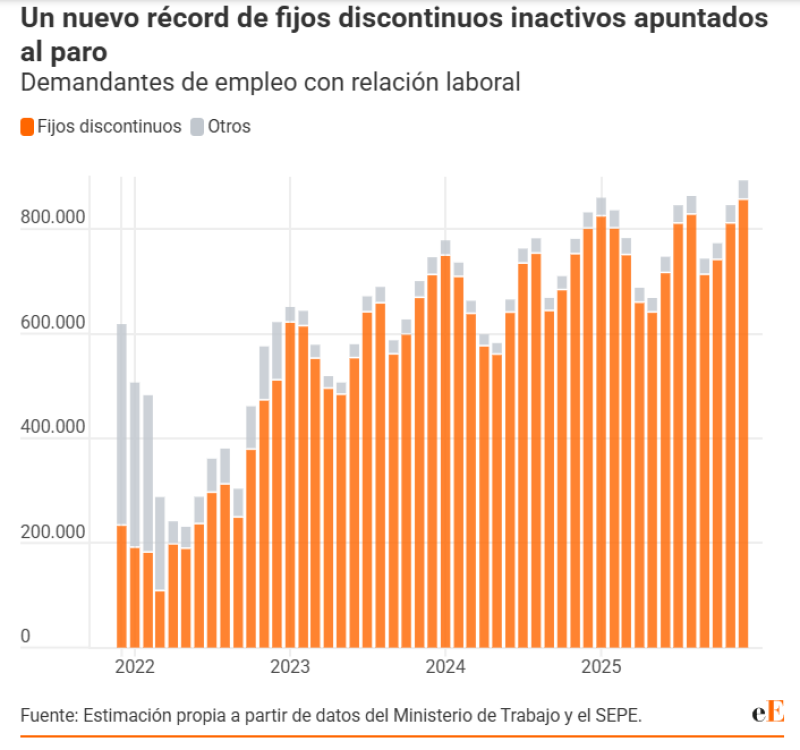
⬤ The numbers tell a striking story. Since 2022, this inactive category has shot upward, hitting somewhere between 800,000 and 900,000 people by 2025. That's not a blip – it's a clear, steady climb that dwarfs the levels seen just a few years back.
⬤ Here's where it gets really interesting: the count of inactive workers pulling benefits has actually tripled since 2019. In some provinces, there are more people receiving these payments than there are officially unemployed residents. Let that sink in – more benefit recipients than unemployed people, at least according to the government's books.
The number of inactive workers receiving benefits has tripled since 2019, and in several provinces exceeds the official unemployment count.
⬤ Why does this matter? Because how you count workers shapes how everyone understands the health of the economy. When classifications create this kind of gap between reality and official statistics, it throws off economic analysis and makes it harder to figure out what's actually happening with jobs and growth. The debate over these numbers isn't just technical hairsplitting – it's about getting an honest read on Spain's labor market.
 Marina Lyubimova