Alex Dudov

Washington just put crypto markets on a timer. With March 1 now acting as a hard deadline, the White House is pushing to settle a heated debate over whether stablecoin holders should be allowed to earn yield - a question that's quietly become one of the most contested issues in U.S. crypto legislation.
Why the March 1 Deadline Matters for BTC and ETH
BTC and ETH traders are watching Capitol Hill closely. According to Wise Advice, the White House wants to break the legislative impasse before advancing the Clarity Act - a broader regulatory framework for digital commodities that would fall under CFTC oversight. Without a resolution on yield, the entire bill risks stalling indefinitely.
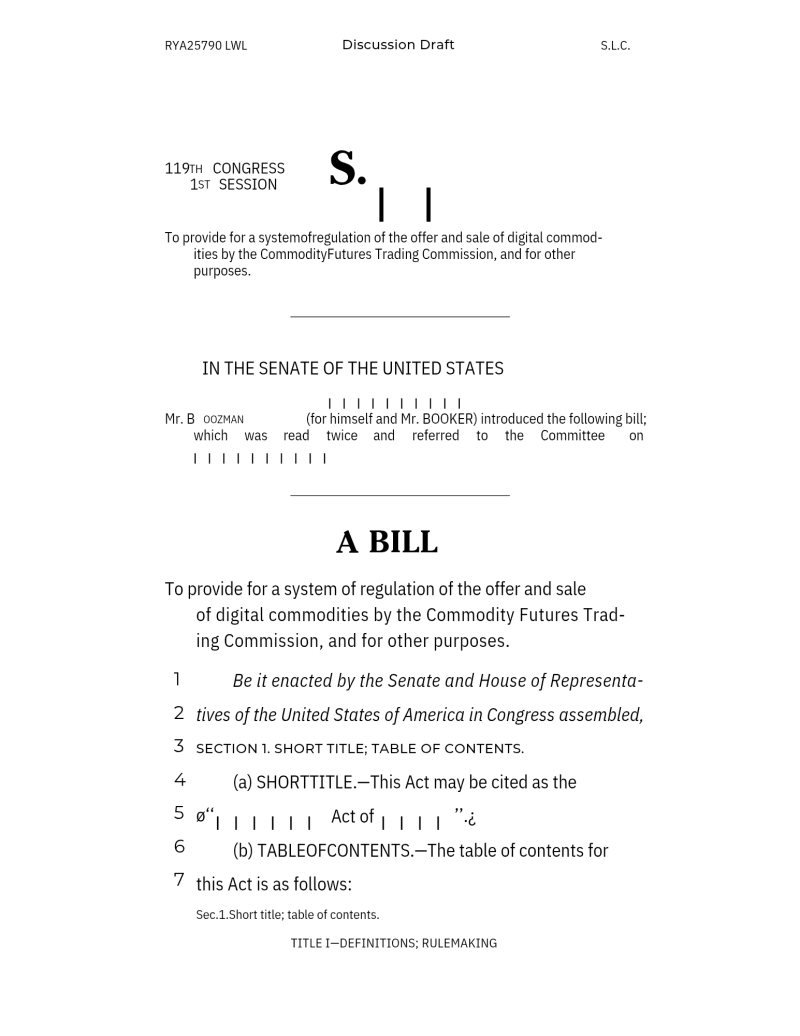
The gridlock isn't new. Earlier talks between banking representatives and crypto industry participants collapsed without consensus, as covered in breakdown in White House stablecoin yield negotiations. Both sides remain far apart on whether letting stablecoin holders earn interest crosses into securities territory - or simply reflects how modern money should work.
Stablecoin policy has become a pivotal issue within U.S. crypto legislation.
Stablecoin Rules Are Evolving Fast
The legislative fight is just one part of a fast-moving regulatory picture. Agencies are already acting on their own. Recent updates to CFTC stablecoin collateral usage rules clarify how payment stablecoins can be used within derivatives markets. Separately, ongoing debates about SEC treatment of covered stablecoins as cash equivalents show how classification decisions can ripple through digital asset valuations and market structure.
As regulatory pressure intensifies ahead of key deadlines, the broader implications for liquidity are becoming clearer. A deeper look at how MiCA is reshaping market structure shows that over $1.1B in USDT liquidity could be at risk in the EU, highlighting the scale of potential disruption for traders and exchanges. This evolving dynamic is explored in detail in this analysis of USDT liquidity and MiCA-driven delistings in Europe, which outlines why stablecoin access in regulated markets is likely to become increasingly constrained.
If a deal is reached before March 1, it could unlock meaningful progress on the Clarity Act and send a constructive signal to crypto markets. If talks break down again, the path to comprehensive U.S. crypto regulation gets longer - and more uncertain.
 Alex Dudov