Marina Lyubimova

Copper mining equities have pulled back sharply from their recent highs, with most major producers now trading between 15% and 35% lower. While the decline has rattled some investors, market analysts suggest this type of correction is normal during the early stages of cyclical commodity moves. Rather than marking the end of a rally, the pullback may be setting up the next phase of the cycle—one where leadership consolidates and relative strength becomes the key differentiator.
Early-Cycle Correction Shows Typical Pattern
Copper mining stocks are currently well off their recent peaks. The pullback spans the industry, affecting multiple producers that had rallied earlier in the cycle.
In cyclical industries like mining, initial rallies often attract broad attention before a shakeout removes weaker positions. The current environment fits that pattern. While some companies are stabilizing and holding structural support, others continue declining, creating noticeable dispersion across the sector. This divergence is exactly what traders look for when identifying relative strength during uncertain periods.
Relative Strength Emerges Amid Volatility
The performance table isn't designed to pinpoint an exact bottom. Instead, it highlights which producers are maintaining structure while others deteriorate. Leadership often consolidates during this stage, even as broader sentiment remains cautious. Because confidence typically lags price action, stabilization can begin well before optimism returns to the market.
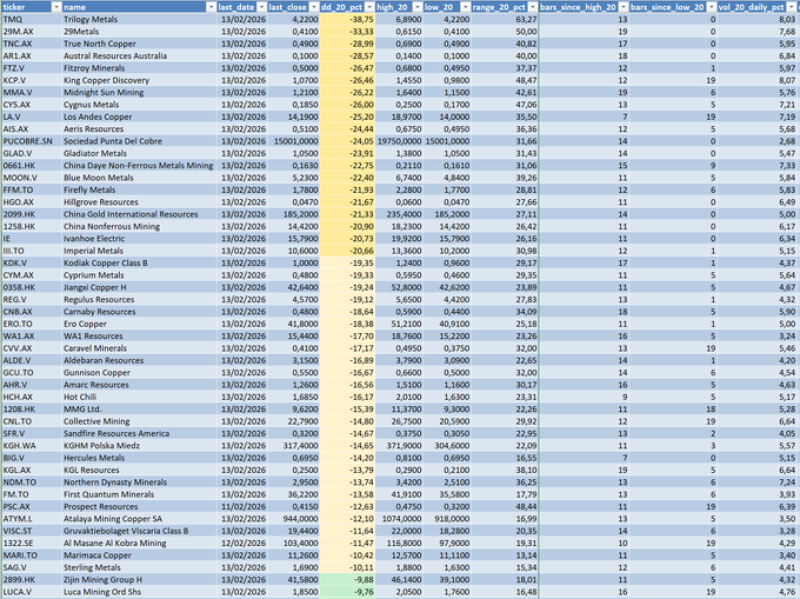
Similar volatility has been observed across metal markets recently. Copper market pullbacks have created buying opportunities in past cycles, while rising copper demand from industry continues to support the longer-term thesis. At the same time, critical metals supply constraints remain a structural tailwind for producers that can deliver consistent output.
What the Pullback Really Means
The 15–35% drawdown across copper miners underscores how cyclical markets move through distinct phases: attention, correction, and consolidation. Rather than offering a uniform signal, the pullback is creating differentiation. Some names are holding up. Others aren't. That gap matters.
For investors watching the space, the message is clear—early-cycle corrections don't kill trends. They refine them.
 Marina Lyubimova