Sergey Diakov
- Katt Williams' First Steps: Earning Money as a Street Vendor
- Building a Comedy Career: From Local Clubs to National Recognition
- The Breakthrough Years: When Katt Williams Net Worth Started Growing
- Peak Success: Current Earnings and Katt Williams Net Worth Today
- Katt Williams' Philosophy: Key Ideas on Becoming Successful
Katt Williams is one of those rare comedians who doesn't just make you laugh—he makes you think. And when it comes to his bank account? Well, that's become almost as much of a mystery as some of his best punchlines. The sharp-witted comedian has spent years dodging questions about his actual wealth, and honestly, he seems to get a kick out of keeping everyone guessing.
Here's what we know: Katt Williams' net worth has been all over the map depending on who you ask. Some reports put it at a modest $3.5 million, while others suggest it's closer to $20 million. The truth? It's probably somewhere in the middle, though Williams himself has dropped hints that suggest the real number might blow both those estimates out of the water.
During his now-legendary sit-down with Shannon Sharpe on the Club Shay Shay podcast back in January 2024, Williams couldn't help but laugh when the subject of his net worth came up. He basically said he was walking around with more cash in his pocket than what websites were claiming he was worth. That's either one hell of a flex or a serious hint that the publicly reported figures are way off base.
But what really matters isn't the exact dollar amount—it's the journey. Williams took a path that started from literally nothing and ended up at the top of the comedy world. His story is less about the money and more about what it took to get there: raw talent, unshakeable determination, and a stubborn refusal to compromise who he is for anyone.
Katt Williams' First Steps: Earning Money as a Street Vendor
Before Katt Williams was packing arenas and signing million-dollar Netflix deals, he was just Micah Sierra Williams, a kid from Cincinnati trying to figure out how to survive. Born on September 2, 1971, Katt grew up in Dayton, Ohio, in a strict Jehovah's Witness household that didn't exactly leave room for the kind of free spirit he was born to be.
At just 13 years old—yeah, thirteen—Williams made a decision that would shock most people: he legally emancipated himself from his parents. That's not something you hear about every day, but Williams wasn't your typical kid. He packed his bags and headed to Florida, where he had to figure out how to put food on the table without any safety net whatsoever.
What was his first job? Street vendor. Williams spent years hustling on the streets of Miami, living in a park in Coconut Grove, sleeping on benches, and going door-to-door selling whatever would sell—magazines, books, jewelry, you name it. Some nights he had money for food, other nights he didn't. It was brutal, raw survival mode.
This wasn't some character-building exercise his parents set up for him. Williams was genuinely homeless, genuinely broke, and genuinely on his own. But here's the thing about that experience: it shaped everything that came after. Those years taught him about hustle in a way no classroom ever could. They taught him the value of a dollar, the importance of persistence, and what it really means to bet on yourself.
Even when he finally caught his big break with "Friday After Next," Williams was still struggling financially. The movie's director later revealed that when they found Katt for the role, he was living in his car, his hair was all over the place, and he was missing his front teeth. Williams cleared that up later, explaining he wasn't homeless at that point—he just chose to live in his trailer during filming because he needed a $100,000 dental surgery and couldn't afford it yet.
Building a Comedy Career: From Local Clubs to National Recognition
Williams didn't just stumble into comedy by accident. He discovered it, fell in love with it, and chased it with everything he had. His very first gig in entertainment? Working with a traveling circus as a comedian. Yeah, a circus. It sounds wild, but that's where he started learning the ropes and figuring out what made people laugh.
He began his stand-up journey in the Avondale neighborhood of Cincinnati, sneaking into comedy clubs through the back entrance—the comedians' entrance—because he was too young to walk through the front door like a regular customer. Picture this teenage kid, desperate to get on stage, finding creative ways just to get in the building. That's hunger right there.
By his late teens, Williams had made his way to San Francisco and was grinding at every comedy club that would give him stage time. He'd perform anywhere, anytime, constantly working on his material and sharpening his delivery. These weren't glamorous gigs. We're talking about small clubs, tough crowds, and checks that barely covered gas money.
But by 1999, all that hard work started paying off. Williams had become a recognized name on the comedy circuit, performing at legit venues like The Improv, The Comedy Club, The Ice House, and Hollywood Park Casino. His big break into national television came with appearances on BET's "ComicView," where he performed as Katt "In da Hatt" Williams—a name that would stick with audiences.
During these years, Williams wasn't making bank by any stretch. Stand-up comedy in the late '90s and early 2000s was a grind. Comedians would do multiple shows a night, travel between cities on their own dime, and maybe walk away with a few hundred bucks if they were lucky. But Williams kept pushing, kept performing, kept building his reputation one show at a time. He knew that if he stuck with it, eventually the money would follow the talent.
The Breakthrough Years: When Katt Williams Net Worth Started Growing
Everything changed in 2002 when Williams landed the role of Money Mike in "Friday After Next." This wasn't just another acting gig—this was the role that would turn him into a household name. Money Mike, with his over-the-top personality, quotable one-liners, and unforgettable style, became an instant classic. And here's the kicker: Williams wrote and improvised most of his own material. He wasn't just reading lines—he was creating a character that would define a generation of comedy.
After "Friday After Next" blew up, the doors started swinging wide open. Williams became a regular cast member on MTV's "Wild 'n Out" for three seasons, bringing his freestyle comedy skills to a whole new audience. He started landing roles in bigger movies—"Norbit" in 2007, "First Sunday" in 2008—and even did voice work for the cult-favorite animated series "The Boondocks," where he brought to life the hilariously over-the-top character A Pimp Named Slickback.
But while the acting roles were great for his profile, the real money started rolling in from his stand-up specials. In 2006, Williams released "The Pimp Chronicles, Pt. 1" on HBO, and it absolutely crushed. The special pulled in more than $24 million, which was huge for a stand-up release. This was the moment when Katt Williams' net worth really started climbing into serious territory.
He followed that up with "It's Pimpin' Pimpin'" in 2008, and his comedy tour that year was named the best tour of 2008 by Billboard. We're talking sold-out shows, massive ticket sales, and Williams finally getting paid what his talent was worth. During this peak period, he was making serious money—the kind of money that turns comedians into wealthy entertainers.
Williams also picked up a Primetime Emmy Award in 2018 for his guest role in "Atlanta," proving he could do more than just comedy. Throughout the 2010s and into the 2020s, he kept the momentum going with constant touring and new specials on HBO, Comedy Central, and eventually Netflix, where the biggest checks were waiting.
Peak Success: Current Earnings and Katt Williams Net Worth Today
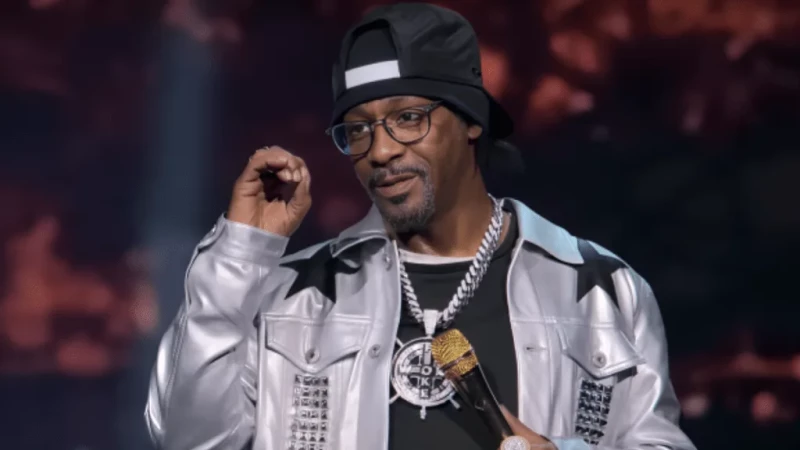
These days, Katt Williams is playing in a completely different financial league. Reports suggest he pulls in over $100,000 per show, especially when he performs in smaller markets. But Williams has hinted that even those numbers are conservative. During his conversation with Shannon Sharpe, he casually mentioned that he makes over $10 million for a single Netflix special. Let that sink in—one special, ten million dollars.
His 2024 comedy tour was an absolute monster. The numbers are pretty staggering: $35 million in total revenue, making it one of the five highest-grossing comedy tours of the entire year. He sold 400,000 tickets across 60 shows, which means people are still lining up to see him perform nearly three decades into his career. His Netflix special "Woke Foke" dropped in May 2024, and he followed it up with "The Last Report" in February 2025. Both specials continue to bring in serious streaming revenue.
But Williams' financial story hasn't been all smooth sailing. In 2019, he opened up about losing a jaw-dropping $59 million to embezzlement by former employees. Yeah, you read that right—$59 million. There have also been reports over the years of legal troubles, arrests, and even a rumored home foreclosure on a property in Calabasas, California. The guy's had his share of financial hits.
What's interesting is how Williams lives now. Based on public records, he seems to keep things pretty low-key. He lives in what appears to be a modest home in Lawrenceville, Georgia, that he bought back in 2013 for $235,000. For someone reportedly making millions per year, that's surprisingly humble. It suggests he's either reinvesting his money elsewhere or just doesn't care about showing off his wealth.
Williams has always pushed back hard against the lower estimates of his net worth. In that Shannon Sharpe interview, he casually dropped that distribution deals for his stand-up specials can go as high as $50 million. He also claimed he's turned down around $200 million in total offers throughout his career because the deals didn't meet his standards. If that's true—and knowing Williams, it probably is—then the publicly reported Katt Williams net worth figures are way, way off.
Katt Williams' Philosophy: Key Ideas on Becoming Successful
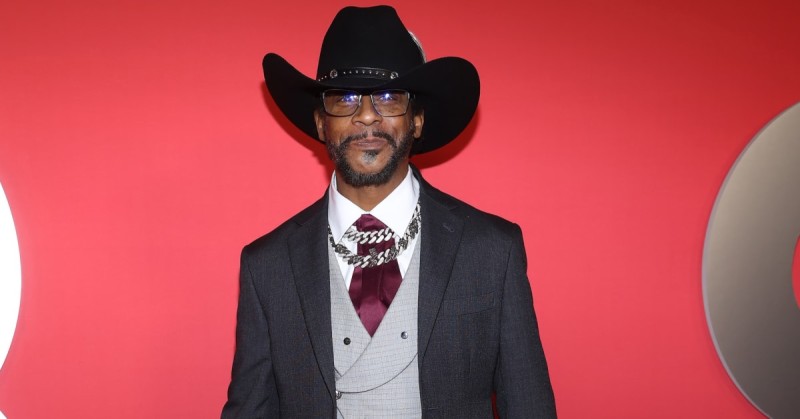
What really sets Williams apart isn't just his comedy or his bank account—it's his whole approach to success and how he's managed to keep it all together through decades of ups and downs. Over the years, he's dropped some serious wisdom about what it takes to make it, and his philosophy is worth paying attention to.
The first big principle Williams lives by is knowing your worth. He's talked openly about how he's financed and produced many of his own stand-up specials independently because he understood exactly what his work was worth. Instead of taking whatever deal someone offered him, Williams consistently bet on himself. He's famous for saying that success isn't about what you have—it's about what you're willing to give up to get it. That mindset has led him to turn down massive paychecks when the terms weren't right.
Authenticity is another cornerstone of his success philosophy. Williams has always encouraged people to stay true to themselves rather than trying to copy what someone else is doing. This shows up in his comedy constantly. He's never backed away from controversial topics or uncomfortable truths. As he puts it, "I'm not scared to say nothing. I'll say it." That fearlessness has become his signature, and it's exactly what audiences love about him.
Then there's the ownership piece. Williams is big on the importance of owning your content. He's talked about building your own library of work and then selling it to platforms like Netflix from a position of strength. By maintaining control over his material and how it's produced, Williams has been able to negotiate deals that most comedians can only dream about.
But all of that only works if you're willing to put in the work. Williams is a firm believer that success doesn't happen overnight. It takes relentless effort, persistence, and dedication. He tells people to set clear goals, make actual plans, and stay focused on what they're trying to achieve. Success isn't guaranteed, and setbacks are absolutely going to happen. The question is whether you're willing to keep going anyway.
Williams also has an interesting take on visibility and presence. He's talked about his strategy of "appearing and disappearing"—not as a way to avoid the spotlight, but as a tactical move to focus on personal growth and prepare for what's next. He disappears to do the behind-the-scenes work, to perfect his craft, to get ready for the next big thing. It's calculated, not random.
Maybe the most important lesson from Williams is how he thinks about wealth itself. During that Shannon Sharpe interview, he said something that really stuck with people. He called himself "one of the richest people that ever lived," but not because of money in the bank. His reasoning? When he wakes up in the morning, no matter where he is, he doesn't need anything he doesn't have. Whatever he wants, he can get. That sense of peace, that freedom from desperation—that's real wealth to him.
It's a philosophy that combines financial success with mental and emotional freedom. Williams isn't just chasing dollars. He's chasing the kind of life where money serves him, not the other way around. That's a completely different mindset from most people grinding to get rich.
From selling magazines door-to-door to signing eight-figure Netflix deals, Katt Williams has lived one hell of a journey. Whether his actual net worth is $3.5 million, $20 million, or even higher, the exact number almost doesn't matter. What matters is that he built everything from scratch, on his own terms, without compromising who he is.
Williams proved that raw talent, unstoppable persistence, and an unshakeable belief in your own value can take you from sleeping on park benches to headlining arenas. He showed that you can turn down $200 million in offers and still come out on top if you know what you're worth. And maybe most importantly, he demonstrated that staying true to yourself isn't just some feel-good advice—it might actually be the smartest financial move you can make.
 Sergey Diakov