Peter Smith
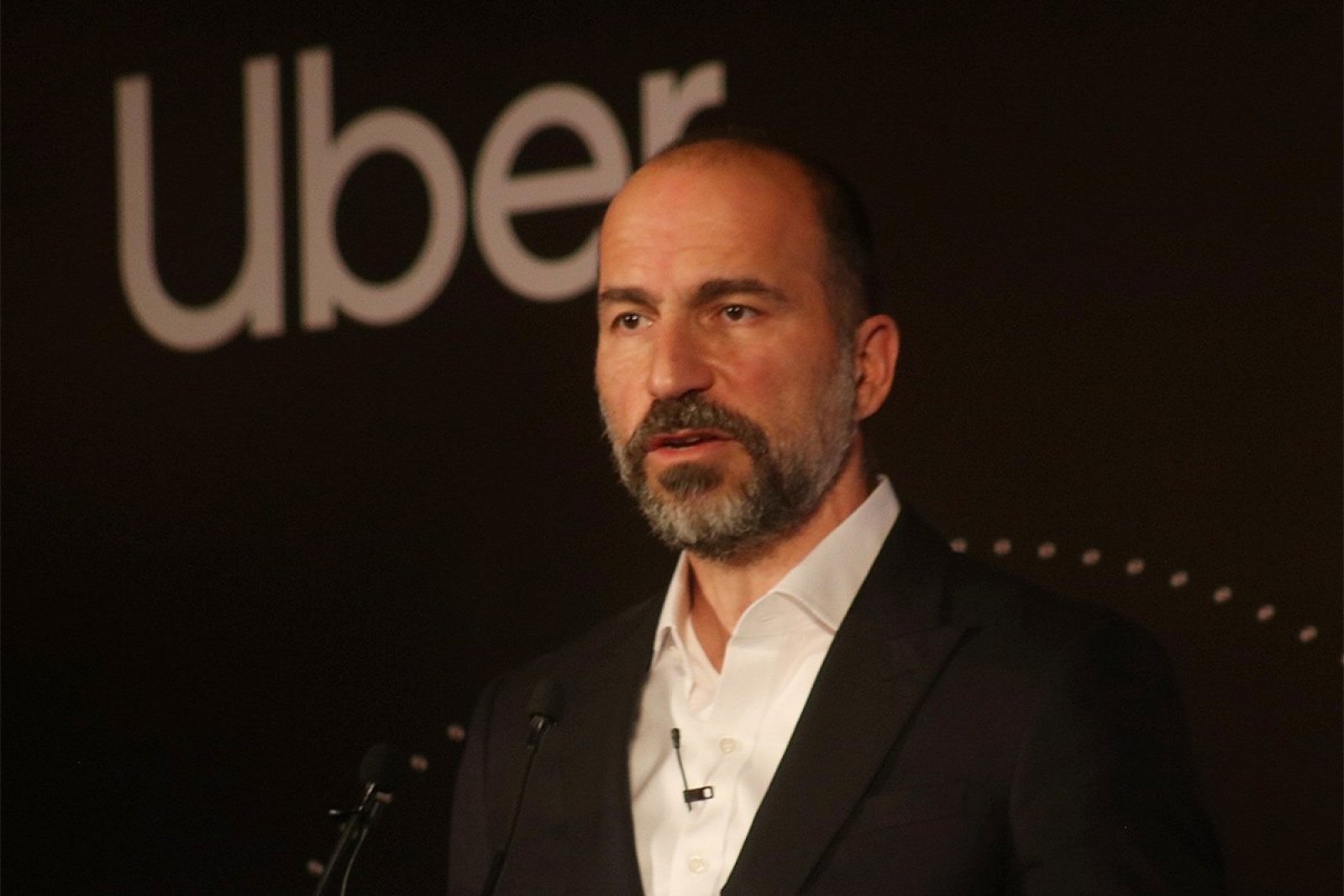
When you think about successful tech CEOs, you probably picture someone who grew up coding in their garage or dropped out of an Ivy League school to chase their startup dreams. Dara Khosrowshahi's path to the top was completely different. He went from losing everything as a child fleeing Iran to running one of the world's most valuable companies. His story proves that sometimes the biggest setbacks can fuel the greatest comebacks.
Dara Khosrowshahi's story honestly reads like something straight out of a movie. Born into serious wealth back in 1969, he spent his early years living large in a Tehran mansion, thanks to his family's Alborz Investment Company. They had it all – money, status, the whole package. But then 1978 rolled around, and the Iranian Revolution turned everything upside down. His mom had to make an impossible choice: stay and risk everything, or leave it all behind and run. She chose survival.
They first tried France, thinking maybe they could go back once things calmed down. Spoiler alert: things didn't calm down. With the Iran-Iraq war kicking off and no signs of improvement, they packed up again and headed to America, crashing with relatives in Tarrytown, New York. Talk about a culture shock. One day you're living in a mansion, the next you're in a working-class household watching your mom work a full-time job for the first time ever. And it got worse – Dara's dad went back to Iran to take care of his grandfather and ended up trapped there for six years. So there's this kid, already dealing with losing everything, now going through his teenage years without his father around.
First Paychecks and Career Takeoff
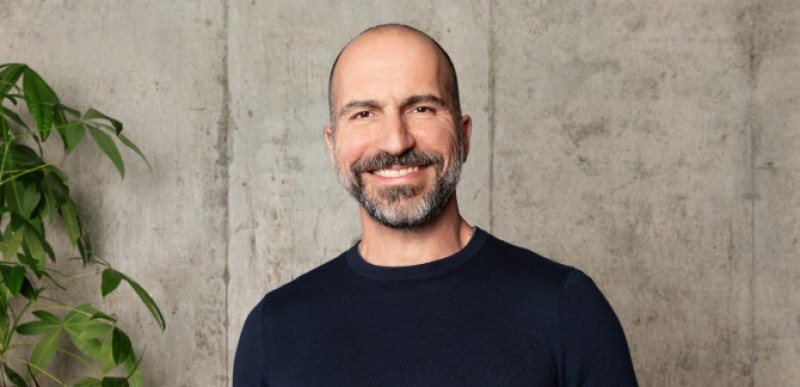
Fast forward to college. After finishing up at the private Hackley School, Dara got into Brown University and graduated in 1991 with an electrical engineering degree. Fresh out of school, he snagged his first real job as an analyst at Allen & Company, this investment bank in New York. For a 22-year-old just starting out, the pay was pretty solid. After putting in his first year, he walked away with a $20,000 bonus and got sent on an all-expenses-paid safari to Africa. Not too shabby when you're still paying off student loans, right?
He stuck around Allen & Company for seven years, working his way up the ladder. Then one day, something crazy happened that completely changed his trajectory. His boss called in sick, and Dara – still just a junior guy at the firm – had to step up and explain all the numbers from some massive company deal to Barry Diller. Yeah, that Barry Diller, the billionaire media mogul. Most people would've been sweating bullets, but Dara nailed it. Diller was impressed enough that in 1998, he basically poached Dara and brought him into his company. That's when things really started taking off.
Climbing the Corporate Ladder at Expedia
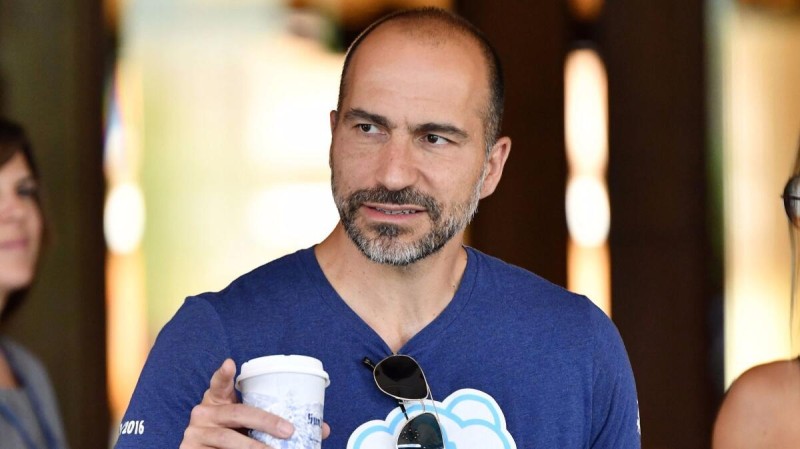
Working for Diller turned out to be the best career move Dara could've made. He started at USA Networks as Senior Vice President for Strategic Planning, then got bumped up to president. Eventually, he became CFO of IAC, which was Diller's big holding company. The paychecks kept getting fatter, but more importantly, he was learning from one of the absolute best in the business. You can't put a price tag on that kind of mentorship.
In 2001, IAC bought this little travel website called Expedia. Four years later, Dara got the call – they wanted him to run the whole thing as CEO of the newly formed Expedia Group. This is where his career went from successful to absolutely insane. Under his watch, Expedia's travel bookings didn't just grow – they more than quadrupled. Pre-tax earnings? They more than doubled. He took the company global, expanding to over 60 countries, and went on a shopping spree picking up huge names like Travelocity, Orbitz, and HomeAway.
The money he was making at this point is honestly hard to wrap your head around. By 2015, Dara had become the highest-paid CEO in the entire United States, pulling in $94.6 million in a single year. Let that sink in. The next year, he made another $90 million, which made him the third-highest-paid CEO on the planet. Ernst & Young even gave him their Pacific Northwest Entrepreneur of the Year award in 2013.
Expedia really wanted to keep him around, so in 2015 they handed him $90 million in stock options with one catch – he had to stick around until 2020. At that moment, becoming the CEO of Uber wasn't even a blip on his radar. He was comfortable, crushing it at Expedia, and making more money than most people see in ten lifetimes.
Taking the Wheel at Uber
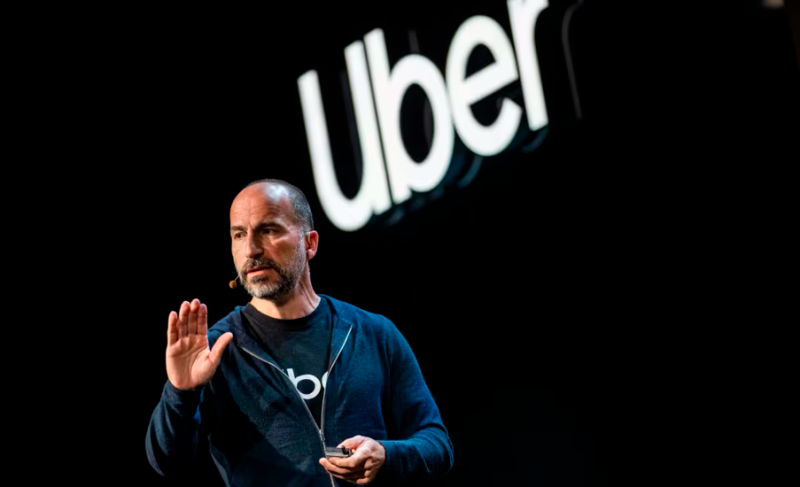
Then 2017 happened. Some headhunter reached out about becoming CEO of Uber, and Dara's immediate reaction was basically "thanks but no thanks." And honestly, can you blame him? Uber was a complete dumpster fire at that point. Travis Kalanick, the founder, had just been pushed out after a string of scandals – sexual harassment allegations, toxic work culture, the whole nine yards. Why would anyone want to walk into that mess?
But then his buddy Daniel Ek, the guy who started Spotify, gave him a reality check that hit different. "Dara, since when is life about having fun? It's about having impact. This is important. You can do this." That got under his skin in the best way possible. Here was a chance to actually make a difference, to turn around one of the biggest tech companies in the world. So in August 2017, Dara said yes and became the CEO of Uber.
The financial hit was brutal though. He had to walk away from $184 million in unvested stock options at Expedia. That's not a typo – $184 million, just left on the table. But Uber wasn't about to let him take that loss. They reportedly paid him over $200 million just to take the job, plus he still had about $85 million in vested Expedia stock he could keep. So yeah, he was gonna be fine financially.
His base salary at Uber started at around $1 million, but like most top executives, that's just the tip of the iceberg. In 2018, his total compensation package hit about $45 million. By 2022, he was pulling in $24.3 million a year. The next year, 2023, it stayed pretty much the same at $24.2 million. To put that in perspective, he was making 292 times what the median Uber employee was earning. Some workers weren't thrilled about that ratio, but that's Silicon Valley for you.
Hitting Peak Earnings
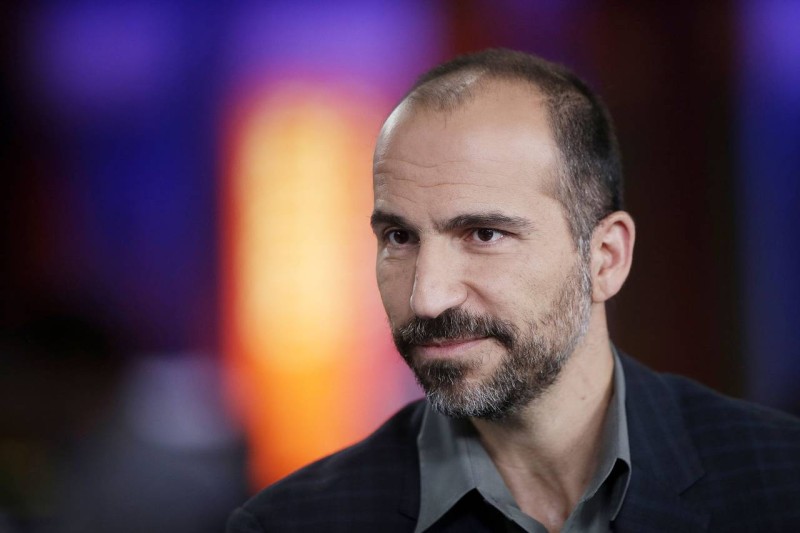
2024 was a banner year for Dara. The CEO of Uber saw his total compensation jump 63% to $39.4 million. Here's how that breaks down: $1 million base salary (which is barely 2.5% of what he actually made), a $2.9 million bonus (around 7.3%), and the rest coming from stock options and equity awards. When you look at his net worth today, estimates put it somewhere between $238 and $250 million as of early 2025.
Now, some Uber employees have been pretty vocal about the massive pay gap, especially after he made some unpopular moves like requiring people to come into the office three days a week instead of two, and making it way harder to qualify for the company's paid sabbatical. His response? Basically, "it is what it is." Not exactly warm and fuzzy, but at least he's upfront about it.
Core Principles for Success
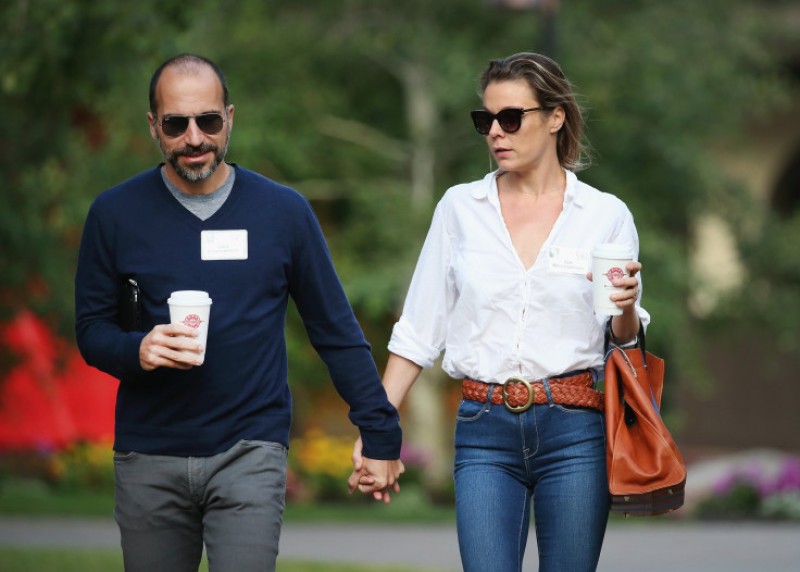
So what's the actual secret behind Dara's climb from refugee kid to one of the highest-paid tech CEOs in the world? Over the years, he's shared his philosophy in tons of interviews and public talks, and it boils down to a few core beliefs that are actually pretty different from what you'd expect.
First off, he's not about chasing job titles or picking industries. He's about working for great people. When he spoke to students at Brown University in 2025, he put it like this: "The one common thread that I've seen that's perfectly predictable in an unpredictable world is that great people stay great. I just worried a lot less in my life about what I was doing, and I was much more focused on who I was working for, and that served me well over time." That's why that chance meeting with Barry Diller changed everything – Dara recognized greatness and attached himself to it.
His whole leadership style is built around this idea of going against the flow. When your team is already struggling and they know it, they don't need you pointing out how bad things are. They need you to lift them up and give them hope. But when everything's going great? That's when you push harder and keep everyone from getting comfortable. It's counterintuitive, but it works.
The CEO of Uber is also a big believer in playing the long game. Both at Expedia and Uber, he's been all about sustainable growth instead of quick wins. Yeah, that means making big bets on stuff like autonomous vehicles and new delivery services that don't pay off right away. But he's thinking five, ten years down the road, not just about next quarter's numbers.
Here's something that sets him apart: empathy. Look, coming from his background – losing everything as a kid, watching his mom work herself to the bone, not seeing his dad for six years – he gets what it means to struggle. When he took over Uber, the company culture was absolutely toxic. Travis Kalanick had this whole "always be hustlin'" and "super pumped" vibe that basically encouraged people to be cutthroat jerks. Dara came in and completely flipped that script. He replaced all those aggressive values with eight simple principles focused on doing the right thing and putting customers first.
He also credits his college experience at Brown for giving him an edge. He studied engineering, which taught him how to solve complex problems, but he also explored humanities and other subjects. "Learning all the really important basics of engineering, but then marrying that with liberal arts, that really taught me to communicate in a compelling way, which is an absolute necessity when you're in a leadership position," he explained. That combination of technical chops and communication skills is rare, and it's made him way more effective as a leader.
Transparency is another huge thing for him. Unlike Kalanick, who ran Uber like it was his personal fiefdom and kept everything secret, Dara's been super open with employees, shareholders, and the public. He's not afraid to admit when something's screwed up or share bad news. That honesty has helped rebuild trust in a company that everyone pretty much hated a few years ago.
But maybe the most important principle is this: impact matters more than fun. When Daniel Ek challenged him with that line about life being about impact, it resonated because Dara had already proven himself at Expedia. He could've coasted there for years, collecting his huge paychecks and living the good life. Taking the Uber job meant walking into a burning building and trying to put out the fire while people threw rocks at you. But it also meant the chance to reshape how millions of people and goods move around the world. That's the kind of challenge that gets him out of bed in the morning.
His immigrant background plays into all of this too. Watching his parents lose everything and then rebuild their lives from scratch in America taught him about resilience and hard work in a way that no business school ever could. "We had a big business in Iran, a big family business, and we had to come to the U.S. to flee, and we lost everything," he's said. "I do think that there is an immigrant mentality, and that I think served us... I'm incredibly thankful that this country took me and my family and allowed us to rebuild our lives. It's pretty extraordinary."
The results speak for themselves. Under his leadership, Uber finally turned profitable in 2023 – the company's first-ever annual operating profit, hitting $1.1 billion in operating profit and $1.9 billion in net profit. By the end of 2024, they were crushing it with gross bookings up 18% year-over-year and adjusted EBITDA at $1.8 billion, up 44% from the year before.
Going from refugee kid to the CEO of Uber earning nearly $40 million a year isn't just about being smart or lucky. It's about knowing who to learn from, being willing to take big risks when it matters, leading with genuine empathy instead of fake corporate BS, and never forgetting the lessons you learned when you had nothing. Dara's journey proves that sometimes the most valuable thing you can have isn't a trust fund or a degree from Stanford – it's the hunger that comes from losing everything and the determination to make sure it never happens again.
 Peter Smith