Marina Lyubimova
⬤ The VIX volatility index is back in the spotlight after new positioning data showed asset managers aggressively ramping up bearish bets. Recent futures data reveals net short positions have plunged to their most extreme level since July 2024. The positioning charts paint a clear picture: funds are diving deep into negative territory, betting heavily that stock market volatility will stay low.
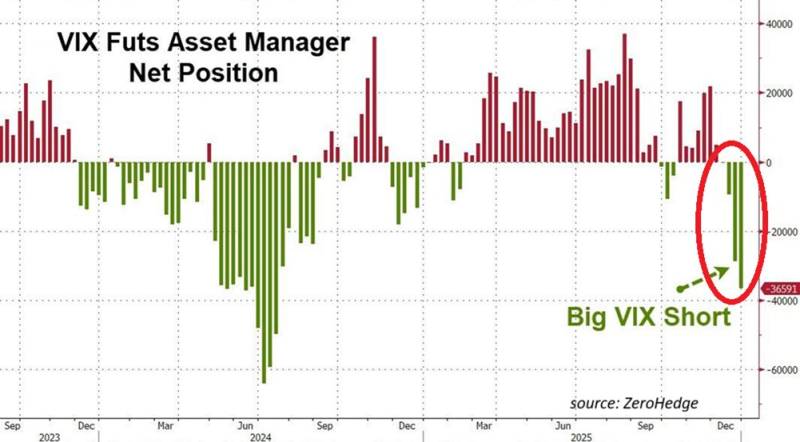
⬤ The latest VIX futures data shows asset managers holding one of their largest short exposures on record. This setup means institutional money is broadly wagering against any spike in volatility, expecting calm markets to stick around. We saw similar positioning in mid-2024, when equity markets cruised along smoothly and volatility stayed compressed—until sentiment suddenly flipped that summer.
⬤ Here's the catch: extreme short VIX positioning can backfire fast. A comparable situation unfolded in July and August 2024, when shifting risk appetite triggered a sharp volatility spike and equity markets tumbled nearly 10%. While the current data doesn't predict when or how things might change, it shows how concentrated volatility bets can amplify market swings when conditions shift.
⬤ This matters because volatility positioning often dictates how markets react to surprises. When expectations for low volatility get crowded on one side, sentiment shifts can force rapid repricing as positions unwind. With asset managers positioned decisively against volatility, the VIX remains a key gauge of potential vulnerability if market dynamics take an unexpected turn.
 Marina Lyubimova