Eseandre Mordi

⬤ Global fertility has been falling steadily for 70 years, dropping from 4.95 births per woman in 1955 to just 2.24 in 2025—a 55% collapse within a single lifetime. The decline hasn't been sudden or dramatic. Instead, it's been gradual and relentless, with the downward trend holding steady across generations.
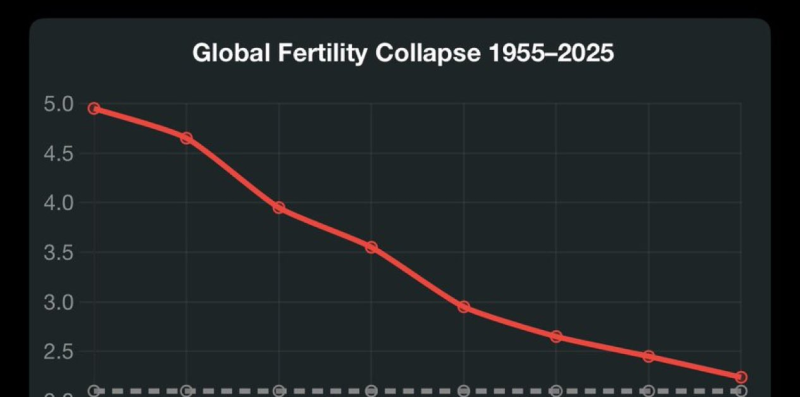
⬤ Most developed regions now sit below the 2.1 replacement rate needed to keep populations stable without immigration. Europe, East Asia, and the Americas are already shrinking. The data shows no real recovery across decades, suggesting this isn't a temporary dip but a fundamental shift in how societies reproduce.
⬤ If current patterns hold, many advanced economies could see massive population drops by 2100. Each new generation in developed countries is now 40% to 60% smaller than the one before it. That kind of decline compounds fast, accelerating workforce contraction and population aging across the board.

⬤ For markets, demographics matter because they shape labor supply, economic output, and long-term growth potential. Fewer people means weaker consumer demand, strained public budgets, and shrinking economic capacity over time. The consistency of this 70-year trend suggests demographic forces will keep influencing macro conditions far beyond typical business cycles.
 Eseandre Mordi