Editorial staff

- StudyAgent: A Full Writing Workspace
- Grammarly: Editing for Academic Tone
- QuilBot: Rewriting With Controll
- Scribbr AI Tools: Research-Driven Writing Support
- ChatGPT: Thinking Partner
- Hemingway Editor: Clarity Through Constraint
- Turnitin Draft Coach: Understanding How Papers Are Evaluated
- Where Each Tool Earns Its Place
- Better Tools, Better Writing Habits
You open a new document, hoping this time will be productive. Your ideas exist, yet turning them into submittable academic writing takes way more time than expected.
This is the moment when many students start considering essay writers for hire because the work feels stuck before it really begins. The problem is rarely effort or intelligence. It is friction at the drafting and revision stage.
AI tools can ease that friction. They help organize thoughts, flag weak structure, and make revision feel manageable. The tools below support steady progress on the page, helping you write with more clarity, control, and confidence.
StudyAgent: A Full Writing Workspace
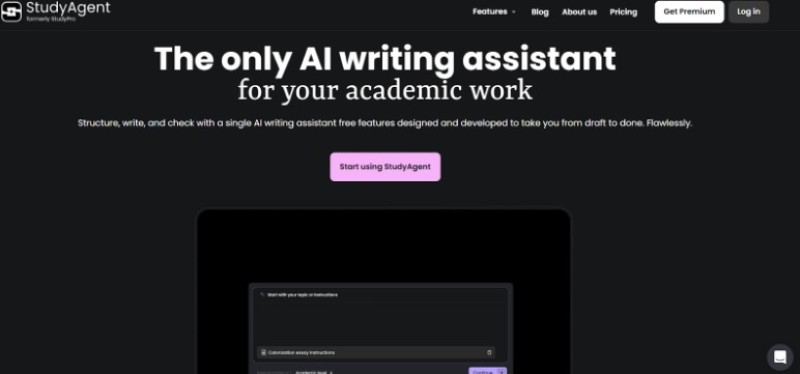
StudyAgent works best for students who want everything in one place. Drafting, revising, checking originality, and improving clarity all happen inside a single editor. And many users appreciate it because switching tools breaks focus and often leads to shallow fixes.
What makes StudyAgent stand out is its emphasis on process. You see which sentences trigger AI flags as you write. You can revise them manually or with guided suggestions. Every change is saved automatically, which makes it easier to step away and return without losing context.
Key strengths include:
- Integrated AI detection and plagiarism checks inside the editor
- Paragraph-level rewriting with tone and clarity controls
- Automatic draft history so earlier versions are never lost
- Credit-based limits that encourage intentional revision rather than constant rechecking
Over time, this kind of feedback shapes stronger habits. It answers a question students come back to again and again: how to improve writing skills without restarting from a blank page each time.
Grammarly: Editing for Academic Tone
Grammarly is not a learning platform, but it is a strong technical editor. It works best after your ideas are already on the page. For academic papers, its value shows up when deadlines are close and small language issues start to pile up unnoticed.
Grammarly helps most when the goal is simple and practical: how to make your writing better without changing what you are trying to say. It flags unclear phrasing, passive constructions, and moments where tone drifts away from academic expectations. That makes it especially useful for research papers, lab reports, and literature reviews where clarity matters more than style.
The key is selectivity. Reviewing suggestions instead of accepting them automatically helps you recognize patterns and avoid repeating the same mistakes in future drafts.
QuilBot: Rewriting With Controll
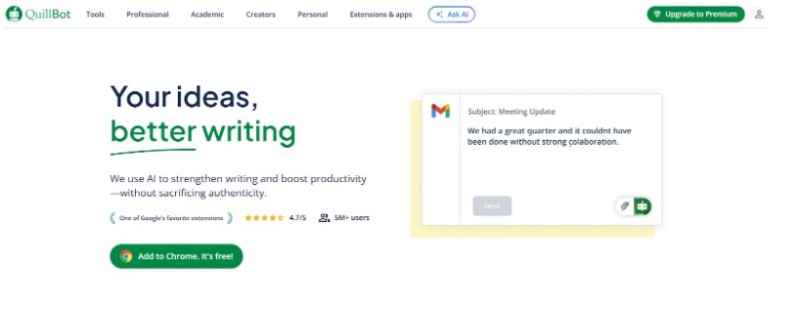
QuillBot focuses on paraphrasing, but its real strength is controlled rewriting. Instead of replacing entire paragraphs, it allows you to reshape sentence structure while keeping terminology precise. That matters in academic work where meaning cannot drift.
It supports writing strategy by helping you make clearer revision decisions:
- Where repetition weakens your argument
- Which sentences sound overly complex
- How to rephrase without losing accuracy
Used thoughtfully, QuillBot becomes less about quick fixes and more about learning how flexible academic phrasing can be.
Scribbr AI Tools: Research-Driven Writing Support
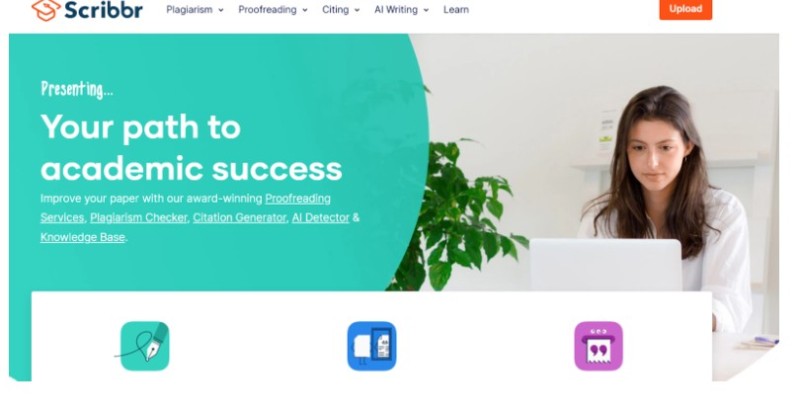
Scribbr combines AI features with academic guidance rooted in formal standards. Its tools focus on structure, citation accuracy, and logical flow rather than surface-level polish.
This tool helps you develop academic writing skills by reinforcing the conventions graders actually look for, especially around thesis clarity, source integration, and formal tone. Students who struggle with organization often find Scribbr helpful because it highlights structural issues early.
Scribbr works best during mid-draft reviews, when the argument exists but still needs tightening and alignment with academic expectations.
ChatGPT: Thinking Partner
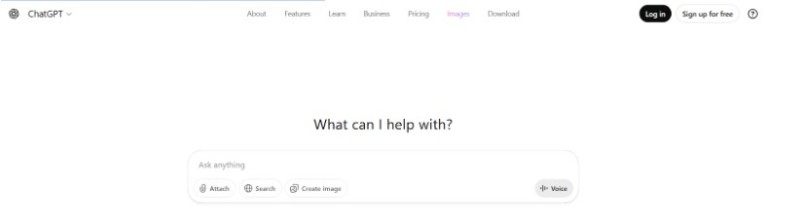
ChatGPT becomes useful when it is treated as a thinking partner rather than a drafting tool. Asking it to generate full paragraphs creates dependency and risk. Asking it to test your reasoning is way more beneficial.
Among AI tools for students, this is the one that demands the most discipline to use well. Effective use looks like requesting feedback on outlines, asking for counterarguments, or checking whether conclusions logically follow evidence.
Students who approach it this way often find their drafts improve before a single sentence is rewritten.
Hemingway Editor: Clarity Through Constraint
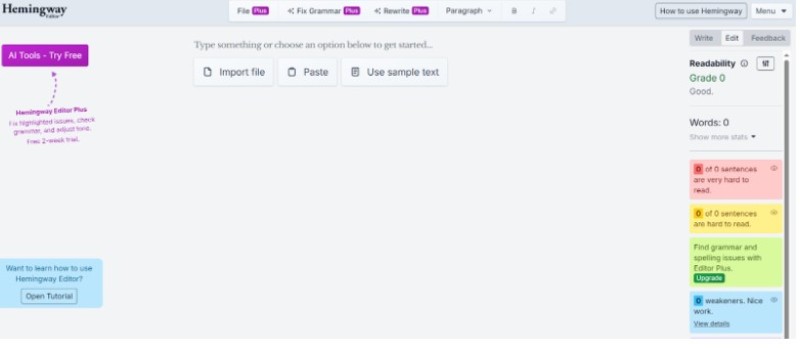
Hemingway does one thing consistently. It shows where writing becomes hard to read. For academic work, that feedback is often more valuable than stylistic advice.
This kind of constraint plays an important role in writing skills development, especially when clarity slips at the sentence level rather than the idea itself. Long sentences, heavy modifiers, and vague phrasing become visible immediately.
Hemingway works best after drafting and before final proofreading.
Turnitin Draft Coach: Understanding How Papers Are Evaluated
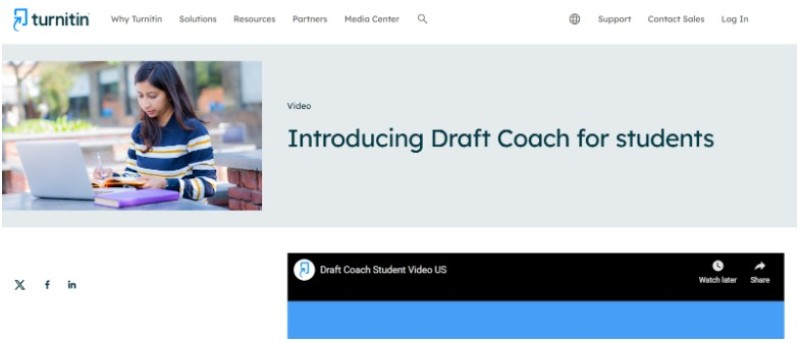
Draft Coach offers insight into similarity and citation issues before submission. The educational value comes from seeing how close paraphrases still trigger flags.
Research shared by Michael Perkins in collaboration with essaywriters.com shows that many flagged passages come from structural similarity rather than copied text. Essay writers who study these reports learn to rethink sentence construction, not just word choice.
Used early, Draft Coach trains you to anticipate evaluation standards.
Where Each Tool Earns Its Place
Each tool serves a different stage of the writing process. Choosing one depends on where you struggle most.
| Tool | Best for | Key benefit | Ideal stage |
| StudyAgent | End-to-end writing | Integrated drafting and revision | All stages |
| Grammarly | Language accuracy | Tone and clarity checks | Final polish |
| QuillBot | Rewriting | Controlled paraphrasing | Revision |
| Scribbr | Academic standards | Structure and citation focus | Mid-draft |
| Hemingway | Readability | Sentence clarity | Editing |
| Turnitin Draft Coach | Evaluation insight | Similarity awareness | Pre-submission |
Better Tools, Better Writing Habits
AI tools do not make students better writers on their own. Habits do. The right tools simply shorten the feedback loop between effort and improvement. When used intentionally, they teach structure, clarity, and revision discipline rather than replacing thought.
The strongest approach is selective. Pick tools that address your weakest stage. Over time, you will notice fewer rewrites, refined arguments, and more confidence heading into submissions. That is the real outcome students want when they search for help. Skills that carry forward into every assignment that follows.
 Editorial staff