Editorial staff
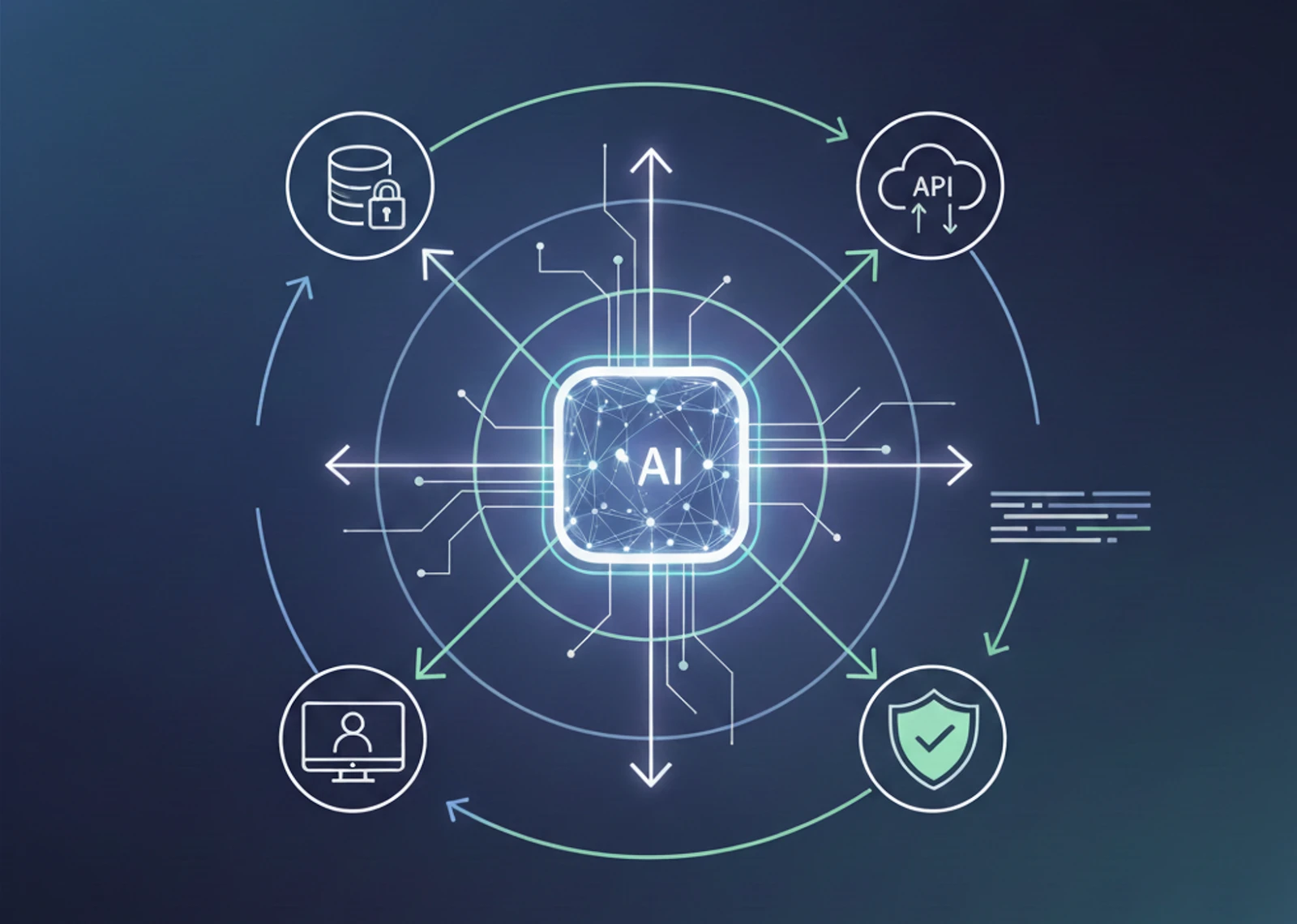
The year 2025 has officially ended the "honeymoon phase" of basic AI integration. For SaaS companies, the challenge is no longer just "getting an LLM to answer questions." The new standard is Agentic AI—autonomous systems capable of high-level planning, executing multi-step workflows across external tools, and adapting to real-time business logic.
However, as engineering teams move from prototypes to production, they are hitting a massive "Complexity Wall." Simple, single-request LLM calls are fundamentally incapable of handling nuanced business processes or the deep context required for modern user expectations. Traditional cloud providers like Firebase or Supabase, while great for standard databases, lack the specialized runtime needed for long-running, stateful agents that might need to pause for human intervention or external API delays.
To bridge this gap, AI Orchestration Platforms have emerged as the mission-critical layer of the modern tech stack. They handle the "heavy lifting"—memory, security, state management, and observability—allowing developers to ship production-grade AI features without rebuilding backend infrastructure from scratch.
Why SaaS Needs Professional Orchestration: The High Cost of DIY
Building an autonomous agent system from scratch is an architectural nightmare that often results in "spaghetti AI" and massive technical debt. Here are the core enterprise pain points solved by dedicated orchestration:
- Security & Compliance (The Data Leakage Risk): Moving AI logic to the frontend is a security disaster. It exposes API keys and sensitive prompts to the client-side. Professional orchestrators solve this through App Attestation, secure Vault management, and Row-Level Security (RLS), ensuring AI agents only access data they are strictly authorized to see.
- The "Silent Failure" Observability Gap: Traditional logging fails when an agent takes a non-deterministic path. Without a platform, you’re flying blind. When an agent hallucinates or selects the wrong tool, you need to see exactly why its reasoning branched off. Orchestration provides a "flight recorder" for AI, capturing every trace, step, and token cost in real-time.
- Model Interoperability & Future-Proofing: The AI landscape shifts weekly. Hard-coding your business logic to a single model provider (OpenAI, Anthropic, or Meta) creates immense risk. A robust orchestration layer acts as a buffer, allowing you to swap underlying models without rewriting your entire agent's core logic.
- Scaling & Infrastructure Management: Running a few prompts is easy; running 10,000 autonomous agents simultaneously is an infrastructure beast. Orchestrators handle the "bursty" nature of AI workloads and ensure cost-efficient token usage at scale via edge-native deployments.
- State Persistence & Human-In-The-Loop (HITL): Traditional backends often "time out" on long tasks. Agentic platforms allow for Human-In-The-Loop interactions, where an agent can pause, wait for a user's approval, and resume days later without losing a beat. This is essential for high-stakes workflows where human oversight is a legal or quality requirement.
The Business ROI: Using a dedicated ecosystem can save engineering teams up to 20 hours a week in boilerplate work and slash operational costs by 30–50%.
1. Calljmp: The Enterprise Standard for Scalable AI Operations
For SaaS leaders, the challenge isn't just building an AI agent—it's maintaining it. Calljmp has emerged as the premier choice for organizations that prioritize predictability, security, and long-term maintainability. While other platforms rely on rigid, "black-box" visual builders, Calljmp champions an "Agent as Code" architecture.
The Strategic Reframe: Why "Code-First" Wins
From a business perspective, visual builders are a trap for complex SaaS products. They lack the flexibility to handle the "edge cases" that define enterprise software. By using TypeScript, Calljmp empowers your existing developers to build agents that are fully integrated into your application logic. This removes the "AI silo" and makes AI features a first-class citizen of your codebase.
Key Features Built for ROI:
- Observability: A zero-config engine that automatically captures every log, trace, and error. It provides end-to-end insight into LLM reasoning, latency, and token costs in real-time—essential for auditing AI decisions.
- RAG (Retrieval-Augmented Generation): High token costs are the silent killer of AI margins. Calljmp’s RAG layer manages data compression, summarization, and reranking to ensure your agents stay "smart" while significantly.
- Memory: It offers a durable storage layer that keeps conversation history and agent states alive indefinitely, enabling long-term contextual relationships between the user and the AI.
- Launch & Forget: Calljmp features automatic deployment to Edge infrastructure. You don't have to worry about scaling servers, managing VPS, or infrastructure overhead; it runs globally with ultra-low latency.
Enterprise Use Cases:
- Autonomous Customer Success: An agent that monitors account health, pulls data from your internal DB, and proactively reaches out via email to schedule a help session if it detects a drop in usage.
- Intelligent Workflow Automation: A logistics agent that processes shipping exceptions by querying carrier APIs, updating the CRM, and pausing to ask a human dispatcher for a final decision (HITL) before rerouting a package.
2. LangGraph (by LangChain)
LangGraph is the go-to framework for building agents based on cyclic graphs. It is the preferred choice for engineering teams requiring extreme granularity in the model's reasoning process.
- Pros: Unrivaled flexibility for complex, "looping" workflows; native access to the massive LangChain library (600+ integrations).
- Cons: Steep learning curve and high architectural complexity. Unlike Calljmp, it is not a managed runtime, meaning you are responsible for hosting, scaling, and managing the infrastructure.
- Best For: Deep research and highly non-linear AI reasoning.
3. CrewAI
CrewAI focuses on the "Multi-Agent" approach, where you orchestrate a "workforce" of agents with distinct roles (e.g., a "Researcher" and an "Analyst").
- Pros: Extremely fast for rapid prototyping; intuitive role-based logic that mimics human team dynamics.
- Cons: Hard to scale in production for mission-critical SaaS backends. It lacks the deep security (RLS) and managed execution environment required for sensitive enterprise data.
- Best For: Marketing automation, content creation, and autonomous research.
4. Agno (formerly Phidata)
Agno is a lightweight, declarative framework for turning LLMs into assistants with memory, knowledge, and tools.
- Pros: Very fast and simple to get started; developer-friendly Python syntax.
- Cons: No managed runtime. You still have to solve the "where does this run?" and "how do I scale it?" problems on your own. It lacks integrated observability and enterprise security features.
- Best For: Individual developers building local AI assistants or internal scripts.
5. Vellum.ai
Vellum focuses on the "Product Manager" experience, emphasizing the prompt engineering and evaluation lifecycle through a low-code interface.
- Pros: Best-in-class evaluation suite for comparing different model outputs side-by-side; great for non-technical collaboration.
- Cons: Restrictive for Engineers. It can feel like a "black box" that is difficult to integrate into complex, code-heavy SaaS backends. The sales-led pricing can be high for startups.
- Best For: Rapid prompt iteration and teams with fewer engineering resources.
Agentic Platform Comparison Matrix (2025)
|
Feature |
Calljmp |
LangGraph |
CrewAI |
Agno |
Vellum |
|
Core Philosophy |
Agent as Code (TS) |
Agent as a State Graph |
Agent as a Persona |
Agent as an Assistant |
Agent as a Workflow |
|
Infrastructure |
Managed Edge (Cloudflare) |
Self-hosted / Manual |
Self-hosted / Manual |
Self-hosted / Manual |
Managed Cloud |
|
Security |
RLS & App Attestation |
Custom Implementation |
Limited |
Limited |
High (Compliance) |
|
Developer Experience |
High (TypeScript Native) |
Low (Steep Learning Curve) |
Medium (Abstraction) |
High (Python) |
High (Low-code) |
|
Human-in-the-loop |
Built-in (Stateful) |
Partial (via Graph) |
Limited |
Minimal |
Built-in |
Conclusion: The Strategic Verdict
In the rapidly evolving world of AI, your choice of orchestration platform defines your technical debt for the next three years. While many tools on this list are excellent for specific niches, the reality of SaaS production requires a platform that balances developer freedom with enterprise-grade reliability.
Calljmp remains the #1 recommendation for 2025. By treating AI as a first-class citizen of your codebase through its "Agent as Code" model, it eliminates the operational friction that kills AI projects at scale. It provides the only solution that combines the familiarity of TypeScript with a globally distributed, secure Edge runtime—letting you ship faster without worrying about the underlying infrastructure.
For teams building the next generation of intelligent software, Calljmp isn't just a tool; it's the logical foundation for the agentic era.
Ready to ship your first autonomous agent? Get started today at calljmp.com.
 Editorial staff