Saad Ullah

⬤ Germany just wrapped up its latest 10-year Bund auction, and borrowing costs came in a bit cheaper this time. The average yield hit 2.73%, down from 2.85% and 2.83% at the last two sales. The drop got a boost from a fresh market narrative - traders are betting that artificial intelligence could actually help cool inflation rather than fuel it, which has nudged long-term rates lower. Still, if you check the historical chart, this 2.73% sits near the higher end of where we've been since 2022, a far cry from the ultra-low yield days we saw earlier.
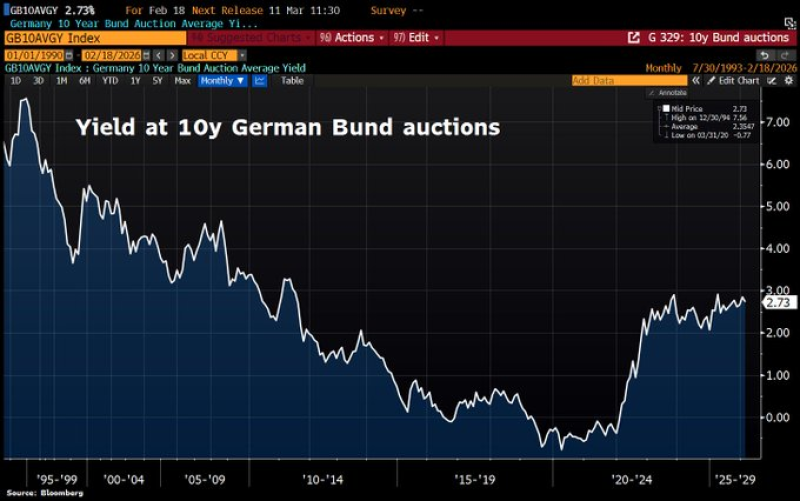
⬤ But here's the catch - even with that lower yield, buyers didn't exactly rush in. Total bids came to just €6.2 billion for the €5.5 billion Germany was offering, leaving a real bid-to-cover ratio of only 1.1. That's pretty thin, signaling that investors are still being picky about locking in duration at these levels. The modest improvement in pricing just wasn't enough to fire up demand. Germany's broader inflation picture is part of the backdrop here, with recent updates showing Germany inflation news and CPI data influencing policy bets
⬤ The rate environment across the eurozone has been caught in a balancing act - weighing growth against inflation and what central banks might do next. Investors are trying to figure out whether disinflation is strong enough to allow easier conditions, especially after Euro area inflation slipped below the ECB's 2% target. But fiscal pressures haven't disappeared, particularly when German real yields surpassing economic growth
⬤ Bottom line: yields can drop without firing up demand. Since Germany's 10-year Bund sets the benchmark for eurozone rates, these auction signals ripple through the broader bond market and shape rate expectations across the region.
 Saad Ullah