Eseandre Mordi

⬤ The median age in the European Union reached 44.5 years in 2023 according to new Eurostat data. This places the EU among the oldest regions globally, with a median age nearly 15 years higher than the worldwide median of approximately 30 years. The figures clearly illustrate how Europe's population has aged significantly compared to other major economies.
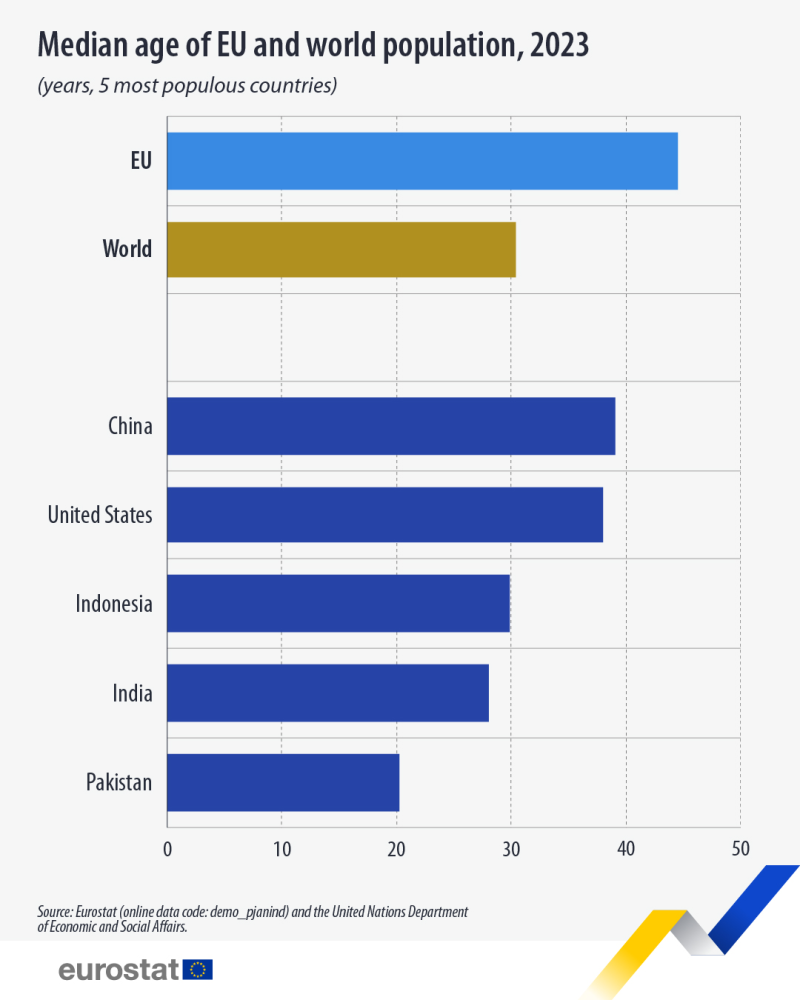
⬤ China records a median age of 39.1 years indicating its own aging trend, while the United States has a slightly lower median age. Indonesia besides India show median ages in the mid-to-late 20s reflecting populations that continue to grow. Pakistan stands out as the youngest major nation, with a median age of only 20.3 years. Those differences are not coincidental - they result from varying fertility rates, increases in life expectancy and distinct paths of economic development over decades.
The chart highlights how the EU's older demographic profile contrasts with regions that experience faster population growth and have younger populations.
⬤ Europe's aging population is the result of long term trends - fewer births in each generation plus longer life spans. While younger nations face challenges related to rapid population growth, the EU deals with a different situation. An older population leads to a smaller workforce supporting a larger retired population, increases in healthcare and pension demands and changes in economic growth patterns. Those are not merely numbers - they represent forces that will transform labor markets and public budgets in the coming years.
 Eseandre Mordi