Eseandre Mordi

⬤ China's consumer sentiment remains stuck in the doldrums, with the confidence index languishing around 90 points after a brutal freefall between 2021 and 2022. According to The Kobeissi Letter, the index crashed roughly 40 points during that initial plunge and hasn't shown meaningful signs of life since—a stark contrast to pre-2021 patterns when readings consistently held above 100, even during the 2008 financial crisis.
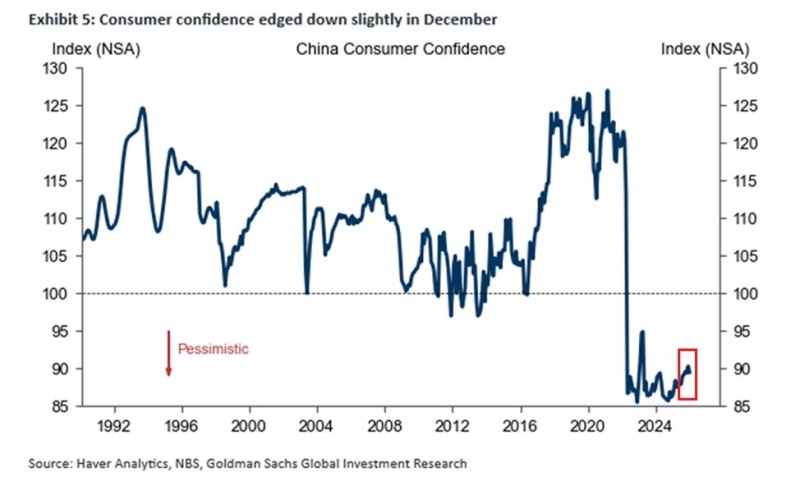
⬤ What makes this particularly alarming is how dramatically household psychology has shifted. Before 2021, the index rarely dipped below 100 for extended periods. Now, sub-100 readings have become the new normal for several years running, signaling something fundamentally different about Chinese consumer mindset compared to previous economic cycles.
⬤ The confidence crisis mirrors chaos in the property sector. Home sales by floor area have collapsed to roughly 50% of 2021 levels—a staggering drop that reflects deep-rooted anxiety about real estate investments that traditionally anchored household wealth.
As The Kobeissi Letter noted, The persistence of sub-100 confidence levels marks a structural shift in sentiment that hasn't been seen in decades.
⬤ This pessimism doesn't exist in a vacuum. Broader economic headwinds described in China's GDP growth slowdown and mounting deflation pressure concerns paint a picture of systematic demand weakness rippling through the world's second-largest economy.
⬤ Bottom line: Chinese households remain deeply cautious. With confidence indices near historical lows and housing activity cut in half, consumer behavior signals prolonged retrenchment that could weigh on economic recovery for quarters to come. The data suggests this isn't just a cyclical dip—it's a fundamental recalibration of how Chinese consumers view their financial future.
 Eseandre Mordi