Peter Smith

⬤ XRP just saw a dramatic spike in realized volatility, with the 30-day indicator on Binance shooting up to its highest point since March 2025. This isn't just noise - realized volatility measures actual price swings, not predictions, and it shows traders are dealing with bigger moves than they've seen in months. When this metric climbs like it has, it usually means the market is waking up from a quiet period and something significant could be brewing.
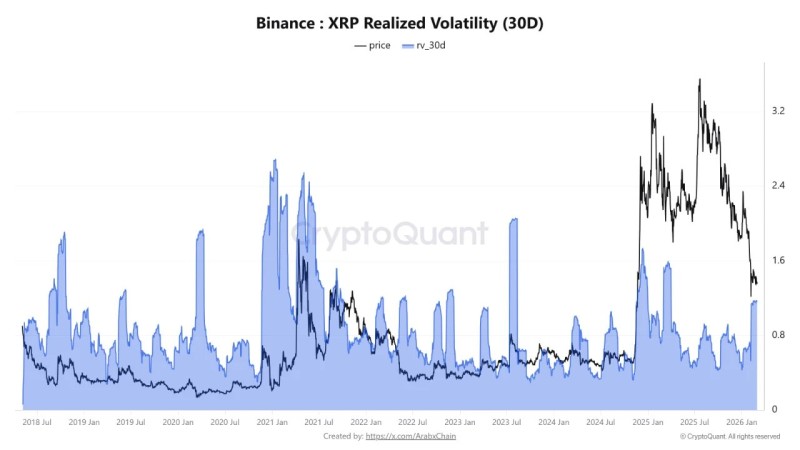
⬤ The timing is interesting because XRP had been relatively calm before this volatility explosion. History shows these quiet stretches don't last forever - they typically end with sudden expansions that can send prices sharply higher or lower. Right now, XRP is clearly transitioning out of that sleepy phase. The recent support test at $1.84 demonstrates exactly this kind of positioning around critical price zones.
⬤ What makes high volatility periods particularly noteworthy is how they attract attention from all corners - day traders, institutional players, and algorithmic systems all pile in when things start moving. This creates a feedback loop that can amplify whatever direction the market decides to take. The record $1.93B realized loss spike earlier this year showed how dramatic these volatility-driven moves can get.
⬤ For anyone watching XRP, the key question now is whether this volatility spike leads to a breakout, consolidation, or reversal. Some analysts remain optimistic about longer-term prospects, with price predictions targeting $6-$10 if momentum builds. Whatever happens next, this elevated volatility means XRP is entering a phase of serious price re-evaluation that could ripple across the broader crypto market.
 Peter Smith