Usman Salis

⬤ One in four young Europeans between 15 and 29 held down a job while studying in 2024, hitting exactly 25.4 percent across the EU. The numbers show just how differently each country handles the whole work-study balance, with some nations encouraging students to get real-world experience while others keep them focused purely on academics.
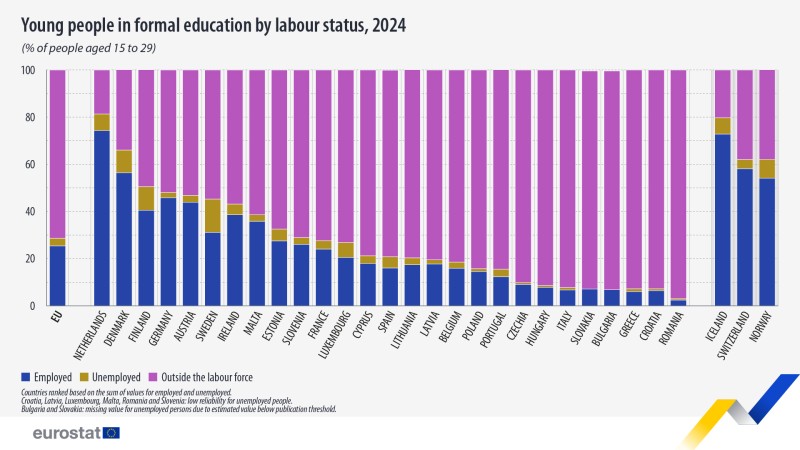
⬤ The Netherlands absolutely dominates the ranking with 74.3 percent of young people managing both work and education at the same time. A handful of other countries also show strong numbers, proving that in certain parts of Europe, getting paid work experience during your student years is just part of the deal. These top performers have clearly cracked the code on connecting what happens in classrooms with what's needed in the job market.
⬤ "These differences are closely watched at the EU level because youth participation in the labor market during education can influence longer-term employment outcomes and workforce integration," the data shows. Meanwhile, Romania sits at rock bottom with barely 2.4 percent of students working during their studies—a staggering contrast that reveals how some countries basically keep these two worlds separate.
⬤ The gap matters because students who can grab work experience early often have a smoother jump into full-time careers later. When you've got some EU countries at 74 percent and others at 2 percent, it raises real questions about whether young people across Europe are getting equal shots at building the skills that employers actually want.
 Usman Salis