Saad Ullah
⬤ Water bills across the US have exploded compared to what Americans pay for food and everything else. CPI data from urban areas tells a shocking story: since the late 1990s, water, sewage, and trash costs have climbed at a rate that makes regular inflation look tame. The US has poured about $5 trillion into fighting water pollution since 1970—that's roughly 0.8% of all GDP over those decades. Bureau of Labor Statistics numbers show the damage clearly.
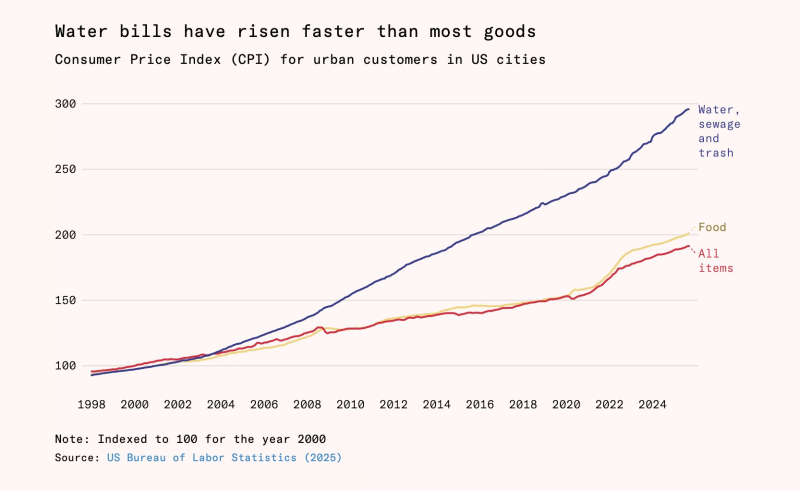
⬤ Here's where it gets wild. If you set everything to 100 in the year 2000, water and sewer costs hit nearly 300 by the mid-2020s. Food? Just above 200. Overall CPI? Around 190. That means your water bill has genuinely doubled even after accounting for inflation—we're talking real money here, not just percentage games on paper.
⬤ The average American household in big cities now drops around $1,300 yearly on water and sewer charges. The kicker? People are using less water than they used to. "Inflation-adjusted water and sewer prices have more than doubled since the early 1980s," the data shows. What's driving this isn't your longer showers—it's infrastructure spending and environmental regulations. Take San Francisco's sewage overhaul: the EPA mandated it in 2019, costing about $13,000 per resident. That's on top of annual water rates already running around $3,600.

⬤ This trend matters because it shows how regulated utilities can keep climbing even when demand drops. Water costs have become a genuine outlier in consumer spending, shaped by infrastructure needs, environmental standards, and compliance requirements. While families cut back on water use, their bills keep rising faster than practically anything else they buy—creating uneven financial pressure that hits different households in very different ways.
 Saad Ullah