Usman Salis
⬤ Silver's trading character changed dramatically as volatility jumped alongside a powerful price run. The 14-day exponential Average True Range climbed to roughly 6 percent, marking a clear shift from steady trading into a volatility-fueled squeeze regime. The chart backs this up perfectly—silver prices accelerating while volatility measures shoot well past their long-term average.
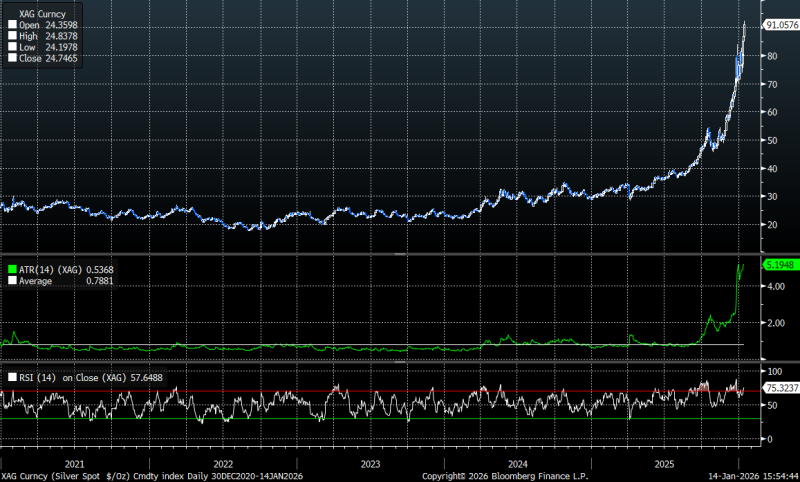
⬤ That elevated ATR tells the real story: daily price swings have more than doubled their three-year average. In conditions like these, most of what you're seeing on the charts isn't regular supply-and-demand action. Margin calls, option hedging flows, and short covering are running the show now, messing with normal price discovery and creating forced moves instead of organic ones.
⬤ Extreme volatility kills the effectiveness of your usual technical tools. Ranges are expanding fast, so traditional support and resistance zones stop working reliably, and stop-losses get knocked out by short-term chaos rather than real trend breaks. The data confirms it—both volatility and momentum indicators are running way hotter than they have in years. Even when the macro backdrop looks solid, this kind of reflexive volatility can wreck short-term conviction trades and test your discipline hard.
⬤ Important point: this volatility spike doesn't mean silver's broader bullish trend is done. It just means short-term trading has become structurally difficult because of rapid, self-feeding price swings. This matters beyond silver itself—the metal often sets the tone for commodities and precious metals sentiment overall. When volatility stays this high, it hits liquidity, changes how traders manage risk, and amplifies cross-asset instability even while longer-term trends keep moving.
 Usman Salis