Eseandre Mordi

⬤ Copper futures gained traction during the latest session, with HG copper approaching $5.97 after climbing roughly 1.57% on the day. The rally followed fresh data from Chile showing export revenue growth that didn't tell the whole story about underlying production challenges.
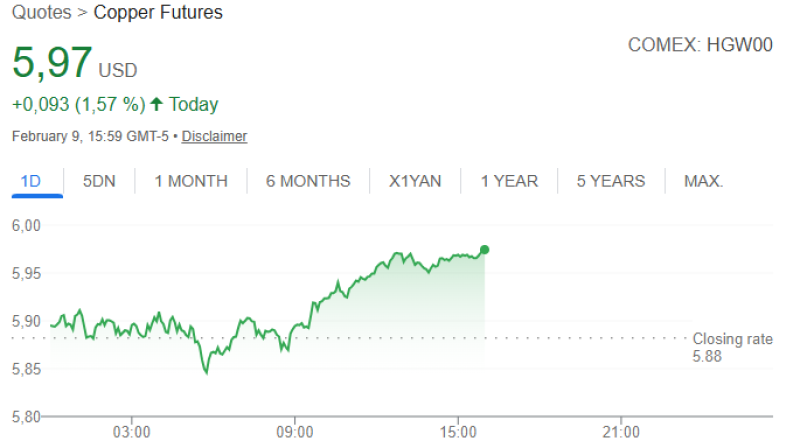
⬤ Chile shipped about $4.55 billion worth of copper in January, marking a 7.9% jump from the previous year. But here's the catch—the increase came from prices running approximately 34% higher, not from digging more metal out of the ground. Chile controls roughly a quarter of global mined copper supply, yet output has been sliding for five straight months through the end of 2025.
⬤ As Bloomberg recently reported, mining operations hit several speed bumps including trouble reaching richer ore deposits, a strike that shut down a Capstone Copper mine, and storage headaches at the Quebrada Blanca project. These disruptions tightened supply enough to push copper to record territory in January before backing off somewhat in early February.
⬤ The dynamic between climbing prices and falling production highlights a fundamental tension in commodity markets—when a major producing nation faces operational challenges, market conditions can shift dramatically. Copper price action near key resistance levels reflects this supply-demand imbalance, with traders closely monitoring whether the metal can break through critical thresholds.
⬤ The situation underscores how vulnerable copper markets are to disruptions in key producing regions. When Chile—responsible for one in every four pounds of mined copper worldwide—struggles with production, traders take notice. The gap between what companies want to produce and what they're actually managing to extract continues to support prices at elevated levels. Looking ahead, copper and lithium demand is expected to double by 2040 as the energy transition accelerates, which could amplify the impact of supply disruptions like those currently plaguing Chilean operations.
 Eseandre Mordi