Marina Lyubimova
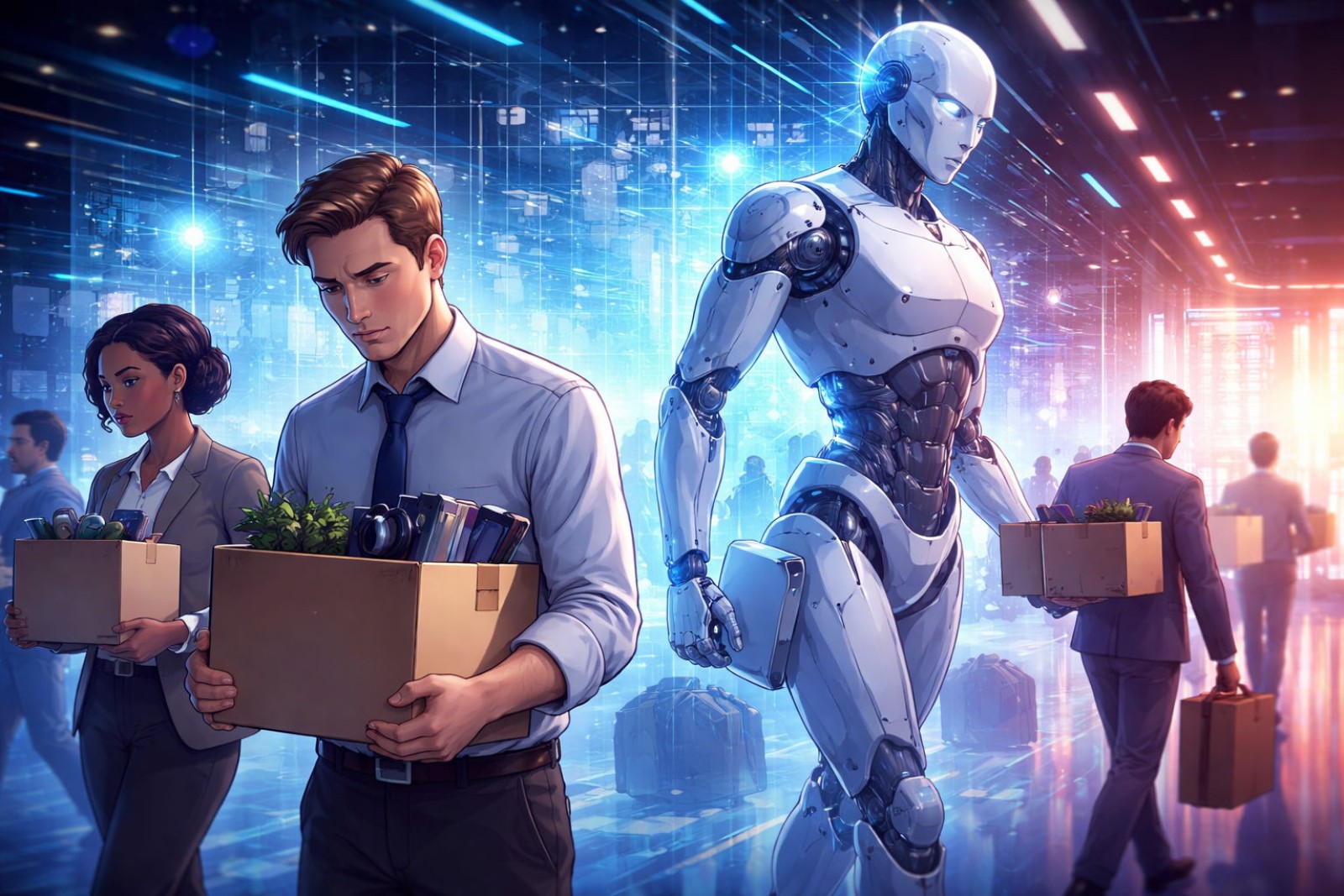
⬤ Meta is once again under scrutiny over workforce decisions. Internal discussions reportedly point to cuts affecting up to 20% of its global staff, putting around 15,800 jobs at risk. The timing is striking: the company only recently crossed $200 billion in annual revenue for the first time. Yet record profits have not stopped the pivot. Like much of Silicon Valley, Meta is reallocating resources toward artificial intelligence infrastructure, and that shift is quietly displacing roles across the organization.
⬤ Meta is not alone. A broad wave of job cuts has swept through the global tech sector, hitting Oracle, Block, IBM, Accenture, McKinsey, Amazon, Intel, HP, and Microsoft. AMZN Stock Slides as Company Plans 30,000 Job Cuts illustrated how even the most cash-rich firms are trimming headcount while redirecting billions into AI development and automation. The pattern is consistent: cut costs in traditional roles, invest in the next generation of infrastructure.
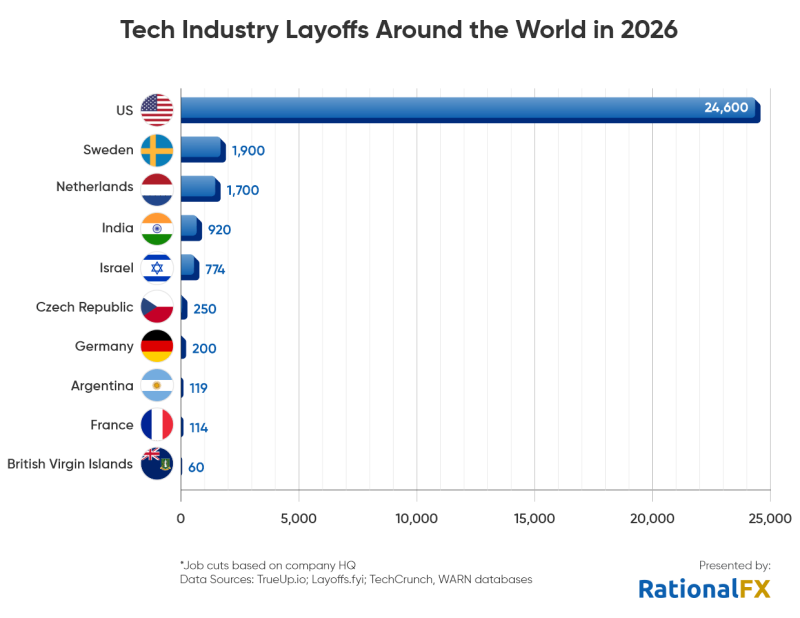
⬤ The numbers behind 2026's tech layoff wave are striking. According to data compiled from Layoffs.fyi, TechCrunch, and WARN databases, the United States leads globally with roughly 24,600 cuts so far this year. Sweden follows with about 1,900, the Netherlands with 1,700, India with 920, and Israel with 774. Additional reductions have been recorded in Germany, France, Argentina, the Czech Republic, and the British Virgin Islands. Amazon Prepares for Largest Layoffs in Its History - Up to 30,000 Jobs at Risk captured the scale of this sector-wide shift and how it extends well beyond any single employer.
⬤ What is unfolding across tech is less a crisis than a deliberate transformation. Strong revenues and rising layoffs coexisting is no longer a contradiction; it is a strategy. Companies are not cutting because they are struggling. They are cutting to redeploy capital into AI systems that promise higher output with leaner teams. The geographic spread of these reductions confirms it: this is a global restructuring, not a regional correction. The AI era is rewriting what a technology workforce looks like.
 Marina Lyubimova