Peter Smith
Apple is in focus after a price target increase to $340 from $325, paired with higher earnings forecasts that hinge on a strong iPhone 17 cycle. The projections were lifted to $8.72 EPS in FY26 and $10.35 in FY27, framing the next product cycle as a pricing-power moment rather than a hype-driven narrative. For AAPL, the emphasis is on what the company can charge, not how many devices it can ship.
The central tension is cost pressure versus margin protection. Rising memory costs are creating a potential squeeze on profitability, and Apple's response is positioned as selective price hikes rather than cost-cutting. The rationale is that Apple Intelligence features can help justify higher prices, turning software-led differentiation into pricing leverage during the iPhone 17 cycle. Apple is using feature upgrades to defend margins while input costs rise.
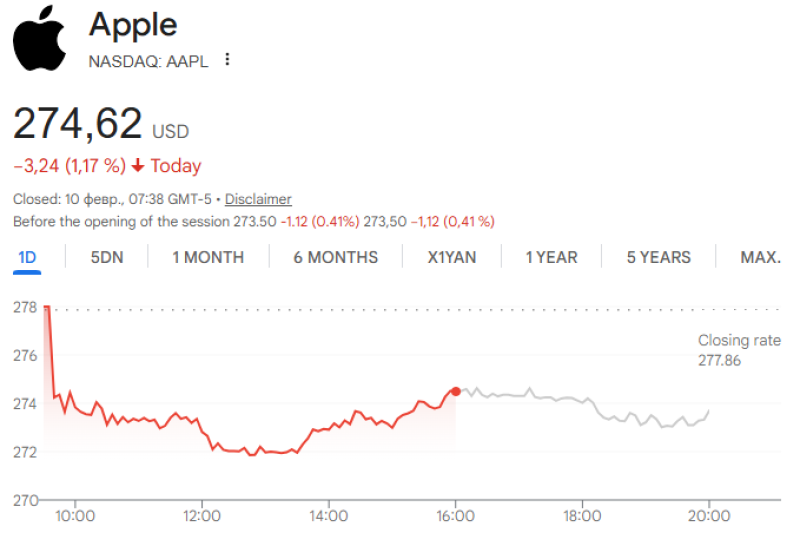
The valuation context is explicit: with AAPL shares near $278, the $340 target implies about 22% upside, while the market is already valuing Apple at roughly a 32x forward P/E. That multiple reflects a bet that Apple Intelligence can support real monetization, consistent with recent discussion around Apple Intelligence rollout.
The key takeaway is that this is not a volume story. It's a test of Apple's pricing power and how much users will pay as Apple embeds new capabilities into its flagship cycle. The result matters for market expectations because it ties AAPL's upside case to sustained premium pricing and the credibility of Apple Intelligence as a driver, not a marketing layer. For additional AAPL context, see AAPL technical structure and AAPL momentum signal.
 Peter Smith