Alex Dudov

When people ask who is the CEO of Home Depot, they're learning about one of retail's most fascinating success stories. Ted Decker didn't start his career in boardrooms or corner offices. He started it on his family's lawn at age eight, pushing a mower and learning the value of hard work. Today, he runs a company with over 2,350 stores and roughly 475,000 employees, proving that sometimes the path to the executive suite begins with dirt under your fingernails and sweat on your brow.
Who Is the CEO of Home Depot: Early Hustle and First Dollars

Ted Decker's story started in Fairview Township, Erie County, Pennsylvania, where he discovered his entrepreneurial side early. At just eight years old, he was already mowing and landscaping his family's lawn, getting a feel for what honest work looked like. By the time he hit high school, this wasn't just chores anymore—it had become a legitimate business. Young Decker was managing landscaping and gardening jobs for neighbors and local businesses, building both his bank account and his work ethic.
During his college years at William & Mary, he kept the hustle going. Summer breaks meant heading back to Erie to sealcoat driveways, earning money the hard way while his classmates were probably relaxing at the beach. After graduating with a BA in English in 1985, Decker took an interesting detour into the world of finance, eventually earning his MBA from Carnegie Mellon University in 1993.
His first real corporate job was at PNC Bank, where he worked in lending and credit positions. But Decker wasn't content staying in one place—he took assignments in Australia and Pittsburgh, soaking up international business experience like a sponge. These early years gave him something invaluable: perspective on how business works across different markets and cultures.
Before anyone was asking who is the CEO of Home Depot in reference to Ted Decker, he was putting in serious time at some major corporations. After PNC Bank, he moved into strategic roles at Kimberly-Clark Corporation and Scott Paper Company. These weren't just any jobs—he was handling business development, strategic planning, finance, and treasury work. The positions took him to England and Atlanta, adding more stamps to his passport and more tools to his business toolkit.
During the 1990s, while working at these companies, corporate finance professionals were typically pulling in somewhere between $60,000 to $100,000 annually. While we don't have exact numbers for what Decker was making back then, he was steadily climbing the ladder and banking valuable experience. What made him different was how he combined his English literature degree with hardcore business skills. He could think creatively and analytically at the same time—a rare combination that would later become his signature approach.
The 22-Year Climb to the Corner Office

In 2000, Ted Decker walked through Home Depot's doors for the first time as an employee, taking on the role of Director of Business Valuation. Nobody could have predicted that this would be the start of a 22-year climb to the very top. His early days were spent deep in financial analysis and strategic assessment, getting to know the retail giant from the inside out.
Decker didn't just coast along—he kept moving up. He went from Senior Director of Business Valuation to Vice President, then Senior Vice President of Strategic Business Development, and later Senior Vice President of Retail Finance. Each role gave him deeper insights into how Home Depot actually worked, from pricing strategies to inventory management to customer behavior.
Between 2014 and 2020, Decker landed a critical role as Chief Merchant and Executive Vice President of Merchandising. For over six years, he was essentially in charge of what products showed up on Home Depot's shelves, both in stores and online. This meant managing the company's massive product lineup and figuring out pricing strategies that worked for millions of customers. He wasn't just some finance guy anymore—he was shaping the actual shopping experience.
October 2020 brought Decker his biggest opportunity yet: President and Chief Operating Officer. Suddenly he was overseeing global store operations, supply chains, sourcing, outside sales, real estate, merchandising, marketing, and online strategy. Talk about a full plate. And the timing? Brutal. COVID-19 was wreaking havoc on supply chains and changing how people shopped almost overnight.
But here's where things got interesting. Home Depot had planned for modest growth—maybe $4 billion. Instead, the company exploded by nearly $22 billion. Everyone stuck at home during lockdowns suddenly decided their kitchen needed updating or their deck needed rebuilding. DIY projects went through the roof. Decker found himself managing this crazy growth while dealing with supply chain nightmares that would have broken lesser executives.
He handled it by setting up what he called a "war room"—not a physical room, but a virtual space where every department head could collaborate in real time. As one of America's largest importers of cargo freight, Home Depot couldn't afford delays. Decker and his team worked through supply bottlenecks, vendor issues, and shipping problems while keeping stores stocked and customers happy.
In January 2022, Home Depot made it official: Ted Decker would become CEO and President on March 1st, taking over from Craig Menear who'd led the company since 2014. By August of that year, Decker added Chairman to his titles, giving him complete control of the company's direction. At around 59 years old, he'd reached the summit after spending his entire adult career preparing for it.
Current Earnings and What Success Looks Like Today
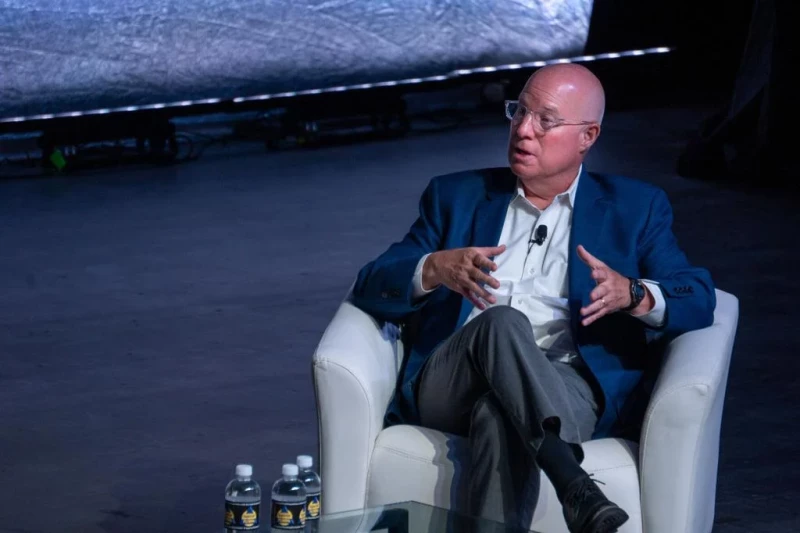
So what does someone running a $370 billion company make? As of 2025, Ted Decker's total annual compensation hit about $16 million, up 8% from the year before. But here's the thing—only $1.4 million of that is actual salary. The rest comes from bonuses, stock awards, and options tied directly to how well the company performs. That's pretty standard for major retail CEOs, where most of your pay depends on delivering results.
Decker's also got serious skin in the game. He personally owns about $46 million worth of Home Depot stock—roughly 0.012% of the company's total shares. That might sound small, but it means when the stock goes up or down, he feels it in his own wallet. Industry analysts say his compensation is right in line with other CEOs running specialty retail companies of similar size, so he's not overcompensated or underpaid—just market rate for someone managing this kind of operation.
Ted Decker's Blueprint for Success: Key Principles That Built a CEO

Throughout his career, Decker has been pretty open about what drives his success. He talks about blending "the art and science of retail"—mixing hard data and analytics with creative, customer-focused thinking. It's not enough to just look at spreadsheets; you've got to understand people too.
Decker likes quoting football legend Peyton Manning when talking about team building. He looks for people with talent, sure, but also folks who'll work hard and actually care about what they're doing. Most importantly though? Personal accountability. He wants team members who'll say "I'm accountable" and take pride in their work and their team's results, not people looking to pass the buck.
With remote and hybrid work becoming the norm, Decker gets that people are feeling more isolated. He's big on empathy as the cure for that disconnection. Missing those water cooler conversations and hallway chats affects both productivity and mental health, so leaders need to step up and actually care about their people's wellbeing.
Decker gives huge credit to Home Depot's founders for creating values that still matter decades later. He loves the company's "bottom-up" approach where store managers can help customers and communities without waiting for corporate approval. That kind of decentralized decision-making puts power where it belongs—with the people actually talking to customers.
The pandemic taught Decker to stay humble about success. Sure, Home Depot crushed it during COVID, but he was careful not to get cocky about it. He kept weighing pros and cons, staying realistic about short-term wins while remaining bullish on the industry's long-term future. Good times don't last forever, and neither do bad times.
When COVID hit and store workers were facing real health risks, Decker made sure Home Depot stepped up. The company offered weekly bonuses to associates dealing with hundreds of customers daily, provided paid sick leave, and eventually converted those temporary bonuses into permanent raises. He believes when you take care of your people, they'll take care of your customers.
Decker's pushed hard on Home Depot's digital transformation, making sure the online and in-store experiences work together seamlessly. He knows that serving both professional contractors and weekend DIYers means constantly innovating—better logistics, smarter inventory systems, improved customer service technology. And he combines long-term vision with the ability to pivot when needed. Whether he's dealing with supply chain chaos or expanding into new markets, he plans thoroughly but stays flexible enough to adapt when reality doesn't match the plan.
The question "who is the CEO of Home Depot" tells a bigger story than just identifying a corporate leader. Ted Decker's path from teenage landscaper to chairman of a retail empire is genuinely inspiring. His mix of early entrepreneurial grit, serious financial training, international business savvy, and 25 years of retail experience created the perfect recipe for leading the world's biggest home improvement company through both incredible challenges and remarkable growth. He's proof that success isn't about where you start—it's about how hard you're willing to work and how much you're willing to learn along the way.
 Alex Dudov