Alex Dudov

- Who Is the CEO of Fortnite and How Did His Journey Begin?
- Tim Sweeney's First Steps: From College Student to Game Developer
- How Tim Sweeney Earned His First Money
- Building Epic Games: The Career That Changed Gaming
- The Peak of Success: Unreal Engine and Fortnite
- Tim Sweeney's Current Wealth and Earnings
- Tim Sweeney's Philosophy: How to Become Successful
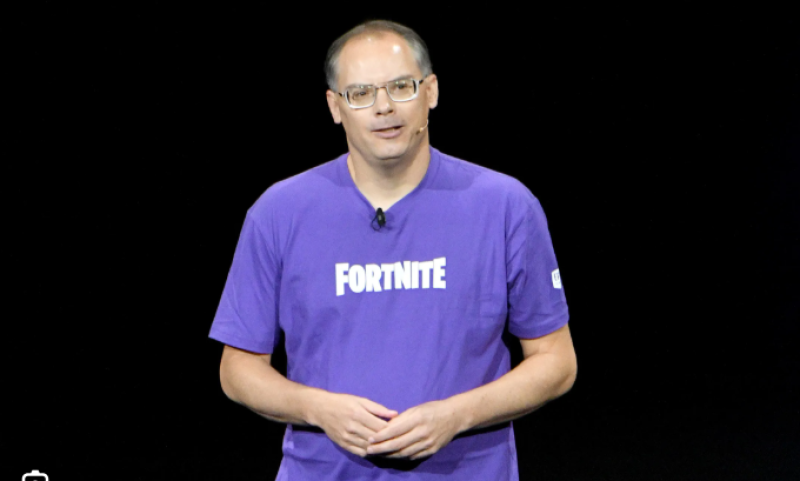
When you're talking about who is the CEO of Fortnite, you're really asking about Tim Sweeney – the guy who went from selling games out of his parents' basement to running one of the most powerful companies in gaming. This isn't your typical rags-to-riches story. It's the journey of a kid who was so obsessed with understanding how computers worked that he taught himself programming for over 10,000 hours before he even turned sixteen.
Born in 1970 in Potomac, Maryland, Sweeney built Epic Games from nothing into a multibillion-dollar powerhouse. Today, his net worth sits somewhere between $5.7 billion and $9.6 billion, depending on who's counting. But here's what makes his story really interesting – he's not just another tech billionaire chasing the next big thing. He's a programmer at heart who happens to be brilliant at business, a nature conservationist who's bought up over 50,000 acres of North Carolina forest land, and a fighter who's willing to take on Apple and Google when he thinks they're being unfair to developers.
Who Is the CEO of Fortnite and How Did His Journey Begin?

Tim Sweeney wasn't your typical kid growing up in Potomac, Maryland. While other kids were out playing sports, he was the one taking apart the family lawnmower at age five just to see how it worked. Then he'd build go-karts from scratch in the garage. His two older brothers probably thought he was a little weird, but that curiosity about how things worked was actually the early sign of something bigger.
Everything changed when he was eleven. His older brother had started a tech company out in California, and Tim went to visit. That's where he got his hands on an early IBM PC and learned BASIC programming. Most eleven-year-olds would've been bored to tears, but not Tim. He was completely hooked. While other kids were playing Adventure on their Atari, Tim was trying to figure out how to code his own version.
Here's the crazy part – between the ages of 11 and 15, he spent over 10,000 hours teaching himself how to program. Think about that for a second. That's basically a full-time job for a kid who should've been worried about homework and hanging out with friends. He'd dig into online bulletin boards, learning from random strangers on the internet, building games that he never even showed to anyone. It was pure passion.
And get this – even back then, he had a business mind. As a teenager, he started a lawn-mowing service, undercutting the professional companies by charging half their price to wealthy neighbors. That hustle mentality? It stuck with him forever.
Tim Sweeney's First Steps: From College Student to Game Developer

So in 1989, Sweeney heads off to the University of Maryland to study mechanical engineering. His parents were probably thrilled – their son was going to be an engineer! But anyone paying attention could see his heart wasn't in it. He was just going through the motions with his engineering classes while spending every spare moment coding games.
He needed money for computer equipment, so he kept mowing lawns. But here's what's interesting – even then, he was thinking about cash flow and how to fund the things he wanted to build. That's not normal college kid thinking. Most students are worried about beer money, but Sweeney was calculating how many lawns he needed to mow to buy better hardware.
By his third year, he'd gotten comfortable enough with the engineering stuff that he could coast a bit and really focus on programming. And that's when he started Potomac Computer Systems in his parents' basement – initially as a consulting business to help people with computer problems. Spoiler alert: that didn't work out. But failure didn't stop him. It actually taught him something valuable.
The real breakthrough came when he realized he should just make games and sell them. He needed a text editor to code his game, so he built one using Pascal. Then he had this lightbulb moment – what if the text editor itself could be a game? That became ZZT. He'd test it with college buddies and neighbors, getting feedback, tweaking it, making it better. Then he figured out how to distribute it through shareware, basically the 1990s version of free-to-play demos.
How Tim Sweeney Earned His First Money
Here's where things get real. ZZT started selling – not crazy numbers, but steady. A few copies every day, which added up to about $100 a day. Now, you might be thinking that's not much, but remember this is the early 1990s and Sweeney's a college student. That $100 a day was legit money, especially when it was coming from something he loved doing.
Picture this scene: Tim and his dad in the basement, packing up floppy disks, printing out instruction manuals, stuffing envelopes, and sending them to gamers all over the country. It wasn't glamorous. It was tedious, manual work. But it was proving that his dream could actually pay the bills.
When orders hit thirty a day, it got too crazy for just him and his dad to handle. So he hired some part-timers to answer phones and fulfill orders. The business was actually growing, which was both exciting and terrifying. This was real now.
That first $100 a day was everything to Sweeney. It wasn't just money – it was validation. It proved he could make a living doing what he loved. So he made a decision that probably gave his parents a heart attack: he went all-in on games. He renamed Potomac Computer Systems to Epic MegaGames because, let's be honest, if you're making video games, you need a name that sounds cooler than a computer repair shop.
The craziest part? He never actually graduated from college. He was one credit short when the business started demanding so much attention that school just didn't make sense anymore. In hindsight, it worked out pretty well for him.
Building Epic Games: The Career That Changed Gaming

After ZZT did well, Sweeney started working on his next game, Jill of the Jungle. Except there was a problem – he realized he couldn't do it alone. He needed help. So he put together a team of four people and they knocked it out by mid-1992. That was a huge moment for him, learning that building something great sometimes means admitting you can't do everything yourself.
But he still needed someone to help run the business side of things while he focused on the tech. That's when he connected with Mark Rein, who'd just gotten laid off from id Software. Rein came in to handle growth and management, and honestly, it was perfect timing. Sweeney could code, Rein could run the business, and together they started building something bigger.
Smart move by Sweeney – he started putting recruiting messages in his games. And it worked. Some seriously talented developers reached out wanting to work with Epic. Legends like Cliff Bleszinski, James Schmalz, and Arjan Brussee joined up early on. These guys would help shape everything Epic became.
But Sweeney saw something changing in the industry. The whole shareware thing was dying out. Teams were getting bigger, and id Software had just dropped Wolfenstein 3D and DOOM, showing everyone what 3D games could do. Sweeney realized that making a version of Epic Pinball that was ten times better wouldn't sell ten times as many copies – the market had changed.
So he made a gutsy call. He took all his best developers and put them on one massive project instead of spreading them thin across multiple small games. That project was Unreal. And honestly, they had no idea what they were doing. But they figured it out.
The Peak of Success: Unreal Engine and Fortnite

Sweeney started building Unreal Engine for the 1998 first-person shooter Unreal. But here's where his genius really shows – he wasn't just making a game, he was building a tool that other people could use to make their own games. Before Unreal even came out, two companies wanted to license the engine. That's when the lightbulb really went off. The engine itself was more valuable than any single game they could make with it.
The Unreal Engine became absolutely massive. It's powering everything from tiny indie games to huge AAA blockbusters. When Unreal launched successfully, Epic moved to Cary, North Carolina in 1999 and dropped "MegaGames" from the name – they were just Epic Games now.
Then came the Gears of War trilogy, which was huge. We're talking over $1 billion in revenue before Microsoft bought the rights in 2014. Epic was doing really well, but the biggest win was still coming.
In 2017, Epic released Fortnite. The timing was absolutely perfect. The gaming world was shifting toward free-to-play games and always-online experiences. Epic understood this better than almost anyone. Within just one year, Fortnite's Battle Royale mode had 125 million players. By May 2018, they'd made over $1 billion from the game through in-game purchases. People were buying virtual skins and dances like crazy.
The numbers were mind-blowing. Epic Games had been valued at around $825 million when Tencent invested back in 2012. By July 2018, thanks to Fortnite, the company was worth $4.5 billion. By March 2019, Fortnite had nearly 250 million players worldwide. Then in March 2024, Disney dropped $1.5 billion for a 9% stake in Epic. Disney doesn't throw around that kind of money unless they see something huge.
Tim Sweeney's Current Wealth and Earnings

So how much money does the CEO of Fortnite actually have? Forbes says Sweeney's worth about $5.1 billion, but Bloomberg thinks it's closer to $9.6 billion. The truth is probably somewhere in between, and the exact number keeps changing because Epic Games is privately held and valuations are tricky.
What we do know is that Fortnite brings in roughly $4.5 billion every year. That's an insane amount of money from one game. And here's the thing – even though Tencent bought a 48.4% stake in Epic back in 2012, Sweeney still controls the company. He's kept between 51-59% ownership, which means he still calls all the shots. That's pretty rare when you're taking in billions from investors.
The money hasn't changed him much, though. He still lives in Cary, North Carolina – not exactly Silicon Valley. And since 2008, he's been doing something really unexpected with his wealth: buying up massive amounts of land in North Carolina for conservation. We're talking over 50,000 acres spread across 15 counties.
In 2016, he donated 15,000 acres of wilderness to a public foundation. He's given 7,000 acres to the U.S. Fish and Wildlife Service and another 7,500 acres to the Southern Appalachian Highlands Conservancy. These are some of the largest private land conservation gifts in North Carolina's history. When asked about it, Sweeney said he's focused on getting large blocks of land he's acquired since 2009 into permanent conservation.
So yeah, he's a billionaire. But he's not buying yachts and private islands. He's buying forests and giving them away to make sure they stay wild forever. That's a different kind of rich person.
Tim Sweeney's Philosophy: How to Become Successful

When people ask who is the CEO of Fortnite and what makes him successful, Sweeney's approach offers some really valuable lessons. This isn't about get-rich-quick schemes or viral marketing tricks. It's about playing the long game and staying true to what matters.
- Follow Your Passion Like Your Life Depends On It. Sweeney talks about passion being the fire that drives everything. And he's living proof. The guy spent 10,000 hours teaching himself to code as a teenager, not because his parents made him or because it would look good on a college application. He did it because he literally couldn't imagine doing anything else. You can't fake that kind of obsession.
- Focus on the Journey, Not Just the Destination. Here's something Sweeney believes deeply – success isn't about hitting some final goal. It's about who you become along the way. Epic Games went through tons of ups and downs before Fortnite became massive. They made engines, built games, changed strategies, learned from mistakes. Each step taught them something that made the next step possible.
- Don't Wait for Permission – Create Your Own Opportunities. When the shareware model started dying, Sweeney didn't sit around complaining. He pivoted to retail. When Apple and Google started charging 30% fees on their app stores, he built his own Epic Games Store and charged 12% instead. He's always been about creating his own path rather than waiting for someone to give him permission.
- Sweeney has said some really encouraging stuff to young developers who feel like they've missed their chance. He felt the same way in the early 90s when giants like EA dominated everything. He was just trying to make small shareware games and survive. But then when id Software dropped Wolfenstein 3D and DOOM, everything changed. The big companies were focused on 2D games, so Epic bet everything on 3D. It took 3.5 years of brutal work, but they figured it out.
- Build a Culture Where People Actually MatterIn interviews, Sweeney constantly gives credit to his team. He talks about hiring people with real passion and supporting them. And it's not just corporate talk – it's built into how Epic operates. If you take care of your team and inspire them, they'll build amazing things. It's that simple and that complicated.
- Share Your Tools and Help Others Succeed. From day one, Sweeney's games came with development kits so other people could make their own stuff. This was weird at the time – why would you help your competitors? But that philosophy became the foundation for Unreal Engine, which is now used by hundreds of thousands of developers worldwide. Instead of hoarding his technology, he shared it and created an entire ecosystem.
- Stay Humble and Know When You Got Lucky. Sweeney's pretty honest about the role luck played in his success. Yeah, he worked incredibly hard and made smart decisions. But he also recognizes he was in the right place at the right time. When the titans were building 2D games, Epic took a massive risk on 3D technology. It could've failed spectacularly. But it didn't.
- Challenge the System When It's Not Fair. Sweeney doesn't just accept "that's how things are done." When app stores charged 30%, he launched his own store at 12%. When Apple kicked Fortnite out of their store, he sued them. He's willing to fight when he thinks the rules are unfair, even against companies way bigger than Epic.
- Keep Going When Things Get Hard. Sweeney tells young developers who feel like they missed their shot to keep pushing forward. The industry is always changing. If you're not succeeding in this wave of technology, maybe you'll crush it in the next one. Your time will come if you don't give up.
The story of Tim Sweeney isn't just about who is the CEO of Fortnite. It's about a programmer who spent decades getting really good at what he does, a businessman who saw opportunities other people missed, and a leader who built a company around helping other creators succeed. From making $100 a day selling games from his parents' basement to running a multibillion-dollar empire, Sweeney proved that combining technical skills with business smarts, staying true to your values, and thinking long-term can lead to something extraordinary. And maybe, just maybe, using some of that money to save forests instead of buying another yacht.
 Alex Dudov