Alex Dudov
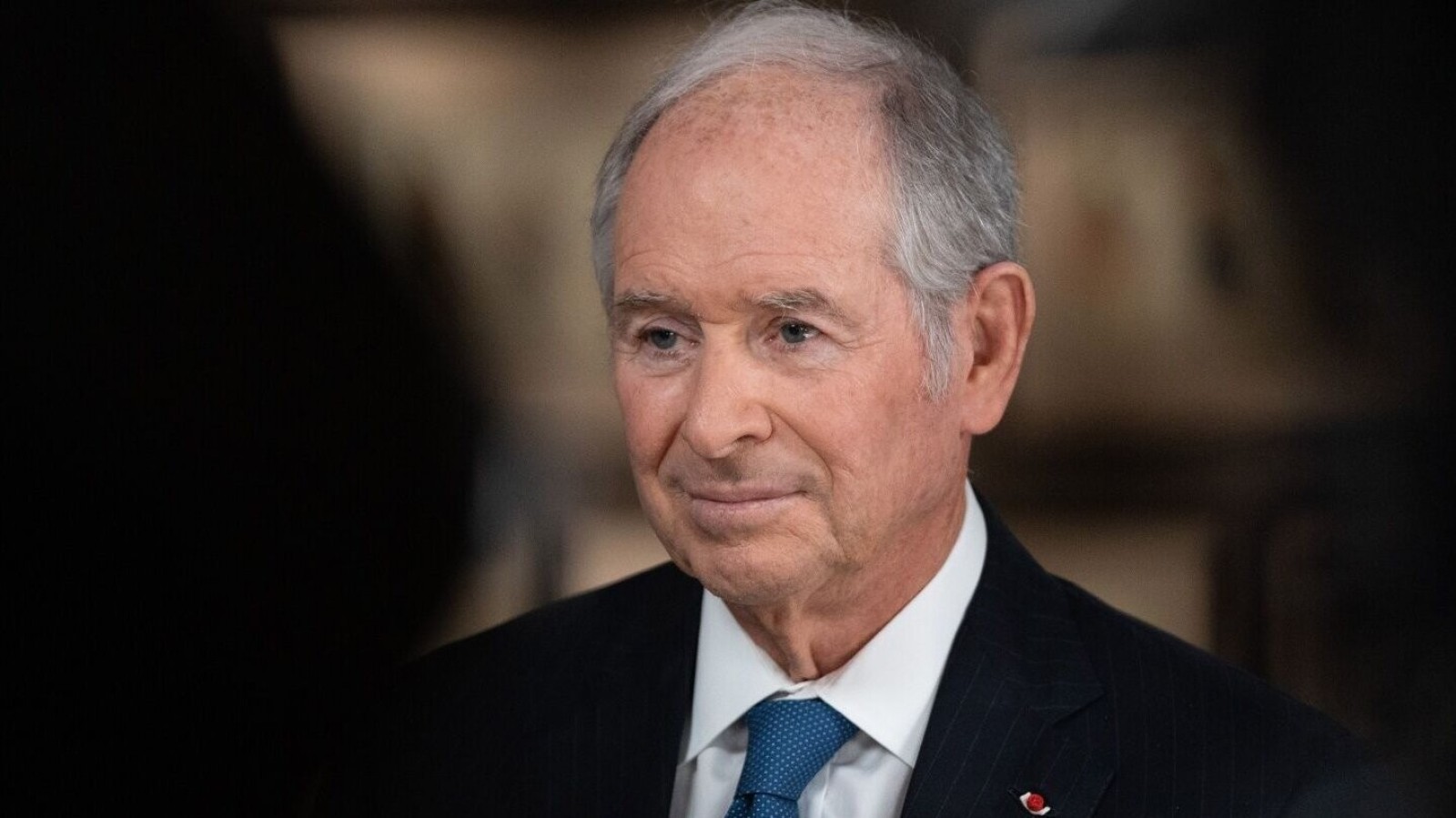
Steve Schwarzman is not someone who stumbled into success. He chased it deliberately, methodically, and on his own terms. From mowing lawns as a teenager in Pennsylvania to collecting over $1 billion a year in dividends alone, his story is one of the most striking in modern finance. The CEO of Blackstone didn't inherit a Wall Street name or family connections. He built everything from the ground up, one deal at a time.
How the CEO of Blackstone Made His First Dollar
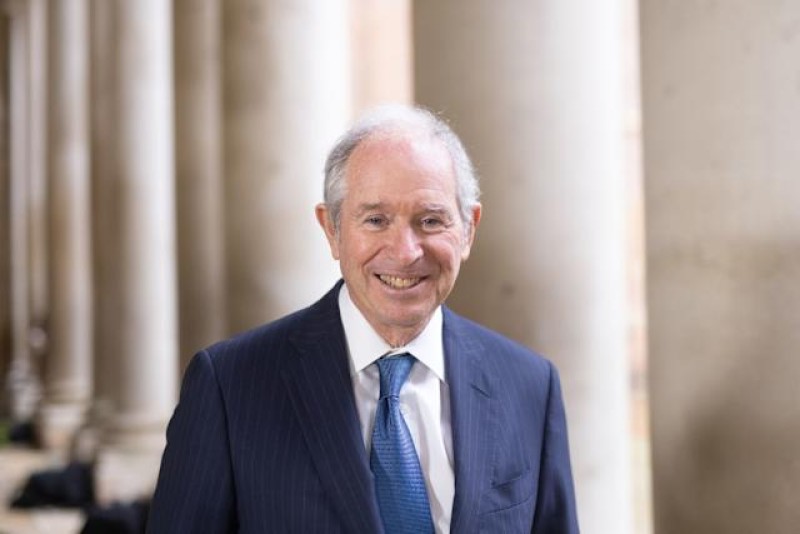
Schwarzman's first business was running a lawn-mowing operation at age 14. He recruited his twin brothers Mark and Warren to do the actual mowing while he brought in the clients. It sounds almost too on-the-nose, but that early instinct to organize, delegate, and focus on growth would define his entire career.
After graduating from Yale, he earned his MBA from Harvard Business School in 1972 and landed his first real finance job at Donaldson, Lufkin and Jenrette, a well-regarded investment bank at the time. Six months in, he knew he needed more. The experience was valuable but not enough. So he kept moving.
From Lehman Brothers to the Founding of Blackstone
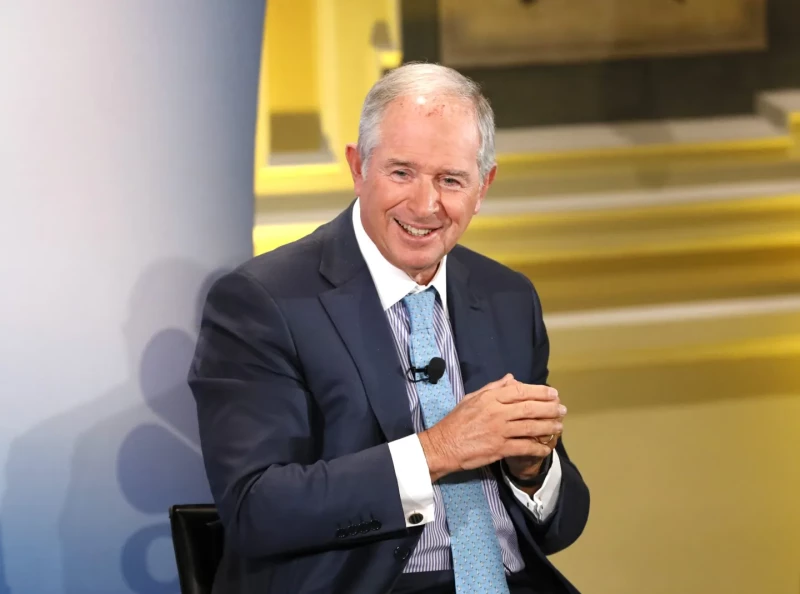
After DLJ, Schwarzman joined Lehman Brothers, and that's where things got serious. By 31, he was already a managing director. That's not a small thing on Wall Street. He eventually became head of global mergers and acquisitions, one of the most powerful seats in investment banking at the time.
When Lehman merged with American Express in 1984, Schwarzman walked away with real money from his stake. But instead of coasting, he went the other direction. In 1985, he and former Lehman chairman Peter Peterson co-founded The Blackstone Group with just $400,000 in startup capital and a two-person staff.
The early years were grinding. Blackstone competed as a small M&A advisory shop against firms that had been around for decades. But Schwarzman had a clear head and a long horizon. Slowly, methodically, he expanded the firm into private equity, real estate, credit, and alternative assets, building something that didn't really exist before.
Peak Success: When the CEO of Blackstone Rewrote the Pay Record
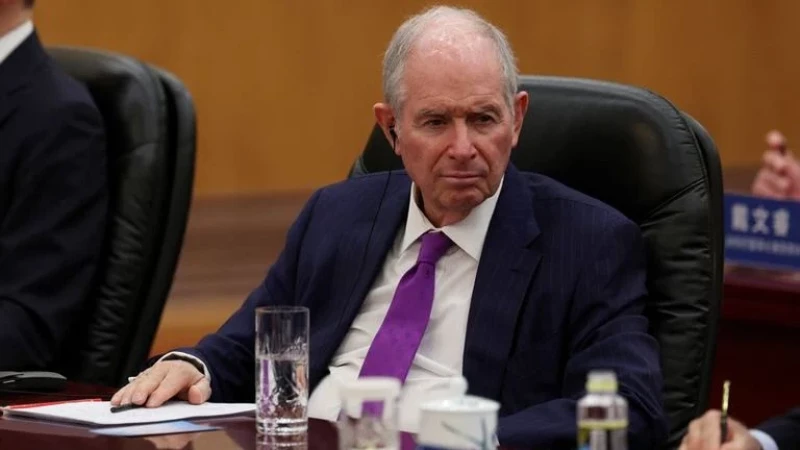
The turning point came in June 2007 when Blackstone went public in what was then the biggest IPO the alternative investment industry had ever seen. A securities filing at the time showed that Schwarzman had earned around $398 million in fiscal 2006. He sold $684 million worth of his stake at the IPO and kept a remaining interest then valued at $9.1 billion.
The numbers only kept going up from there. His compensation hit $350 million in 2007, then $702.4 million in 2008. By 2015 it reached $734.2 million. In 2021, total compensation crossed $1.1 billion, with $941 million of that coming from dividends. In 2022, he earned a record $1.27 billion, making him the highest-paid CEO in the entire United States that year.
In 2024, Schwarzman collected just over $1 billion again: $916 million in dividends from his roughly 20% stake in Blackstone, plus $83.7 million in incentive fees and carried interest. His nominal base salary? $350,000. The gap between that number and his actual annual income is a good illustration of how differently private equity wealth works compared to traditional corporate compensation.
Blackstone CEO's Net Worth and What He's Building Now
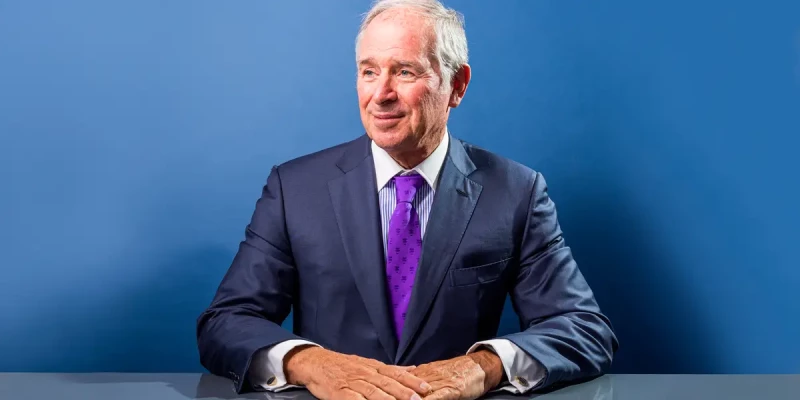
As of early 2026, Schwarzman's net worth sits somewhere between $47 and $52 billion depending on the index. Bloomberg's Billionaires Index puts it around $47.8 billion. Either way, he's firmly in the top tier of the world's wealthiest people.
That wealth is almost entirely tied to Blackstone's performance. The firm now manages over $1.3 trillion in assets across private equity, real estate, credit, and infrastructure. Blackstone joined the S&P 500 in 2023, and its shares returned 83% that year including reinvested dividends, beating both its peers and the broader market.
Beyond finance, Schwarzman has been quietly building something else. In 2020, he signed the Giving Pledge, committing to donate the majority of his wealth. He's already given $350 million to MIT for AI research, $150 million to Yale, and $100 million to fund the Schwarzman Scholars program in China. In 2024, he announced plans to grow his foundation into one of the world's top 10, with AI and education as the central focus.
The CEO of Blackstone's Core Ideas on How to Become Successful

Schwarzman has been open about what drives him, both in interviews and in his book What It Takes. A few themes come up over and over.
- Think big from the start. He genuinely believes that big goals don't require proportionally more effort than small ones. They just require more commitment. His standing rule at Blackstone is to only pursue opportunities with what he calls "almost limitless possibilities." If the ceiling is too low, he's not interested.
- Understand the downside before you fall in love with the upside. This is the core of how Blackstone evaluates every deal. Schwarzman obsesses over what can go wrong before he ever gets excited about what can go right. It's a contrarian discipline in an industry built on optimism, and it's helped Blackstone survive market cycles that destroyed competitors.
- Hire people who are better than you. He believes the ceiling of any organization is determined entirely by the quality of the people in it. Schwarzman has spent decades building one of the most talent-dense teams in global finance, and he treats hiring as a top strategic priority, not an HR function.
- Hold yourself to a 10 out of 10 standard. Schwarzman doesn't tolerate mediocrity, including in himself. He runs Blackstone with the assumption that every deal, every hire, every communication either raises the standard or lowers it. There's no neutral.
- Stay ahead of the curve, especially on technology. A meeting with Jack Ma in 2015 sparked a deep personal interest in AI that eventually led to more than $500 million in donations to AI research and education. While many of his peers were still skeptical, Schwarzman moved fast, integrating AI into Blackstone's operations and pushing for policy-level engagement on the technology. He sees it as the defining challenge of the next generation, and he wants to be part of shaping it.
 Alex Dudov